If you’re shopping for champagne flutes, the honest opening: you might want coupes or wine glasses instead. Sommeliers and bartenders have been saying so for years. Below: when a flute IS the right call, what to buy if so, and the cleaner alternative most people overlook (if it’s wine glasses you’re really after, our best wine glasses picks cover every budget).
TL;DR: the quick answer
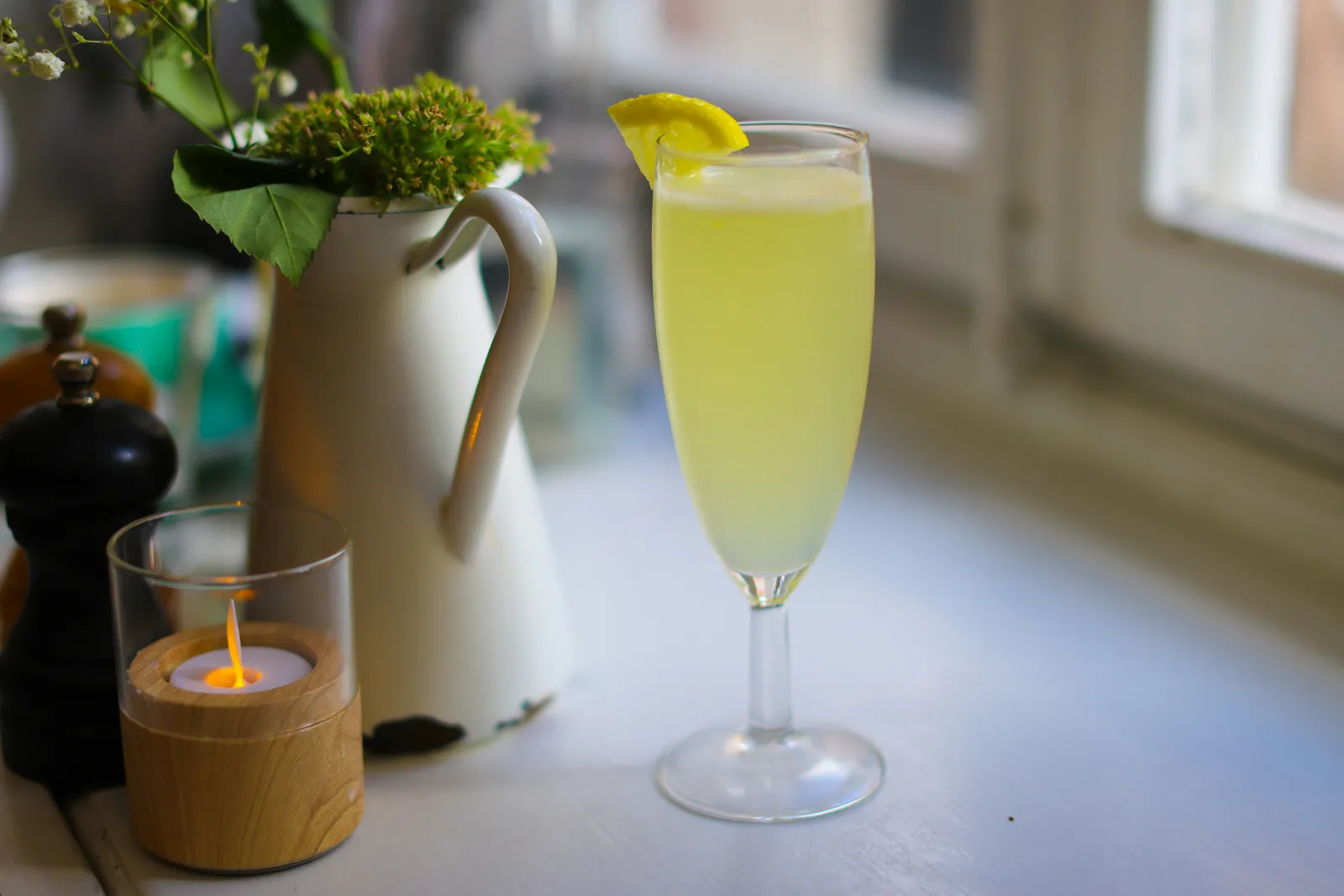
- A champagne flute is a tall, narrow stemmed glass, about 6-8 ounces.
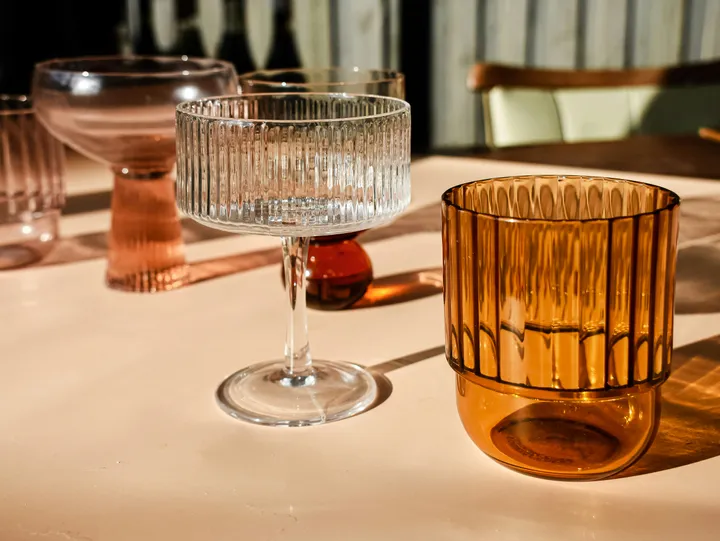
- Three valid champagne glasses exist: flute (tall and narrow), coupe (rounded shallow bowl), and white wine glass / tulip (slightly wider bowl with curved sides).
- Bartender consensus has shifted away from flutes toward coupes for casual drinking, and toward white-wine-style glasses for vintage champagne.
- When flutes ARE right: toasts, photo moments, when you want bubbles to last (a mimosa bar is the classic case), when the wine is dry and high-acid (cava, brut prosecco).
- When flutes AREN’T right: when you want to actually taste the wine. The narrow shape hides aromatics.
- What to buy: 6-8 oz capacity, sturdy stem, dishwasher-safe. Schott Zwiesel for budget, Riedel Performance for the workhorse, Josephinen if you’ll use them for life.
- Don’t buy flutes if you only drink sparkling 2-3 times a year. Get coupes that work for everything.
Why flutes: the case for and against
The flute became iconic in the 20th century, but champagne pre-flutes was almost always served in coupes. The shift to flutes happened in the 1960s for two reasons: visual drama (rising bubbles look incredible in a tall narrow column) and bubble preservation (a smaller surface area means CO2 escapes more slowly).
Both of those things are still true. But over the last 15 years, the wine world has been quietly walking away from flutes for a different reason.
The case for flutes
- The bubbles last longer. Less surface area exposed to air = slower CO2 release. A flute will keep its fizz 30+ minutes; a coupe goes flat in 10-15.
- The visual. A column of rising bubbles is genuinely beautiful. Flutes photograph better than any other champagne glass.
- Toasts work better. A wider glass is hard to clink without spilling. The narrow flute is the right shape for a wedding toast or NYE moment.
- The signal. A flute on a bar or table reads “champagne is being poured” in a way no other glass does.
The case against
- Aromas get trapped. The narrow rim concentrates bubbles but also traps everything else, yeasty, brioche-y, citrus aromatics that good champagne is supposed to deliver. You’re tasting the bubbles, not the wine.
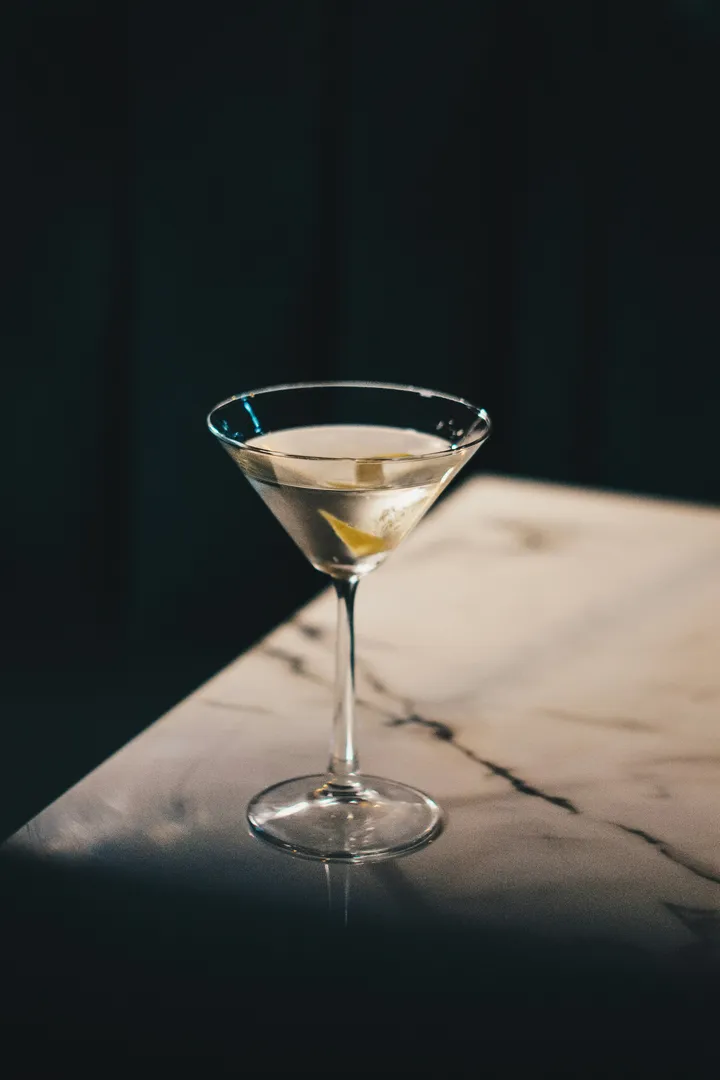
- Bartenders prefer coupes. Same reason as our coupe vs. martini glass argument, coupes are more stable, more comfortable to hold, and work for nearly all sparkling wine and cocktails.
- Sommeliers prefer white wine glasses for vintage champagne. Krug, Dom Pérignon, anything vintage or aged, the recommended glass is closer to a Burgundy white wine glass than a flute. Wider bowl, more aroma release.
- Flutes are a single-use glass. Coupes can hold a martini, a daiquiri, a French 75. Flutes hold sparkling wine and that’s it.
What modern wine service actually does
Walk into a champagne bar in Paris, New York, or Tokyo in 2026 and you’ll see fewer flutes than you’d expect. The trend is:
- Casual sparkling (prosecco, cava, sparkling rosé) → flute or coupe
- House champagne → coupe or modern tulip
- Vintage / fine champagne → white wine glass
The flute is increasingly reserved for toasts and photographs. Both are valid reasons. They’re just narrower reasons than the past 60 years suggested.
Flute vs. coupe vs. white wine glass: the comparison
| Flute | Coupe | White wine glass | |
|---|---|---|---|
| Bowl shape | Tall narrow tube/cone | Rounded half-sphere | Tulip with curved top |
| Capacity | 6-8 oz | 5-7 oz | 10-14 oz |
| Bubble preservation | Best (30+ min) | Worst (10-15 min) | Middle (15-20 min) |
| Aroma release | Worst (narrow rim) | Better | Best |
| Stability | Good | Best | Best |
| Visual drama | Highest | Subtle/classic | Lowest |
| Versatility | Sparkling only | Sparkling + cocktails | Wine + sparkling |
| Best for | Toasts, casual sparkling | Most casual champagne | Fine/vintage champagne |
If you’re buying one glass shape for a home bar that handles both wine and sparkling, the white wine glass is the most versatile. If you’re buying one glass shape for sparkling specifically, the coupe beats the flute in everything except bubble longevity.
When a flute is actually the right call
Flutes earn their space when:
- You’re hosting a toast moment. Wedding, NYE, milestone birthday, baby announcement. The flute’s narrow rim is easy to clink without spilling, and the visual signals “this is the toast glass.”
- You want the bubbles to last. A 90-minute reception where the toast comes 45 minutes in, flutes keep the wine drinkable. Coupes will be flat by then.
- The wine is built for fizz, not flavor. Bone-dry prosecco brut, cava, sparkling rosé, sparkling cider, these wines don’t have much aromatic complexity to release. The flute’s downside doesn’t apply.
- The aesthetic matters. A vertical line of flutes on a bar reads as “champagne event” in a way no other glass does. For a hosting moment where you’re staging the visual, flutes earn it.
- You only drink sparkling on special occasions. If champagne shows up 2-3 times a year and it’s always the toast, you don’t need the aroma optimization. A simple set of flutes is fine.
If none of these apply, meaning you drink sparkling casually, you actually want to taste the wine, and your “occasions” are random Tuesday nights, get coupes or white wine glasses instead.
What to look for when buying champagne flutes
The shape is similar across brands. The differences are in the details.
Size: 6-8 oz is the sweet spot
A standard champagne pour is 4 oz (or 3 oz for a toast). Glasses smaller than 6 oz make a normal pour look stingy; glasses over 9 oz are oversized and read as cheap.
Walk into a department store and you’ll see “champagne flutes” at 12+ oz. Skip them. The flute earns its place via proportion, a giant flute defeats the entire point.
Stem: sturdy, not delicate
The same rule that applies to martini glasses: a 3-inch stem with visible thickness at the join survives dishwasher cycles. Whisper-thin stems break.
The base diameter matters too. A wider base prevents tipping when guests gesture or bump tables.
Bowl shape: the slight curve at the top matters
The best flutes have a very slight taper at the rim, not enough to call them tulips, but enough to slow aroma loss and concentrate bubbles. A perfectly straight tube loses bubbles faster than a slightly tapered one.
The cheap flutes are perfectly straight cylinders. The good flutes have an almost-imperceptible curve. Hold one up next to another and you can see it.
Material: soda-lime glass vs. crystal vs. plastic
- Soda-lime glass, most affordable flutes. Durable, dishwasher-safe, the right pick for everyday and dinner-party use.
- Crystal (lead or lead-free), refracts light beautifully, often hand-wash only, more fragile. Worth it for a small set used carefully.
- Plastic, only for outdoor / pool / wedding-on-the-beach contexts. See below.
Stemless flutes: when they make sense
Stemless flutes are essentially a flute on a small foot. More stable (no spill risk from a knocked stem), easier to hand-wash, more compact in storage. They lose the dramatic stemmed silhouette that makes flutes worth choosing in the first place.
Buy stemless if: you’re hosting outdoors often, you have small kids around the kitchen, or you genuinely prefer the modern look. Buy stemmed if: you want the traditional reason flutes exist.
Our picks (budget, mid-tier, splurge)
Three flutes, one per budget. For the full field, including the tulips, coupes, stemless, and plastic glasses that a flute cannot replace, see our best champagne glasses roundup, with live per-glass prices.
Best budget: Schott Zwiesel Pure (~$10/glass)
Tritan reinforced crystal, dishwasher-safe, 7 oz capacity. The same glass family as our martini glasses pick, Schott Zwiesel makes the workhorse mid-affordable cocktail glassware. Available at most kitchen retailers and on Amazon.
If you want one set of flutes that survives 5+ years and looks better than its price tag, this is the answer.
Best mid-tier: Riedel Performance (~$50/glass, sold in pairs)
Riedel’s higher-tier Performance line, taller than their basic Vinum, with a wider bowl and a tapered rim that does meaningfully improve aroma release (strictly it is a tulip, not a flute, which is why it wins). About 13 oz by Serious Eats’ measurement, so a 4-oz pour has room. Lead-free crystal, dishwasher-safe. About $99 a pair from Riedel directly or via Williams Sonoma.
This is what we’d buy if we entertained at a level where champagne shows up monthly and we wanted glasses that’d last decades.
Best splurge: Josephinen Josephine No. 4 ($99/glass)
Hand-blown lead-free crystal from a small German maker. 7 oz capacity, very thin walls, the kind of glass that elevates the wine just by holding it. Hand-wash only, these are heirloom glasses, not workhorses. Direct from Josephinen or via wine specialty retailers.
Buy these if: you photograph wine, drink vintage champagne regularly, or care about glassware as an object. Otherwise the Schott Zwiesel above does 80% of what these do for 10% of the price.
Best stemless: Lenox Tuscany Classics
Solid, dishwasher-safe, the right size, and from a brand that’s been making glassware for 130+ years. The trade-off vs. stemmed: you lose the dramatic silhouette but gain stability and ease. Available widely; Amazon is the simplest option.
A note on plastic flutes (and when they’re actually fine)
Plastic flutes have a deserved bad reputation indoors. Indoor plastic feels wrong at the lip, the stem flexes, and the drink reads as juvenile. Don’t use plastic for any seated dinner party or indoor event.
That said, plastic does have legitimate uses:
- Outdoor weddings, especially beach or garden, broken glass on grass is a real safety problem. Plastic solves it.
- Pool parties, same logic.
- Catered events with 50+ guests, washing 100+ glass flutes after a single event is impractical for most home hosts.
If you’re going plastic, TOSSWARE PET (recyclable) is the only brand worth recommending. Their flutes look genuinely glass-like, the rim feels close to right, and the material is recyclable rather than landfill-bound. Avoid the cheap acrylic flutes that come in 100-count packs at party stores, they’re cloudy, the stems pop off, and they feel like garbage in your hand.
If you’re hosting outdoors and don’t want plastic at all, consider stemless metal cups (insulated double-wall), they keep wine cold, won’t break, and feel more intentional than plastic.
How many flutes for a dinner party?
The math on champagne pours:
- 1 standard 750ml bottle = ~6 generous pours (4 oz each) or ~8 toasting pours (3 oz each)
- For a 6-person dinner party where champagne is the aperitif → 1 bottle, plan 1 flute per person
- For a 6-person dinner where champagne is throughout → 2 bottles, plan 2 flutes per person (or one flute, refilled)
- For a wedding-style toast with 8 guests → 1 bottle, 1 flute per person
How many flutes to own:
- Buy 6 minimum, fits most dinner parties.
- Buy 8-12 if you regularly host 8+, better to have extras than to mix shapes mid-meal.
- Don’t buy 12 unless you actually host that often. Two sets of 6 in different styles is more flexible than one set of 12.
What to skip
- 12+ oz “fishbowl” flutes. They look generic and make a normal pour look meager. Stay 6-8 oz.
- Novelty wedding flutes, acrylic, gold-rimmed, hand-painted, branded with names and dates. They photograph poorly, get used once, and live in a box for the next 30 years.
- Ultra-thin Riedel or Zalto if you’ll dishwasher them. Very thin crystal needs hand-washing or it’ll chip.
- Stemless flutes if you spill, the lower center of gravity helps but they’re still flute-shaped, so a tipped one still spills.
- Cheap acrylic plastic for any indoor use. The flex and the lip-feel are wrong. Use real glass or skip flutes entirely.
- Buying flutes if you only drink sparkling 2-3 times a year. Get coupes, they work for sparkling AND cocktails. The flute earns its specialization only if you use it often.
A short FAQ
Why say no to flutes? Many wine experts now recommend coupes or white wine glasses instead. The flute’s narrow shape preserves bubbles but traps aromatics, hiding the wine’s complexity. Flutes still work for toasts and casual sparkling, they’re just no longer the default for fine champagne.
What is the difference between a champagne flute and a champagne glass? A flute is the tall, narrow stemmed glass. “Champagne glass” is the umbrella term covering flutes, coupes (rounded), and modern tulip-shaped wine-style glasses. All three are valid champagne glasses.
What are the three types of champagne glasses? Flute (tall narrow), coupe (rounded shallow bowl), and tulip or white wine glass (wider bowl with curved sides). The flute preserves bubbles best; the coupe is most versatile; the tulip releases the most aroma and is preferred for vintage champagne.
Why is a champagne flute tall and skinny? The narrow shape slows CO2 escape, so bubbles last longer. The tall column also makes the rising bubbles visible, half the visual appeal of champagne. The downside: the same narrow shape mutes the wine’s aroma, which is why finer champagne is increasingly served in wider glasses.
How many flutes do you get from a bottle of champagne? About 6 generous pours (4 oz) or 8 toasting pours (3 oz) per 750ml bottle. For a 6-person dinner with 2 glasses each, plan 1.5 to 2 bottles.
How a champagne flute fits into a home bar
If you’re building cocktail and wine glassware from scratch, the honest order:
- Universal wine glass (handles white, sparkling, light reds, the single most useful glass)
- Rocks glasses for stirred cocktails
- Coupes for “up” cocktails and casual sparkling
- Martini glasses if you specifically want the drama
- Champagne flutes if you host toasts often or genuinely prefer the long-bubble experience
A home bar that has the first three covers 95% of what guests will drink. Flutes are a specialization, buy them when you know you’ll use them.
For the broader home-bar build (the 8 bottles, 4 tools, 6 mixers we’d actually buy), see the home bar guides. To see where the flute ranks against every other glass, our guide to the types of cocktail glasses you actually need sorts them by need-tier, and the highball glass and whiskey glasses guides cover the everyday tumblers that earn their space first. If your table drinks more beer than bubbles, the types of beer glasses guide covers that side in the same buy-less spirit.
When the flute is part of a real dinner party, for an aperitif toast, a New Year’s Eve dinner, or a milestone meal, our guide to how to host a dinner party covers the 5-day plan, drink math, and day-of timing that gets it right.