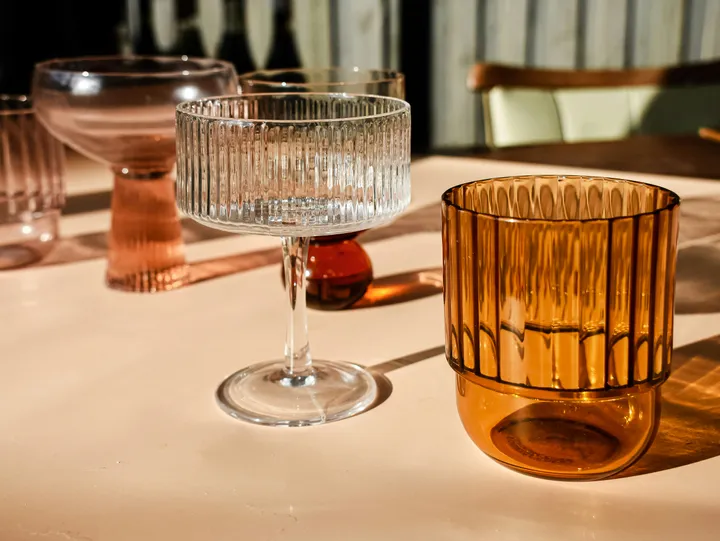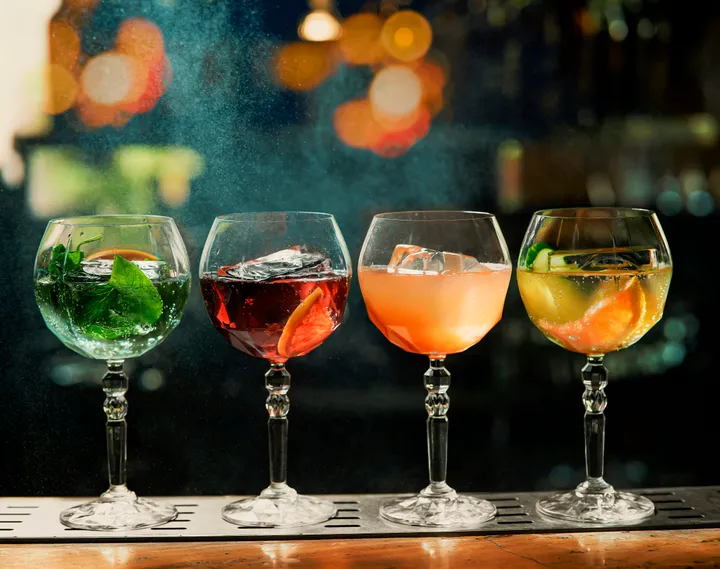
If you’re shopping for martini glasses, the honest opening: you might want coupes instead. Many bartenders do. Below, what a martini glass actually is, when it’s the right call, and which 3 sets we’d buy at every budget.
TL;DR: the quick answer
- A martini glass is a stemmed V-shaped cocktail glass, traditionally 4-6 ounces.
- What goes in it: martinis (gin or vodka), cosmopolitans, and most “up” cocktails.
- The honest catch: bartenders generally prefer the coupe glass for sip experience and stability. Coupes work for nearly all the same drinks and look better at a 6-person dinner.
- When a martini IS right: when you want the visual drama, when you’re hosting “martini night,” when the cocktail is the point.
- What to buy: skip anything over 8 oz. Look for 5-7 oz capacity, sturdy stem, dishwasher-safe.
- Our picks: Schott Zwiesel for budget, Riedel Vinum for the workhorse, Richard Brendon if you’ll keep them for life.
What is a martini glass, exactly?
A standard martini glass holds 4 to 12 ounces, with 5 to 7 ounces as the sweet spot for home use. A classic martini is a 3-ounce pour and a generous modern pour is 4 ounces, so a 5 to 7 ounce glass fits either with room for an olive and no spill risk.
A martini glass is a stemmed cocktail glass with a sharp V-shaped bowl. The cone of the bowl rises straight from the stem to a wide rim, usually 5 to 7 inches across at the top, holding 4 to 12 ounces.
The shape became iconic in the 1920s as the standard glass for a martini, then expanded to “any cocktail served up”, cosmopolitans, sidecars, pisco sours. The V-shape does three things well: it shows off the drink, releases aromatics, and keeps garnishes (olive, twist) visible at the surface.
It does one thing badly: hold liquid steady. Any pour over about 3 ounces will slosh out of a tilted V-glass. Modern bartenders have responded by using coupes more often than martini glasses, even for actual martinis.
Why the V-shape (and why bartenders complain about it)
The V-shape made sense in the era of the small, stiff cocktail. A 1920s martini was 2.5 ounces of gin, a quarter ounce of dry vermouth, and an olive. Fits in a 4-oz glass with no spill risk.
By the 1990s, “martini” had drifted to mean any flavored vodka cocktail in a V-glass, and bars started serving them at 6 to 8 ounces. The glass’s design didn’t change, but the drinks did. Result: spilled cocktails everywhere, and a generation of bartenders who privately wish you’d ordered something in a coupe.
You’ll notice this if you watch a serious cocktail bar in 2026: most martinis arrive in coupes or Nick & Noras, even when ordered “in a martini glass.”
How it differs from a coupe
A martini glass is a sharp V. A coupe is a rounded half-sphere on a stem. Both are “up” cocktail glasses (no ice in the glass, drink served chilled). But they handle differently:
- Martini glass: dramatic visual, unstable, easy to spill, narrow base of liquid means the drink warms quickly in your hand
- Coupe: subtle visual, stable, harder to spill, wider base of liquid means the drink stays cold longer
If you’re choosing one shape for your home bar, the coupe is the better tool for almost every cocktail except a few showy variants. Full breakdown in our coupe glasses guide.
How it differs from a Nick & Nora
The Nick & Nora is the third “up” cocktail glass, named after the Thin Man movie characters. It’s a small (4-5 oz), stemmed, tulip-shaped glass with curved sides that taper inward at the top.
It’s the bartender’s actual favorite. The narrow rim concentrates aromatics. The small capacity matches a properly proportioned 3-oz cocktail. The stable base prevents spills. The downside: it looks like a delicate sherry glass, which doesn’t read as “cocktail” to guests who don’t know the reference.
Most home bars don’t need Nick & Noras. We mention them because they’re showing up on cocktail menus and you should know what you’re being served.
Martini glass vs. coupe vs. Nick & Nora: which to use when
| Martini glass | Coupe | Nick & Nora | |
|---|---|---|---|
| Bowl shape | Sharp V-cone | Rounded half-sphere | Small tulip with curved sides |
| Typical capacity | 5-10 oz (often too big) | 5-7 oz | 4-5 oz |
| Stability | Tippy | Stable | Most stable |
| Spill risk | High at >3 oz | Low | Very low |
| Visual drama | Highest | Subtle/classic | Lowest |
| What bartenders use | Rarely | Often | Most often |
| Best for | Visual occasions, “martini night,” the photo | Most cocktails, day-to-day | Properly proportioned classics |
If you’re buying one shape for your home bar, the coupe is the right call. If you’re buying two, add the Nick & Nora before the martini glass. Add the martini glass third, for the occasional drama.
When a martini glass is actually the right call
The case against martini glasses is real, but the case for them is also real:
- You’re hosting “martini night.” A V-shape on the bar tells guests what they’re walking into. The drink is the point; the spill risk is part of the deal.
- The drink is genuinely small. A classic 3-oz dry martini in a 5-oz V-glass looks proportional and won’t spill at a normal pour.
- You want the photo. Cocktails styled in V-glasses photograph better. If you post drink shots, this is a real consideration.
- The aesthetic matters. Some kitchens, bars, and dining rooms work with the V-shape’s sharp lines. Mid-century, art-deco, or any modernist setting reads better with martini glasses than coupes.
- You only host occasionally. If you’re buying 6 glasses for 2 dinner parties a year, the drama factor of a V-shape might be worth more than the sip experience.
If none of these apply, get coupes.
What to look for when buying martini glasses
The shape is the same across brands. The differences are in the details.
Size: 5-7 oz is the sweet spot
This is where most retail martini glasses go wrong. Walk into Crate & Barrel and the “martini glasses” are often 9-12 oz. Those are designed to hold a “modern” supersized martini, which is a watered-down 1990s holdover.
A correctly proportioned classic martini is 3 oz. A generous modern pour is 4 oz. Either fits in a 5-7 oz glass with room for an olive without sloshing.
If the glass is over 8 oz, your martini will look meager and be hard to carry. Skip it.
Stem: stable base wins
Long, delicate stems look elegant in product photos. They snap during dishwasher cycles and in clumsy hands. A 3-inch stem with visible thickness at the join is the right balance of look and durability.
The base diameter matters too, wider = more stable. If the base is the same width as a quarter, the glass will tip if anyone bumps the table.
Bowl shape: the angle of the V matters
A wider, shallower V (closer to a triangle) shows off a small drink and looks more dramatic. A narrower, deeper V (closer to a tulip) holds liquid more securely and looks more conservative.
For most home use, lean toward the narrower V. It’s the version most people will actually enjoy drinking from.
Material: glass vs. crystal vs. plastic
- Soda-lime glass (most affordable martini glasses), durable, dishwasher-safe, the right pick for everyday use
- Crystal, refracts light beautifully, often hand-wash only, breakage rate higher. Worth it if you’ll use them carefully and rarely.
- Plastic, fine for outdoor / pool / patio use only. Indoor plastic martini glasses look cheap and the rim doesn’t feel right at the lip. Skip for any real hosting.
Stemless martini glasses: when they make sense
Stemless martini glasses are essentially a V-shape on a small base instead of a stem. Newer trend, mostly modern bars. They’re more stable than stemmed (no spill risk), easier to hand-wash, and more compact in storage. They also lose the dramatic stemmed-glass silhouette that makes martini glasses worth buying in the first place.
Buy stemless if: you’re hosting outdoors often, you have small kids around the kitchen, or you genuinely prefer the modern look. Buy stemmed if: you want the traditional reason for a martini glass to exist.
Our picks (budget, mid-tier, splurge)
We weren’t able to test 11 sets the way Food & Wine did. The three below are well-regarded across multiple tested reviews and stand up to the criteria above (5-7 oz capacity, sturdy stem, dishwasher-safe).
Best budget: Schott Zwiesel Bar Special (~$10/glass)
Made of “Tritan” reinforced crystal, Schott Zwiesel’s specialty. Dishwasher-safe, surprisingly hard to break, and at 6.7 oz they’re right in the size sweet spot. This is the workhorse pick for someone who wants a real martini glass without spending real money. Available at most kitchen retailers and on Amazon.
Best mid-tier: Riedel Vinum Martini (~$30/glass)
Riedel’s reputation in glassware comes from their wine glasses, but their Vinum martini is the standard. 7.4 oz capacity (slightly larger than ideal but not absurd), thin rim, lead-free crystal that’s actually dishwasher-safe (uncommon for crystal). This is what you buy if you’ll use them weekly and want them to last 10 years. Direct from Riedel or via Williams Sonoma.
Best splurge: Richard Brendon Cocktail Glass (~$70/glass)
Lead-free crystal, hand-blown in Europe, 5 oz capacity (the right size). Sharp enough lines to be the centerpiece of a bar without feeling fussy. Dishwasher-safe with care. Buy these if you’ll have them for life, photograph cocktails for any reason, or genuinely care about glassware as objects. Direct from Richard Brendon.
A note that cheap can be honest
A $5 IKEA martini glass works. We’ve used them. The Schott Zwiesel is better, but if all you need is “a glass in the right shape,” IKEA is fine. Spend the difference on what’s in the glass.
A note on espresso martini glasses
Espresso martini glasses are martini glasses with a slightly different bowl, usually a flatter bottom and a wider, shallower V. The flat bottom is to prevent the espresso from compressing into a single tight layer at the bottom; the wider V gives the foam (which is the showpiece of an espresso martini) room to breathe.
If espresso martinis are your go-to drink: get a pair of these specifically. The standard martini glass works, but the foam settles faster and the photo looks worse.
If espresso martinis are an occasional thing: a regular martini glass or a coupe is fine.
What to skip
- 10-14 oz “fishbowl” martini glasses. Looks dramatic empty. Makes a 4-oz cocktail look depressing. Skip unless you specifically want a giant visual.
- Paper-thin crystal if you have a dishwasher. Most lead crystal is fine; very thin hand-blown crystal will crack in a year of dishwasher cycles. If you must have crystal, plan to hand-wash.
- Plastic martini glasses for any indoor use. They flex at the rim, the lip-feel is wrong, and the drink reads as “kid’s plastic cup.” Save plastic for the pool.
- Vintage martini glasses if your typical pour is over 3 oz. Genuine vintage glasses are usually 3-4 oz and won’t hold a modern pour. They’re great for properly proportioned classics; not great for “I want a generous drink.”
- A full set of 12 if you’ll only host martinis a few times a year. Buy 4-6. Two sets of 4 in different styles is more flexible than one set of 12.
- Buying martini glasses before coupes. Coupes are more useful, more stable, and work for almost every cocktail martini glasses do. Build the home bar in this order: rocks → coupe → highball → martini glass (only if you want the drama).
A short FAQ
What kind of glass do you use for a martini? A martini glass (V-shape) traditionally, but most modern bartenders prefer a coupe (rounded shallow bowl) or Nick & Nora (small tulip). All three work, pick based on your sip preference and how often you spill.
Why are martini glasses the shape they are? The wide V shows off the drink, releases aromatics, and keeps olives visible. The downside: any pour over 4-5 oz is hard to carry without spilling, which is why modern bars often use coupes instead.
What’s the difference between a martini glass and a coupe? Bowl shape. Martini = sharp V. Coupe = rounded half-sphere. Coupes are more stable, less prone to spills, and most bartenders prefer them. Martini glasses are more dramatic.
Why never 2 olives in a martini? Bartender tradition, olives go in odd numbers (one or three, never two). Visual balance, plus an old superstition about even numbers. Functionally, two olives also don’t sit cleanly on a pick.
Are martini glasses dishwasher safe? Most affordable thicker-walled options (Schott Zwiesel, Libbey) are. Most lead crystal and very thin hand-blown glasses are not. Check the spec sheet and prioritize a dishwasher-safe set over a fancier one that has to be hand-washed.
How a martini glass actually fits into a home bar
The honest “buy in this order” recommendation for cocktail glassware:
- Rocks glasses (Old Fashioned), the most-used cocktail glass. Stirred drinks on ice (old fashioned, negroni, whiskey on the rocks).
- Coupes, covers virtually every “up” cocktail you’d want to make.
- Highballs, gin and tonics, mules, Tom Collins.
- Martini glasses, only if you specifically want the drama. Skip if you don’t.
- Nick & Noras, the bartender’s favorite, but you can wait until you’ve made cocktails for a few years before adding them.
If you bought just rocks + coupes, you’d cover 80% of cocktails ever ordered at your house. The martini glass earns its space if you specifically host cocktail-forward dinners or you love the V-shape’s silhouette enough to keep it around.
For the full home-bar build (the 8 bottles, 4 tools, 6 mixers we’d start with), see our home bar guides. For non-alcoholic versions of the cocktails that traditionally fill a martini glass, our vodka mocktails guide covers the non-alc dirty martini using Lyre’s. To see where the martini glass fits among everything else, our guide to the types of cocktail glasses you actually need ranks the full lineup, and the highball glass and whiskey glasses guides cover the everyday tumblers you will reach for more often. Beyond cocktails, the best wine glasses and types of beer glasses guides cover the wine and beer sides of the same shelf.
If you’re hosting and the cocktail is part of the meal, our guide to how to host a dinner party covers the broader 5-day plan, drink math, and day-of timeline that the martini fits into.