Most whiskey glassware articles list eight to twelve glass types and tell you that each one optimizes for a different aroma compound. This is true. It’s also useless if you have a closet of normal size and don’t run a distillery.
Here’s what’s actually true: you need three whiskey glasses to cover ~95% of how whiskey is consumed at home. A Glencairn for tasting and neat pours. A rocks glass for whiskey on the rocks and cocktails like the Old Fashioned. A Highball for taller mixed drinks. That’s the system.
This guide walks through each of the three, explains why the others (snifters, NEAT glasses, Glencairn Canadian, Copita variations) are not necessary for any normal drinker, and answers the questions Google’s PAA module is full of.
TL;DR
- For tasting and neat pours: Glencairn glass (the tulip-shaped one).
- For ice and the Old Fashioned: rocks glass (also called Double Old Fashioned, or DOF).
- For tall cocktails: Highball glass.
- Three glasses, not twelve. Buy four to six of each.
- Crystal vs. glass: crystal looks nicer and feels heavier. The whiskey doesn’t taste different. Skip crystal unless you’re using it for guests you want to impress.
- Skip: the snifter (wrong for whiskey), the NEAT glass (gimmicky), the Glencairn Canadian (a Glencairn variant for blends, unnecessary).
The proper glass for whiskey (and the Glencairn answer everyone misses)
The standard whiskey glass is called a rocks glass, also known as an Old Fashioned or lowball glass: a short, heavy tumbler holding 10 to 12 ounces. The tulip-shaped glass for tasting whiskey neat is called a Glencairn. Rocks and Old Fashioned are two names for the same glass.
The most-asked question on whiskey glasses is “what’s the proper glass for whiskey,” and the most-cited answer is the Glencairn. That’s correct, but only if you’re tasting whiskey neat. The proper glass for whiskey depends entirely on how you’re drinking it.
- Neat (no ice, no mixer): Glencairn or another tulip-shaped tasting glass. The narrowed rim concentrates aromas; the wide bowl lets you swirl.
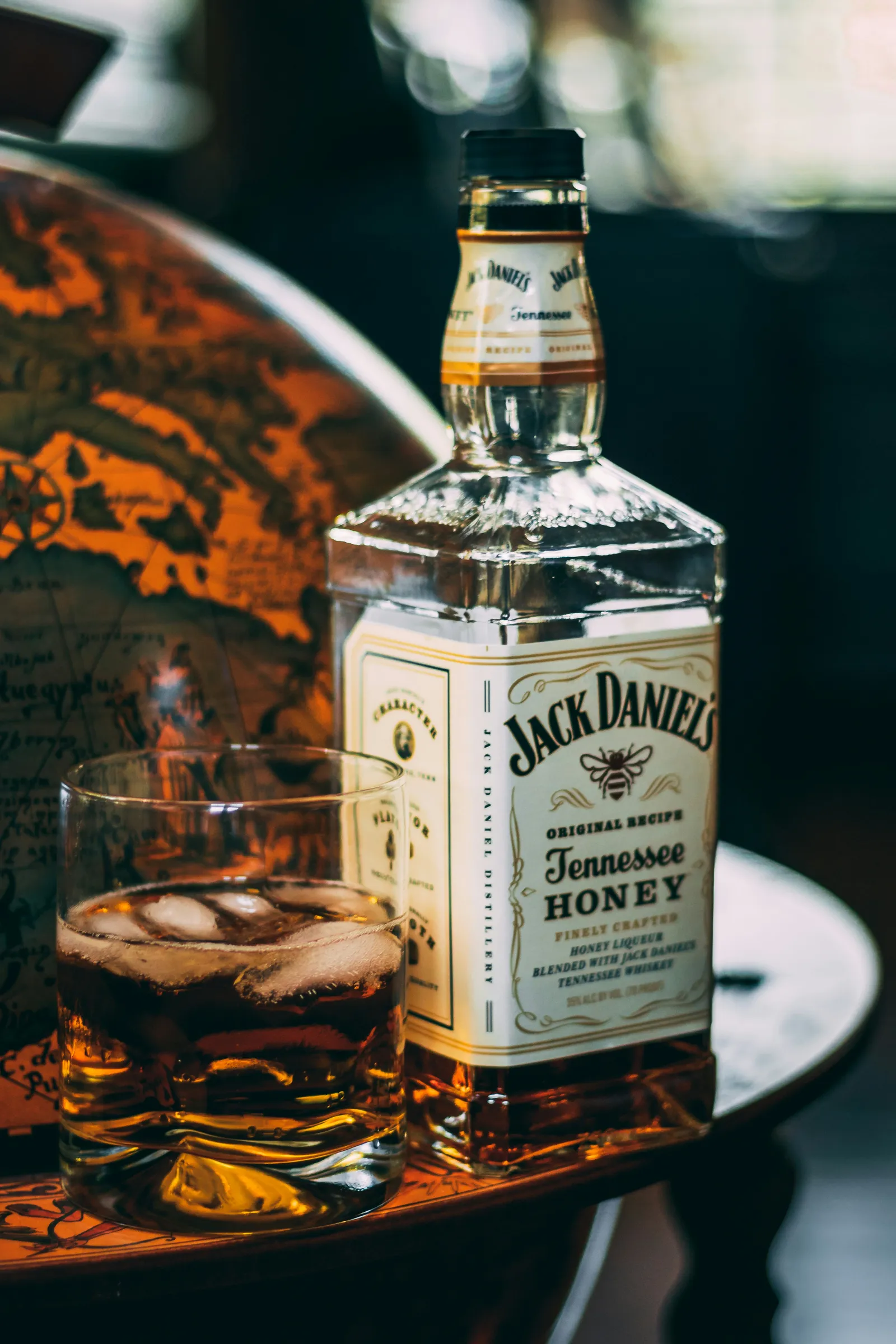
- On the rocks (whiskey + ice): rocks glass. The wide opening lets you smell over the ice; the heavier weight feels right for a slower drink.
- In a cocktail (Old Fashioned, Manhattan-on-the-rocks, Sazerac): rocks glass for short cocktails, Highball for taller ones (Whiskey Soda, Whiskey Ginger, Mint Julep variants).
- In a Highball or sour with mixers: Highball glass.
A Glencairn is the right glass for tasting because of the shape, not because it’s marketed as a whiskey glass. The same shape is used for Scotch, bourbon, rye, Irish whiskey, Japanese whisky, and even rum and tequila tasting. The shape is universal across spirits people sip neat.
Glass #1: The Glencairn (for tasting and neat pours)
The Glencairn is the standard. It was designed by the Scotch whisky industry in the 1990s as an aroma-optimized tasting glass. The shape: a wide tulip bowl that tapers to a narrowed rim, on a short, stubby base.
Why the shape works
The wide bowl gives the whiskey room to breathe. The narrowed rim concentrates aromatic compounds, sending them up to your nose in a focused stream rather than dispersing them sideways. The short stubby base lets the glass sit stably on a table without a long stem to break.
If you’ve ever wondered why whiskey “smells like nothing” in a regular tumbler, this is why. The wide opening of a tumbler lets the alcohol vapors disperse before reaching your nose. The Glencairn fixes that.
When to use it
Pour whiskey neat, no ice, no water, and use the Glencairn for any of these:
- A new bottle you want to taste before deciding what to do with it
- A premium whiskey you want to actually enjoy (anything you spent $60+ on, neat is the way)
- A side-by-side tasting between two whiskeys
- The before-or-after-dinner sipping pour
A few drops of room-temperature water (not ice) opens up most whiskeys at cask strength (anything over 50% ABV). A Glencairn is the right glass for that, too.
What to buy
The original Glencairn glass, made in Scotland by Glencairn Crystal, is the gold standard. About $10-15 each in singles, $25-30 for a set of two with a small wooden stand. The branded version is the only one worth buying; the off-brand “tulip glasses” on Amazon are usually thicker, which dampens the aroma effect.
For a home bar: 4 glasses is enough. You will rarely have more than 3 people doing a side-by-side neat tasting. If you do, buy 6.
What about the Glencairn Canadian, the Copita, or the NEAT glass?
- Glencairn Canadian: A taller version made for Canadian whiskies and blends. The shape difference is minor. Skip unless you’re a serious blends drinker.
- Copita-style nosing glasses: Small wine-shaped tasters used in distilleries for QC. They work fine but a Glencairn does the same job with better hand-feel. Skip.
- NEAT glass: A patented glass with a wider rim designed to “remove ethanol burn.” Real reviews are split; many tasters find it strips aromatic complexity along with the burn. Skip for normal drinking; consider if you’re cask-strength tasting and find ethanol overwhelming.
For 99% of drinkers, the original Glencairn is all you need.
Glass #2: The rocks/Old Fashioned (for ice and cocktails)
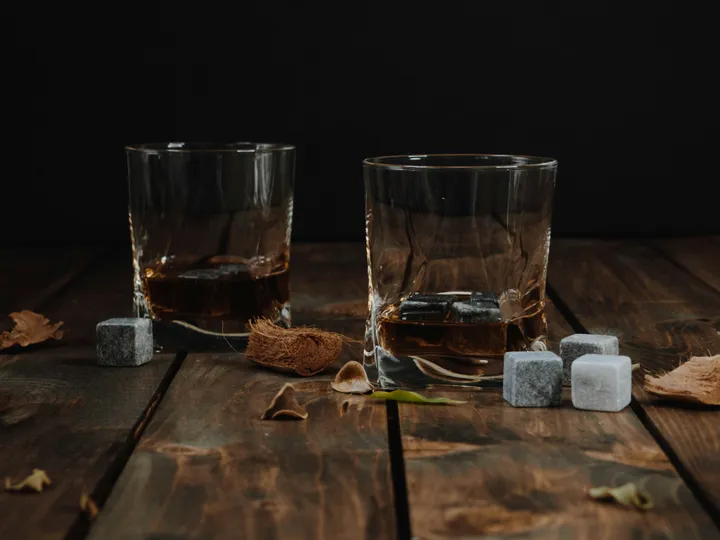
The rocks glass is the workhorse of whiskey drinking at home. Heavy, thick-walled, wide-mouthed, low-profile. Same glass for whiskey on the rocks, the Old Fashioned, the Manhattan-on-the-rocks, the Sazerac, the Boulevardier, and the Whiskey Sour served on the rocks.
Why the shape works
The wide mouth gives you room for ice, a single large cube, two smaller cubes, or crushed ice depending on the drink. The thick base feels intentional in the hand and resists chipping when you set the glass down on stone or wood. The low profile makes the drink feel close, contained, contemplative.
The standard size is the Double Old Fashioned (DOF), holding 10-12 oz. Most “rocks glasses” sold today are DOFs, regardless of what the box says. The original single Old Fashioned (6 oz) is now rare and arguably too small for the standard 2.5 oz cocktail with one large ice cube.
When to use it
- Whiskey on the rocks (whiskey + ice, no mixer)
- Old Fashioned (the cocktail this glass is named for)
- Manhattan on the rocks (it’s classier in a coupe glass straight up, but on the rocks it goes here)
- Negroni, Boulevardier, Sazerac, all the brown-and-bitter classics
- Whiskey Sour (when served on the rocks; up versions go in a coupe)
- Any time you want a low-volume, high-proof drink to feel substantial
What to buy
Rocks glasses range from under $5 each at restaurant supply stores to $100+ for hand-cut crystal. The honest middle ground:
- Budget ($3-8 each): Libbey Lexington, Anchor Hocking, generic restaurant-supply DOFs. Functional and indestructible.
- Mid ($15-25 each): Schott Zwiesel, Spiegelau, Riedel. Crystal-clear, dishwasher-safe, slightly thinner walls. The price increase is mostly noticeable in the hand.
- Splurge ($40-100 each): Tom Dixon Tank, Nude Glass, hand-cut Waterford. Now you’re buying a sculpture that holds bourbon. Worth it for guests; not worth it for daily use because they break.
For a home bar: 6 glasses. This covers a dinner party of four where two people want a whiskey before dinner, two want one after, and you have spares for spills or breakage.
The single biggest upgrade most people can make is buying one nice rocks glass and using it as their personal everyday glass. The everyday upgrade matters more than the guest collection.
Glass #3: The Highball (only if you make cocktails)
The Highball is the tall, straight-sided glass that holds about 10-14 oz. Same glass for the Whiskey Highball, Whiskey Soda, Mojito, Tom Collins, and any other tall cocktail with a spirit-and-mixer base (the Collins is just its slightly taller twin, as our highball vs collins glass guide explains).
Why the shape works
Tall and narrow keeps the carbonation in mixers from going flat as fast. The straight sides display layered drinks (Mojito with mint and lime visible, an Espresso Martini in a Highball when crowded). Easy to hold even when full of ice.
When to use it
- Whiskey Highball (whiskey + soda water + lemon peel, Japan’s contribution to whiskey drinking)
- Whiskey Soda, Whiskey Ginger, Whiskey 7 (Seven & Seven)
- Mojito, Tom Collins, Cuba Libre, non-whiskey cocktails that share the format
- Long iced tea drinks, virgin highballs, any tall mixed drink
Do you need them?
Only if you make highballs at home. If your whiskey routine is “neat or on the rocks,” skip Highballs and use a tall pint glass for the rare highball. If you’re moving toward Japanese-style whiskey highballs (which is one of the best ways to drink whiskey, full stop), get four Highball glasses and never look back.
What to buy
- Budget: Libbey Highballs ($3-5 each)
- Mid: Schott Zwiesel, Spiegelau ($12-18 each)
- Splurge: the same Riedel and Nude Glass options as for rocks glasses
Four glasses is enough. The Highball is the cocktail glass you reach for second-most after the rocks; rare to need more than four at a time.
Glasses you don’t need
The whiskey glassware market is full of niche shapes designed for specific aroma profiles. Most are unnecessary for any home drinker. Here’s the honest list of what to skip.
- Snifter: the bowl-and-stem brandy glass. Often pictured with whiskey in old movies, but the wide bowl actually disperses aromas (bad for whiskey) while concentrating ethanol vapor (also bad). Use it for brandy or aged rum.
- NEAT glass: the patented “ethanol-removing” glass. Polarizing reviews; many tasters find it strips good aromas with the bad. Skip unless you’re specifically cask-strength tasting and find normal glasses overwhelming.
- Twist or thumbprint glasses: decorative variations on the rocks glass. Fun visual; same function. Buy if you like the look, skip if you’re optimizing.
- Liqueur glasses, cordial glasses, Norlan Whisky glass: not unnecessary, but not first-purchase. The Norlan in particular is well-engineered with a unique double-walled shape, but it costs $50 for a glass that does what a Glencairn does.
- Whiskey stones: technically not glassware, but worth flagging here: stones cool whiskey less than a single ice cube and add nothing in flavor. Most serious drinkers prefer a single large ice cube (which melts slowly and adds water gradually, opening the whiskey) or no ice at all.
If your drawer has the Glencairn, the rocks glass, and the Highball, you can drink any whiskey in any common style.
Crystal vs. regular glass: does it matter?
The honest answer: not for the whiskey itself.
Crystal contains lead oxide (or a modern lead-free alternative like Schott Zwiesel’s Tritan), which makes it harder, clearer, and more refractive than soda-lime glass. Crystal can be cut into more intricate patterns, holds an edge longer, and rings when you tap it. The whiskey tastes the same.
Where crystal earns its price:
- Hand-feel: crystal is denser, so a crystal rocks glass weighs more in the hand. Some drinkers love this. Some don’t notice.
- Visual: cut crystal refracts light, making whiskey look like it’s glowing. Real benefit if you care about presentation, especially for guests or photos.
- Durability: modern lead-free crystals (Tritan, Sparkx) are dishwasher-safe and chip-resistant, often more so than soda-lime glass.
Where crystal does not earn its price:
- Flavor: no measurable difference. Anyone who tells you whiskey tastes better in crystal is reporting placebo or romanticism.
- Aroma: the shape of the glass matters; the material does not.
For an everyday home bar, mid-tier soda-lime glass (Libbey, Anchor Hocking) is the right choice. For a guest collection or a single nice glass for yourself, crystal earns its keep.
Should whiskey glasses be thick or thin?
The PAA snippet question. The answer depends on the glass type.
- Tasting glasses (Glencairn, Copita): thin. The thinness keeps the glass visually light so it doesn’t intrude on the experience, and reduces heat transfer from your hand to the whiskey (which would warm it past optimal tasting temperature).
- Rocks glasses: thick walls and heavy base. Function: the weight feels intentional and balanced; the thick base resists chipping; heat transfer matters less when there’s ice in the glass cooling the whiskey.
- Highballs: medium-thick walls. Cold mixers benefit from a glass that doesn’t transfer heat too fast, but the glass needs to be light enough to drink from comfortably.
The very thin, very light “whiskey glasses” sometimes sold in sets are usually compromise designs, too thin to feel solid as rocks glasses, too thick to be ideal tasters. Skip those; commit to a real Glencairn or a real rocks glass.
Budget tiers: what to actually buy
Three full setups depending on commitment level. All cover the three-glass system.
Tier 1: Starter ($50-70 total)
- 4× Glencairn glasses ($45-50 for a set)
- 6× Libbey Lexington rocks glasses ($25 for a set of 6)
- 4× Libbey Highballs ($15 for a set of 4)
Total under $100. Will outlast you if treated reasonably. This is the right setup for a first home bar and probably the only setup most people need.
Tier 2: Real home bar ($150-220 total)
- 4× Glencairn original ($45-50)
- 6× Schott Zwiesel or Spiegelau DOFs ($90-120)
- 4× Schott Zwiesel Highballs ($60)
Now you’re at the dishwasher-safe crystal tier. The rocks glasses feel meaningfully better in the hand without being fragile. This is what most cocktail-enthusiast home bars look like.
Tier 3: Splurge ($400+ total)
- 6× Glencairn or Norlan Whisky glasses ($45-300)
- 6× Tom Dixon Tank or Nude Glass DOFs ($240-400)
- 4× hand-cut Highballs ($120-200)
At this tier you’re collecting glassware. The drinking experience improves marginally; the visual experience improves significantly. Worth it if hosting is a regular and meaningful part of your life. Otherwise the budget tier delivers 90% of the experience for 25% of the cost.
Care and storage
Whiskey glasses last a long time if treated reasonably. A few rules:
- Hand-wash anything thin or expensive. Glencairns are technically dishwasher-safe but the rims chip; hand-wash with warm soapy water and a soft sponge.
- Air-dry upside down on a rack. Towel-drying leaves lint inside the glass that you’ll see when you next pour.
- Store right-side up if possible. Storing rocks glasses upside down on a shelf traps stale air; the glass smells off the next time you pour into it.
- No dishwasher detergent shock. Most chips and clouding come from hot water on cold glass or vice versa. Wait a beat between rinsing and drying.
A Glencairn that’s hand-washed and air-dried can last 10+ years. A rocks glass thrown in the dishwasher every night might last 2-3 before it gets cloudy or chips.
FAQ
What is the proper glass for whiskey?
For tasting whiskey neat: a Glencairn. For whiskey on the rocks or in cocktails: a rocks glass. There is no single “proper” glass for whiskey because whiskey is consumed in different ways. The proper glass depends on the use.
Should whiskey glasses be thick or thin?
Tasting glasses thin (less heat transfer, less visual weight); rocks glasses thick (weight, durability, presence in the hand). The thickness should match the use, not be a generic preference.
What kind of glass is good for whiskey?
The three-glass system: Glencairn for neat, rocks for ice and cocktails, Highball for tall mixed drinks. Owning all three covers ~95% of how whiskey is drunk at home.
Why do whiskey glasses have a thick bottom?
Function and aesthetics. The thick base adds weight (so the glass feels balanced and intentional), resists chipping when set down on hard surfaces, and reads visually as serious. The thin-walled, balanced-for-aroma rule applies to tasting glasses; the heavy, thick-bottomed rule applies to rocks glasses.
What’s the difference between a rocks glass and an Old Fashioned glass?
Nothing. Same glass. “Rocks glass” refers to whiskey-on-the-rocks; “Old Fashioned glass” refers to the cocktail. The technical industry name is the Double Old Fashioned (DOF), holding 10-12 oz. Most cocktail glasses sold today are DOFs.
Can I drink wine from a whiskey glass?
You can, but it’s not ideal. Wine wants a stem (so the wine doesn’t warm from your hand) and a wider bowl that closes at the top (so aromas concentrate). A rocks glass is too wide-mouthed and hand-warmed for wine. Use a wine glass for wine; the universal-glass approach doesn’t work for both.
What’s next
The whiskey glasses here are one corner of a bigger picture. When you are ready to buy, our best whiskey glasses roundup names the exact picks at every budget, including the gift answers. For the full lineup of glasses worth owning and which to skip, see our guide to the types of cocktail glasses you actually need. The highball glass and coupe glasses guides cover the other two everyday shapes, the types of beer glasses guide handles the beer side, the bar cart guide handles the rest of the setup, and our bourbon cocktail recipes give you something to actually pour into the rocks glass.