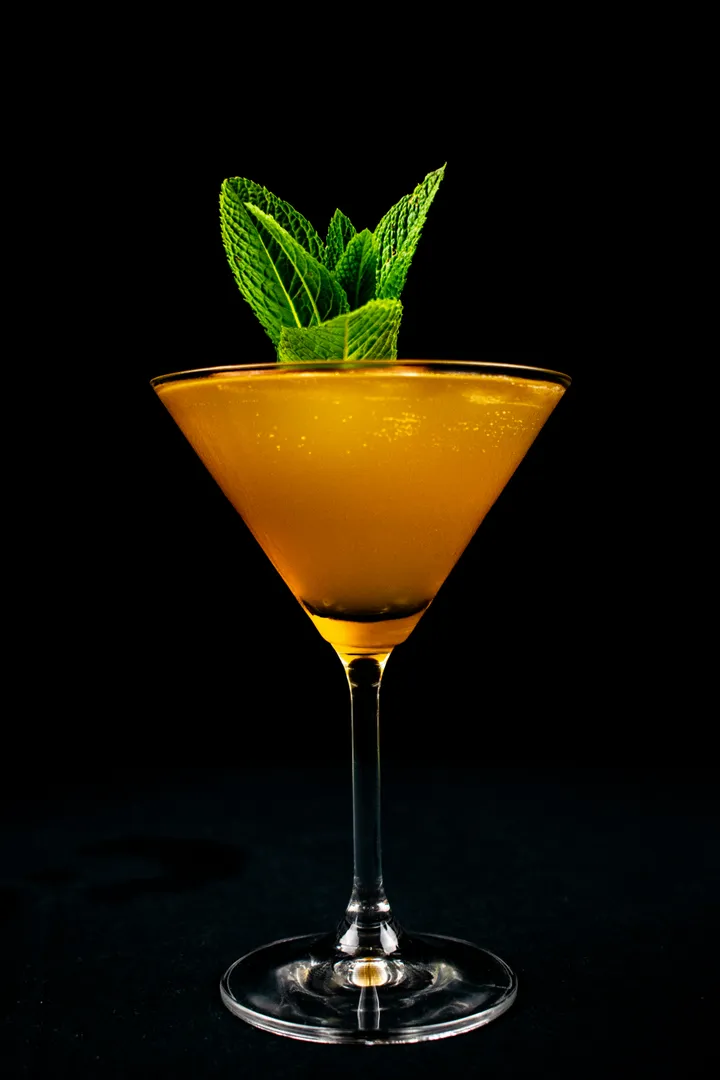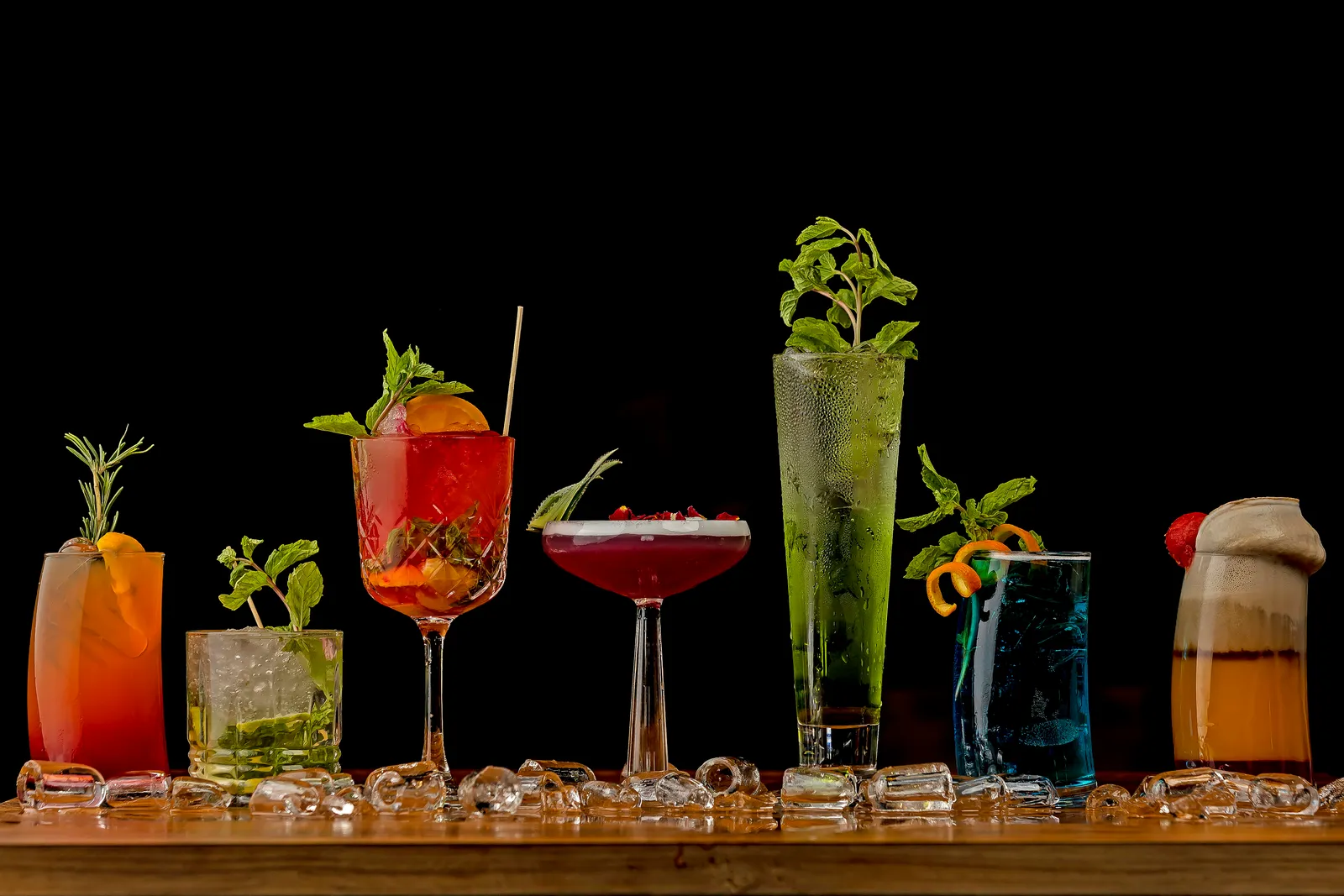
If you searched for “vodka mocktail,” you might mean one of two things, and that’s fine, because we’re going to cover both. Below: 6 recipes that actually taste like the cocktails they’re imitating, plus an honest take on which non-alcoholic vodkas are worth buying.
TL;DR: the two ways to do this
- Path A: virgin recipes, use ingredients (apple cider vinegar, strong citrus, tonic water) to mimic the flavor of a vodka cocktail without any alcohol substitute. Free, fast, works tonight.
- Path B: non-alcoholic vodka substitutes, use a bottle like Lyre’s Vodka, Ritual Zero Proof, or Spiritless Kentucky 74 the same way you’d use vodka. Costs ~$30/bottle but gives the closest approximation to the drinking experience.
- Both count as mocktails. Choose Path A for one-off hosting; choose Path B if non-alcoholic drinks are part of your regular rotation.
- The 6 recipes below cover both paths, plus the techniques behind them.
First, what is a mocktail (and why is “vodka mocktail” a thing)?
A mocktail is a non-alcoholic mixed drink built to mimic a cocktail in presentation, flavor, and complexity. The word itself dates from the 1970s; the category exploded in the 2010s with the sober-curious movement.
So why does “vodka mocktail” get 49,500 monthly searches when the term is technically a contradiction? Two reasons:
- People want a non-alcoholic drink that feels like the cocktail they’d otherwise order. When you usually drink vodka sodas, you don’t want a fruit smoothie, you want something that looks, smells, and tastes adjacent to what you’d normally have.
- The non-alcoholic spirit category is real now. Bottles like Lyre’s, Ritual, and Spiritless are bona-fide vodka substitutes. A drink made with them is a mocktail by definition (no alcohol) but functionally a cocktail.
We’ll serve both interpretations.
The “bite” trick: how to fake vodka without vodka
The single biggest reason most virgin drinks feel like juice instead of cocktails: they lack the bite that alcohol provides, that slight burn, the way the drink wakes up the front of your tongue.
There are two ingredients that mimic this almost perfectly:
- Apple cider vinegar (ACV), 1/4 to 1/2 teaspoon per drink. Don’t go higher; past about 3/4 teaspoon, you can taste the salad dressing. Used right, it gives the drink the same edge alcohol provides without any vinegar flavor.
- Strong citrus juice, fresh lemon or lime, in higher proportions than a typical recipe. The acidity does some of the work alcohol normally does.
Many of the recipes below use one or both. Once you’ve built two or three drinks with this technique, you’ll never need to follow a recipe again.
6 vodka mocktail recipes
Each makes one drink. Scale up as needed.
1. Virgin appletini
The crowd-pleaser. Sweet but balanced, looks polished in a coupe.
- 3 oz fresh apple juice or apple cider
- 1/2 oz fresh lime juice
- 1/4 oz maple syrup (or simple syrup)
- 1/4 tsp apple cider vinegar
- 2 oz tonic water (added last)
- Apple slice + lime twist for garnish
Combine apple juice, lime, syrup, and ACV in a cocktail shaker with ice. Shake 10 seconds. Strain into a chilled coupe glass. Top with tonic water. Garnish.
2. Virgin moscow mule
The non-alcoholic version of the classic copper-mug drink. Ginger does most of the heavy lifting.
- 4 oz good ginger beer (Fever-Tree or Bundaberg, not ginger ale)
- 1/2 oz fresh lime juice
- 1/4 tsp apple cider vinegar (optional but adds bite)
- A few mint leaves
- Lime wedge + mint sprig for garnish
Add lime juice, ACV, and mint to a copper mug or rocks glass with ice. Top with ginger beer. Stir gently (don’t shake, kills the fizz). Garnish.
3. Virgin cosmopolitan
Pink, snappy, looks great in a coupe. Tastes like the original within reason.
- 2 oz cranberry juice (the real cranberry, not the cocktail blend)
- 1 oz fresh orange juice
- 1/2 oz fresh lime juice
- 1/4 tsp apple cider vinegar
- 1/4 oz simple syrup (only if your cranberry is unsweetened)
- Lime twist for garnish
Combine all ingredients in a cocktail shaker with ice. Shake 10 seconds. Strain into a chilled coupe. Express a lime twist over the surface and drop it in.
4. Virgin lemon drop
The brightest of the bunch. The sugar rim is non-negotiable, it does a lot of work.
- 1 oz fresh lemon juice
- 3/4 oz simple syrup
- 1/4 tsp apple cider vinegar
- 4 oz sparkling water or club soda
- Sugar for the rim
- Lemon twist
Run a lemon wedge around the rim of a chilled coupe and dip it in sugar. In a shaker, combine lemon juice, syrup, and ACV with ice. Shake 10 seconds. Strain into the rimmed coupe. Top with sparkling water. Garnish with the lemon twist.
5. Non-alcoholic vodka soda
The simplest drink in the category and the one most likely to fool a vodka-soda regular.
- 1.5 oz Ritual Zero Proof or Lyre’s Vodka
- 4-5 oz cold soda water
- Lime wedge
Build in a highball glass over ice. Add the non-alc vodka first, then the soda water. Squeeze the lime wedge over the top and drop it in. That’s it.
This is the reference drink for testing whether a non-alc vodka is worth keeping. If the result tastes like seltzer with a lime, the bottle isn’t doing its job. Lyre’s and Ritual both pass.
6. Non-alcoholic vodka martini
For when you want the full ritual without the alcohol. Looks identical to the real thing.
- 2.5 oz Lyre’s Vodka
- 1/2 oz Lyre’s Aperitif Dry (the non-alc dry vermouth equivalent)
- 3 castelvetrano olives on a pick OR a long lemon twist
Combine the Lyre’s Vodka and Aperitif Dry in a mixing glass with plenty of ice. Stir 30 seconds (yes, full 30, this is what gives a martini its texture). Strain into a chilled coupe or martini glass. Garnish.
This is the closest a non-alcoholic drink gets to the original. It won’t fool a serious martini drinker, but for a host who wants a sober option that doesn’t feel like a downgrade, it’s the right move.
Choosing a non-alcoholic vodka (if you want the second path)
There are four real bottles competing for this slot. Here’s the honest read.
Lyre’s Vodka: most balanced (~$32)
The default pick. Lyre’s Vodka tastes the closest to actual vodka, neutral, slightly sweet, no off notes. Mixes cleanly into anything that uses vodka. Available at most well-stocked liquor stores and on Amazon. If you’re buying one bottle: this one.
Ritual Zero Proof: juniper-forward, more “white spirit” (~$28)
Ritual makes a “Vodka Alternative” that’s a touch more aromatic than Lyre’s, closer to the way a top-shelf vodka has a little character. Some people prefer it; others find the juniper edge confusing in a vodka cocktail. Try it if Lyre’s doesn’t work for you.
Spiritless Kentucky 74: actually whiskey-style
This one’s mis-shelved as a vodka substitute on a few sites. It’s actually a non-alcoholic whiskey. Skip for vodka drinks; consider it for old fashioned or whiskey sour mocktails.
Free Spirits “The Spirit of Gin” / “Vodka”: decent but harder to find
The bottles are good, particularly the gin alternative. Distribution is limited. Order online if your area carries it; don’t go out of your way otherwise.
A note on cost
Non-alcoholic vodka costs roughly the same as mid-shelf real vodka (~$30/bottle). For occasional non-alc drinks, this is a lot. For someone who’s actively non-drinking and entertains often, the math works out, it’s still cheaper than buying a bottle of real vodka and not drinking it.
Tips for making mocktails feel like real cocktails
This is what separates a credible mocktail from “juice in a glass.”
- Glassware matters most. Serve a virgin moscow mule in a copper mug. Serve the appletini in a coupe. The drink doesn’t change, but the experience does. (See our coupe glasses guide and the broader glassware section for what to keep stocked.)
- Garnish like you mean it. Every recipe above gets a real garnish, not a token. A lime wedge on the rim is the bare minimum. A lemon twist expressed over the surface is even better.
- Chill the glass. A room-temperature coupe makes a 50°F mocktail feel warm. Stick the glass in the freezer for 10 minutes before pouring.
- Use ice that’s actually cold. Ice from a freezer that’s only at 25°F (the default for many home freezers) melts faster and waters the drink down. Crank your freezer to 0°F and the ice does its job longer.
- Treat the host equal to the guest. If you’re serving alcohol to other guests, serve the mocktail in the same glass shape. It signals “you’re not getting the kid version”, which is the entire point of a mocktail program.
What to skip
- Shaking carbonated drinks. If a recipe calls for tonic, soda water, or ginger beer, build in the glass and stir gently. Shake first, then top with the carbonated ingredient. Skip this step and you’ll get a flat drink and a foamed-up shaker.
- Premade “mocktail” syrups and bottled drinks. Most are oversweet, overpriced, and taste industrial. The fresh recipes above cost a fraction and taste better.
- Virgin versions of cocktails where alcohol IS the point. A virgin negroni isn’t a thing, the bitterness of Campari is the drink. A virgin martini without a non-alc spirit substitute is just cold dry vermouth, which nobody wants. Pick mocktail formats where the alcohol was a flavor element, not the main event.
- Expecting non-alcoholic vodka to taste identical to vodka. It doesn’t. Set the right expectation: it’s adjacent to vodka, fills the same role in a drink, and is more interesting than seltzer. That’s the win.
- Adding too much apple cider vinegar. 1/2 teaspoon is the ceiling. Past that, the drink tastes like a salad. Start with 1/4 teaspoon if you’re new to the technique.
A short FAQ
Is vodka used in mocktails? By definition, no, a mocktail contains no alcohol. But “vodka mocktail” usually means either a virgin recipe that mimics a vodka cocktail’s flavor, or a drink made with non-alcoholic vodka (Lyre’s, Ritual, Spiritless). Both qualify.
What can I use instead of vodka in a mocktail?
Two paths. For mimicking the flavor: a small splash of apple cider vinegar (1/4 tsp) plus strong citrus. For mimicking the drinking experience: a non-alcoholic vodka substitute like Lyre’s ($32) or Ritual ($28).
How do I make a mocktail taste like alcohol? Replicate the bite (apple cider vinegar, strong citrus, or non-alc spirits) and replicate the depth (tonic water, non-alcoholic bitters, smoked garnishes). Glassware and garnish add a third layer.
Which non-alcoholic mocktail is best? Depends on what you usually drink. Vodka soda regulars get the closest experience from a non-alc vodka soda (Lyre’s + soda + lime). Cocktail drinkers who want flavor get more from a virgin appletini or virgin lemon drop. The best mocktail is the one that respects the person not drinking.
How vodka mocktails fit into hosting
Offering a real mocktail option, not just sparkling water with a lime, is one of the most underrated hosting moves of the last decade. According to Gallup’s annual consumption survey, roughly 36% of American adults describe themselves as total abstainers from alcohol. If you host friends regularly, at least one of them is in that group, plus another group who’s actively moderating but not abstaining.
Stock a single bottle of Lyre’s Vodka (or learn the apple-cider-vinegar trick), keep tonic and soda water in the fridge, and you can offer any guest a real-feeling drink without needing a separate menu. It costs less than one round of cocktails at a bar.
For more on building a flexible home bar that handles both alcoholic and non-alcoholic guests, see the home bar guides. For glassware that makes the drinks feel intentional, the glassware section covers what to keep on the shelf.
For the bigger picture, when, where, and how a non-alcoholic option fits into a real dinner-party menu, see our guide to how to host a dinner party, which covers the drink math (one bottle of wine per two guests, plus a non-alc option) in context.