The Lemon Drop is the most-searched vodka cocktail on the internet, and most published recipes get it wrong. They skip the triple sec (or use cheap supermarket grocery-brand orange liqueur). They use bottled lemon juice. They ignore the sugar-rim technique, or they put sugar on the inside of the glass where it falls into the drink.
This is the proper version. The recipe that bartenders actually make. The triple-sec question answered. The four variants people search for. And the technique secret that separates a drinkable Lemon Drop from a sweet-and-sour vodka shot in a fancy glass.
TL;DR
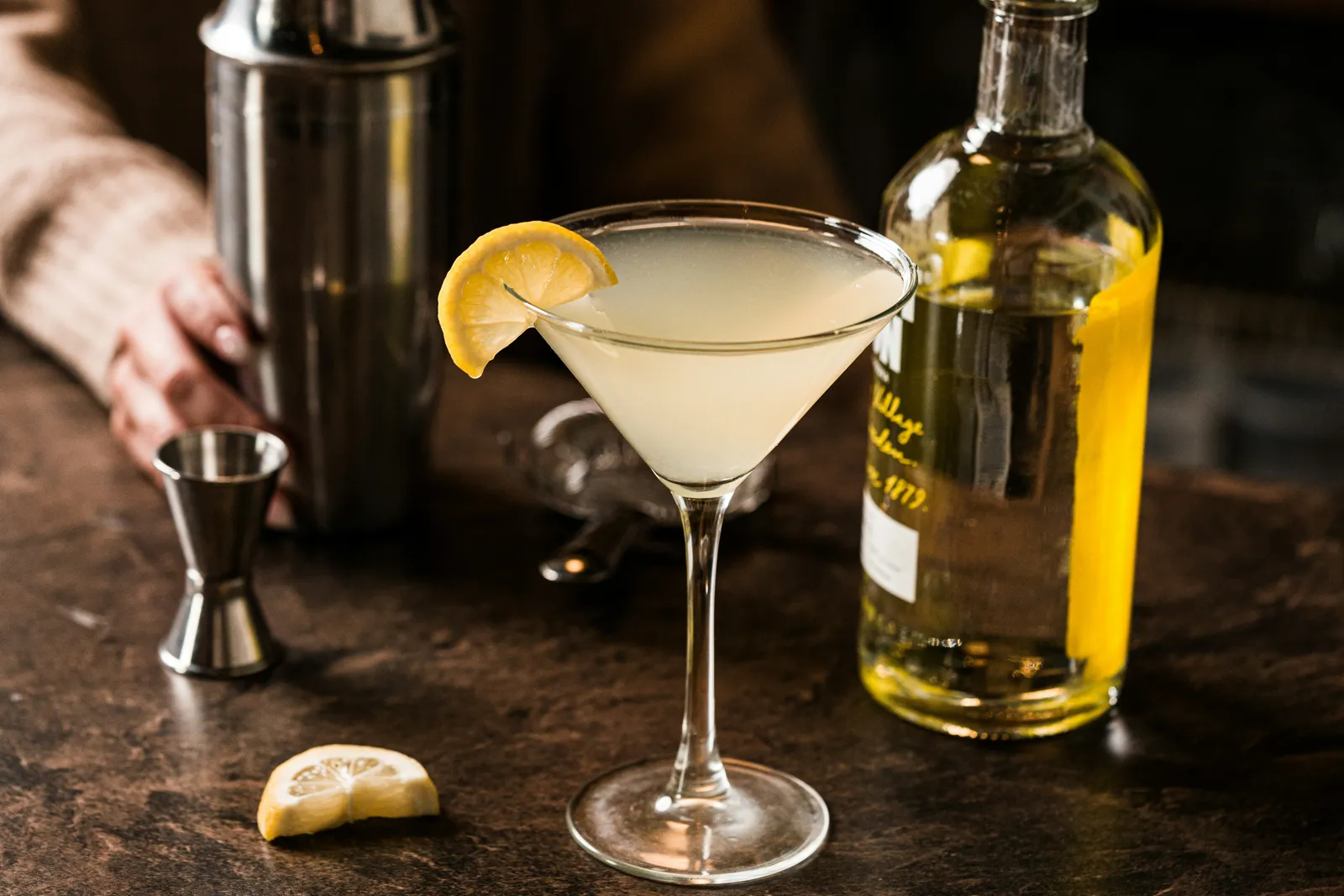
- The proper recipe: 2 oz vodka + 0.5 oz triple sec (Cointreau) + 0.75 oz fresh lemon juice + 0.5 oz simple syrup, shaken with ice, strained into a sugar-rimmed coupe.
- The triple sec matters. Skip the grocery-store orange “triple sec.” Use Cointreau ($35) or Grand Marnier ($45), they last forever and unlock dozens of cocktails.
- The 4 variants: Lemon Drop Martini (same drink, different name), Lemon Drop Shot (smaller, no triple sec, party format), Lemon Drop Spritz (tall, sparkling, summer-friendly), non-alcoholic Lemon Drop (with non-alc vodka).
- The technique secret: chilled coupe, fresh lemon juice, sugar rim on the OUTSIDE of the glass only. These three details make the drink.
What’s actually in a Lemon Drop
The classic Lemon Drop is a four-ingredient drink:
- Vodka, the spirit base
- Triple sec (Cointreau is the standard, Grand Marnier is the upgrade), the orange-liqueur layer
- Fresh lemon juice, the acid
- Simple syrup, the sugar
- Sugar rim, not optional
That’s the recipe. Four liquid ingredients, one garnish (sugar rim + lemon twist), one shaker.
The Lemon Drop’s appeal is the sweet-tart balance. Done right, it’s bright, zippy, sweet without being syrupy, with a citrus edge that makes you want a second sip. Done wrong (skipping the triple sec, using bottled lemon juice, dumping sugar in the cocktail instead of on the rim), it’s a sugary lemonade with vodka.
The proper recipe (the martini version)
Serves 1.
Ingredients:
- 2 oz vodka (a clean, mid-tier vodka, Tito’s, Stoli, or Reyka)
- 0.5 oz Cointreau (or Grand Marnier for a richer profile)
- 0.75 oz fresh lemon juice (one large lemon yields ~1 oz; you’ll have a little extra)
- 0.5 oz simple syrup
- Sugar (superfine, for the rim)
- Lemon wedge + lemon twist (for the rim and garnish)
- Ice
Method:
-
Chill the coupe. Put a coupe or martini glass in the freezer for at least 30 minutes before serving. A warm glass kills the drink in 90 seconds.
-
Sugar the rim (on the OUTSIDE only). Rub a lemon wedge around the outside edge of the chilled glass. Dip the wet outer rim into a small plate of superfine sugar. Set the glass aside.
-
Combine ingredients in a shaker. Add vodka, Cointreau, fresh lemon juice, and simple syrup to a cocktail shaker filled with ice.
-
Shake hard for 12-15 seconds. Long enough that the shaker frosts over. Don’t under-shake; this drink needs proper aeration.
-
Double-strain into the chilled coupe. Use a fine-mesh strainer along with the shaker’s built-in strainer. This keeps the small ice shards out and gives the drink a clean look.
-
Garnish with a lemon twist. Express the peel over the surface of the drink (gives off citrus oil), drop it in.
-
Serve immediately. A Lemon Drop sits at full quality for 5-7 minutes; after that, the dilution and warming starts to flatten it.
Do you need triple sec? (yes, here’s why)
The most-asked question in the Lemon Drop search universe. Short answer: yes.
The triple sec does three things vodka, lemon juice, and simple syrup cannot do alone:
1. It adds orange-peel complexity. Triple sec is made from bitter and sweet orange peels. The flavor is citrus, but it’s a different citrus than the lemon. Without it, the drink is one-note (lemon + sweet). With it, the drink has a top note (orange) and a base note (lemon).
2. It softens the alcohol burn. Triple sec is about 40% ABV but it’s been distilled with sugar, so it tastes softer than vodka. Adding 0.5 oz of triple sec to 2 oz of vodka brings the average ABV down slightly and rounds the harsh edges.
3. It thickens the texture. A drink with vodka + lemon juice + simple syrup is thin. Triple sec, with its slightly oily orange-peel character, gives the drink a tiny bit of body.
The triple sec hierarchy
Not all triple secs are equal. Three real options, in order of quality:
- Cointreau ($35-40, French, the gold standard). Clean, bright orange flavor. The right default for almost any cocktail that calls for triple sec.
- Grand Marnier ($45-55, also French, cognac-based). Richer, more complex, slightly sweeter. Good in Margaritas and Sidecars; works in a Lemon Drop where you want extra depth.
- Pierre Ferrand Dry Curaçao ($30-35, the bartender’s pick). Drier than Cointreau, more bitter-orange forward. Excellent in cocktails where you want the orange notes pronounced.
Skip: the grocery-store “triple sec” that sells for $9-12. It’s mostly orange-flavored neutral grain spirit with corn syrup. Tastes flat and slightly chemical. Ruins the drink.
A bottle of Cointreau lasts months at home and unlocks dozens of cocktails (Margarita, Sidecar, Cosmopolitan, White Lady, plus the Lemon Drop). It’s the most useful liqueur to keep on a home bar after vodka, gin, and bourbon.
The “secret” to a perfect Lemon Drop
The PAA snippet question. The honest answer: there are three small techniques most home bartenders skip.
1. The chilled coupe
A Lemon Drop served in a room-temperature glass dilutes too fast. The ice in the shaker melts during shaking; the drink hits the warm glass and starts warming further; by minute 3 the cocktail is watery.
Fix: put the coupe in the freezer 30 minutes before serving. If you’re hosting, put 4-6 coupes in the freezer when you start prepping. They’ll be ready when the drinks go out.
A frozen coupe holds the drink at proper temperature for the full 5-7 minutes someone takes to drink it. The difference is meaningful.
2. Fresh lemon juice (always)
Bottled lemon juice ruins more cocktails than any single other ingredient. The metallic, slightly chemical taste from the preservatives is unmistakable. A Lemon Drop with bottled lemon juice tastes like sweetened lemon-flavored water.
Fix: squeeze fresh lemons. One large lemon yields about 1 oz of juice. A bag of 5-6 lemons at the grocery store costs $3-5 and makes 6-8 cocktails.
The juice is best within 4 hours of squeezing; refrigerated, it holds 24 hours. After that, the brightness fades.
3. The sugar rim (on the outside only)
The most-skipped detail. Most home bartenders dip the entire rim of the glass into sugar, including the inside lip. When the drink is poured, the sugar on the inside lip washes into the drink, making it cloyingly sweet. The drink also looks messy.
Fix: rub the lemon wedge around the outside edge of the glass only. Dip just the outside lip into the sugar plate. The sugar sits on the outside of the rim, where the drinker’s lips meet the glass.
This way, the drinker tastes sugar on their lips for the first sip, then tastes the balanced cocktail. The sugar enhances the experience without sweetening the drink itself.
4 variants people search for
The Lemon Drop has spawned a small family of related drinks. Here’s what each variant does and when to use it.
The Lemon Drop Martini (vs. the Lemon Drop)
Functionally identical. Same ingredients, same ratios, same garnish. The difference is the name.
The original drink, invented at Henry Africa’s bar in San Francisco in the 1970s, was called the “Lemon Drop.” When the cocktail revival of the 1990s hit, “martini” became shorthand for any drink served in a V-shaped or coupe glass, so bartenders started calling it the “Lemon Drop Martini.” Both terms are correct.
If you order a Lemon Drop Martini at a bar and a Lemon Drop at a different bar, expect the same drink, possibly with a 0.25 oz variation in lemon juice or simple syrup based on the bartender’s preference.
The Lemon Drop Shot
A shrunken, shooter-format version of the Lemon Drop. Often served at parties or as a “shot” round at a bar.
Recipe:
- 1 oz vodka
- 0.25 oz triple sec (or skip)
- 0.5 oz fresh lemon juice
- 0.25 oz simple syrup
- Sugar rim on the shot glass (outside only)
- Garnish: a sugared lemon wedge for chasing
Method: combine ingredients in a shaker with ice, shake hard, strain into a sugared shot glass. Drink in one go; bite the lemon wedge as a chaser.
The shot version often skips the triple sec (because shots are about speed, not nuance), but adding it makes the shot meaningfully better.
The Lemon Drop Spritz
A taller, sparkling version, the summer-friendly format. Same ratio of base ingredients, but topped with sparkling water or sparkling wine for a long drink instead of a sip.
Recipe:
- 1.5 oz vodka
- 0.5 oz triple sec
- 0.75 oz fresh lemon juice
- 0.25 oz simple syrup
- 4 oz cold sparkling water (San Pellegrino) OR sparkling wine (prosecco)
- Crushed or full-cube ice
- Lemon wheel garnish, optional sugared rim
Method: combine vodka, triple sec, lemon juice, and simple syrup in a tall glass over ice. Top with sparkling water or prosecco. Stir gently. Garnish.
The Lemon Drop Spritz is a spring/summer drink. It works at brunch, garden parties, and outdoor cocktail hours. Less concentrated than the martini version, more refreshing.
The non-alcoholic Lemon Drop
A real non-alc version, made with non-alcoholic vodka.
Recipe:
- 2 oz non-alcoholic vodka (Lyre’s, Ritual Zero Proof, or Spiritless)
- 0.5 oz fresh orange juice + 2-3 drops orange-blossom water (substitute for triple sec)
- 0.75 oz fresh lemon juice
- 0.5 oz simple syrup
- Sugar rim, lemon twist garnish, ice
Method: standard Lemon Drop method. Shake hard with ice, strain into a sugar-rimmed coupe, garnish.
The drink loses the warming alcohol burn but keeps the bright lemon-orange-sweet balance. The orange-blossom water is the key substitute for triple sec, it adds the floral-citrus note that triple sec provides.
For more on non-alcoholic spirits and how to use them, see non-alcoholic spirits and mocktail recipes.
When to serve a Lemon Drop
The Lemon Drop is a versatile cocktail that fits most hosting contexts:
- Cocktail party. A Lemon Drop is approachable enough that almost any guest will drink one, sweet enough that non-cocktail-drinkers find it palatable, and pretty enough that it photographs well.
- Brunch. The Lemon Drop Spritz variant is the move at brunch. Sparkling, citrus-forward, light. Pairs with eggs.
- Birthday or celebratory dinner. A Lemon Drop in a chilled coupe with a sugared rim feels celebratory. The sugar rim alone reads as “this is a special drink.”
- Summer outdoor party. The Spritz variant for hot weather. The standard Lemon Drop Martini is too concentrated for outdoor heat.
- A pre-dinner cocktail at home. Two Lemon Drops while cooking dinner is the right amount, flavorful enough to feel like a real cocktail, not so heavy you can’t taste the food after.
For glassware: see coupe glasses (the historically correct vessel) and martini glasses (the modern alternative). The coupe is bartender-preferred; the martini glass works but spills more easily.
What to skip
A few patterns the Lemon Drop space has accumulated that don’t belong.
- Bottled “Lemon Drop mix” sold pre-made. Most are aggressively sweet, artificially flavored, and not recognizably the same drink. Skip.
- Yellow food coloring. Some recipes call for it. Real Lemon Drops are pale gold from the lemon juice and triple sec. Yellow food coloring makes the drink look like cleaning fluid.
- Margarita salt on the rim. A Lemon Drop has a sugar rim, not a salt rim. Mixing them up is a signature mistake.
- Adding triple-sec at a 1:1 ratio with the vodka. Some recipes call for 2 oz vodka + 2 oz triple sec. That’s a thick, sticky drink. The proper ratio is 2 oz vodka to 0.5 oz triple sec.
- Pre-batching with the lemon juice. Lemon juice oxidizes within 4-6 hours and goes bitter. Make Lemon Drops fresh, or batch the vodka + triple sec + simple syrup in a pitcher and shake the lemon juice in per-serving.
- The “frozen Lemon Drop” with crushed ice in a blender. A frozen drink for tequila and rum. Vodka cocktails lose all character when frozen. Skip.
- Vodka + powdered lemonade mix. A different drink entirely (closer to a Hard Lemonade). Don’t call it a Lemon Drop.
A short FAQ
What are the ingredients in a Lemon Drop?
Vodka, triple sec (Cointreau), fresh lemon juice, simple syrup. Standard ratio: 2 oz / 0.5 oz / 0.75 oz / 0.5 oz. Plus a sugar rim and lemon twist garnish.
Do you need triple sec for a Lemon Drop?
Technically yes. The triple sec adds orange-peel complexity that lemon and vodka can’t provide alone. You can substitute Grand Marnier or Pierre Ferrand Dry Curaçao at the same ratio. Skip cheap grocery-store triple sec; use Cointreau or better.
What’s the difference between a Lemon Drop and a Lemon Drop Martini?
Same drink, two names. The original 1970s name was “Lemon Drop.” The “Martini” suffix got added in the 1990s when the term became shorthand for any drink in a coupe or V-shaped glass. Bars use the names interchangeably.
What’s the secret to a perfect Lemon Drop?
Three details: chilled coupe (30 min in freezer), fresh-squeezed lemon juice, sugar on the OUTSIDE of the rim only. Skip any of these and the drink is meaningfully worse.
Can I make a Lemon Drop without triple sec?
You can, but the drink will taste thinner and one-note. If you’re without triple sec, substitute 0.5 oz of orange juice + 3 dashes of orange bitters (or Angostura). Closer to the right flavor profile than just skipping the orange element entirely.
How many calories in a Lemon Drop?
About 180-220 calories per cocktail, depending on simple syrup quantity. The vodka is ~110 calories, triple sec ~50, simple syrup ~30, lemon juice negligible. Sugar rim adds ~10-15 calories. For a lower-cal version, replace simple syrup with monk fruit syrup or skip it entirely (the drink will be more tart but still good).
Can I batch Lemon Drops for a party?
Yes, partially. Combine vodka, triple sec, and simple syrup in a pitcher (refrigerate, no ice). Shake the fresh lemon juice in per-serving. For 12 servings: 24 oz vodka + 6 oz triple sec + 6 oz simple syrup in a pitcher; squeeze 12 lemons fresh; shake one serving at a time. Keeps the lemon juice from oxidizing.
What vodka is best for a Lemon Drop?
A clean, mid-tier vodka. Tito’s ($25) is the workhorse. Stoli ($28) and Reyka ($30) are slightly cleaner. Top-shelf vodka (Grey Goose, Belvedere, Chopin) is fine but the difference disappears in a Lemon Drop because of the strong lemon and triple sec flavors. Don’t waste premium vodka in a Lemon Drop; save it for Martinis.
For broader vodka cocktail education, see vodka cocktail recipes and vodka mocktails. For the home bar setup that supports any of these drinks, see bar cart and cocktail shakers. For the right glass, see coupe glasses and martini glasses.