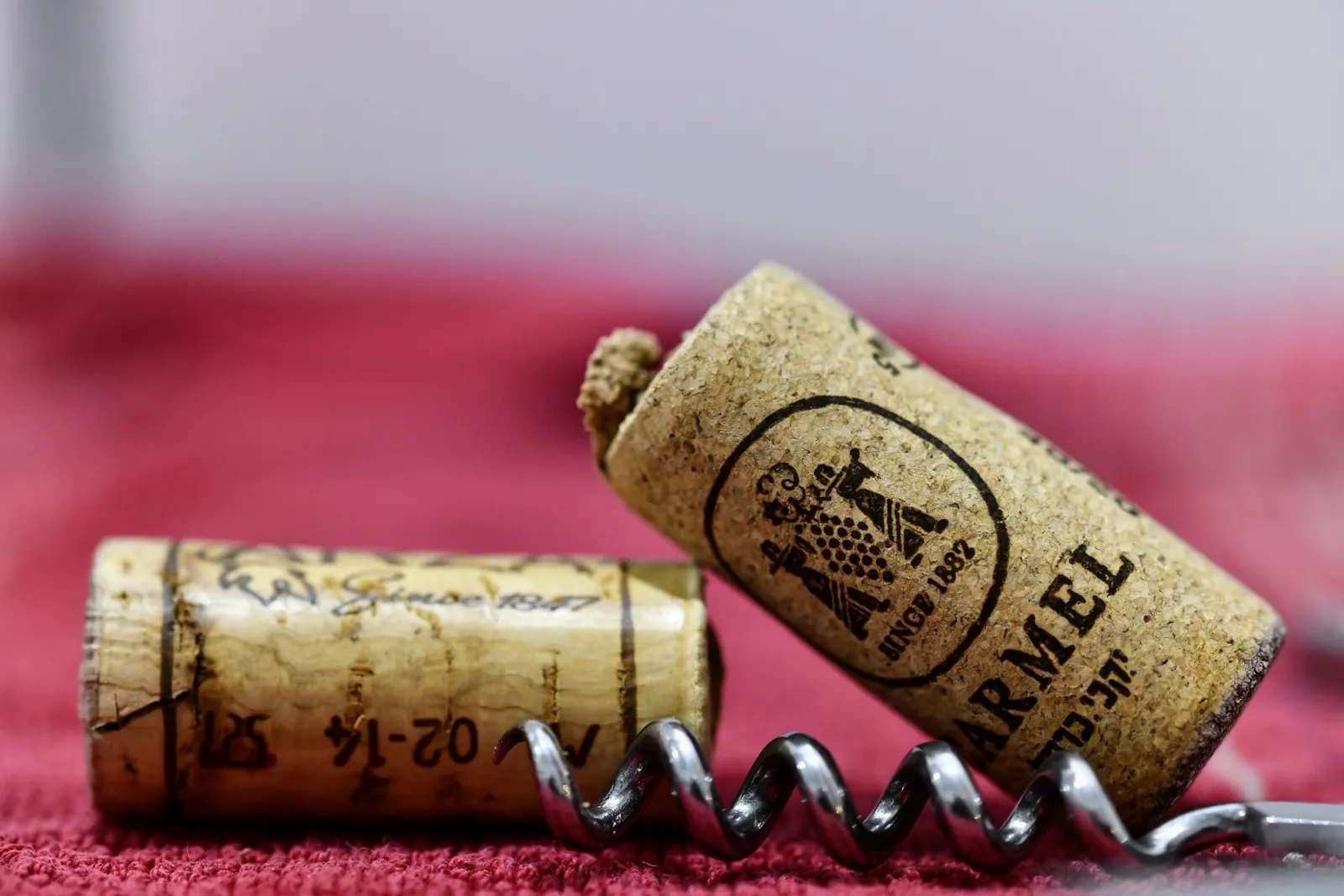
The best wine opener for most homes is a double-hinged waiter’s corkscrew, and the one we’d buy is the OXO Steel Double Lever, $19.99. Four of the eight big tests we read named a double-hinged waiter’s corkscrew as their top pick, including both tests updated in 2026. It costs about $20, fits in a drawer, and has no battery to die halfway through dinner.
To be clear about what this is: we didn’t run our own corkscrew test. We read the tests Google leans on (Food & Wine, Serious Eats, Wirecutter, The Spruce Eats, TechGearLab, The Kitchn, Epicurious, and America’s Test Kitchen), checked prices on each maker’s site on November 5, 2026, and lined the results up. That turned out to be useful, because they contradict each other constantly. The same Oster electric opener is The Spruce Eats’ best overall and The Kitchn’s worst.
Who this is for
You’ve got people coming over and a corkscrew that shreds corks. Or you’re tired of getting the bottle between your knees. Or your hands hurt, and a basic corkscrew has stopped being a small job.
You don’t need to know anything about wine. If you’re also sorting out what to pour it into, our best wine glasses guide covers that, and our best wine decanter guide covers the step in between.
TL;DR: the best wine openers
- Best overall: OXO Steel Double Lever Waiter’s Corkscrew, $19.99. Food & Wine’s top pick, Wirecutter’s upgrade pick, Serious Eats’ budget pick, and easy to buy direct.
- The sommelier classic: the Pulltap’s, if you can buy a real one in person. Online it’s a knockoff minefield.
- Cheapest: True Truetap, about $7. Wirecutter’s top pick, though Serious Eats found it stiff.
- Easiest manual opener: Le Creuset Table Model, $32. Keep turning one way and the cork climbs out. No technique.
- Best lever: the Rabbit lever ($67.99 at Rabbit, often less elsewhere), if you open a lot of bottles and have counter space.
- Best electric wine opener: the Oster at about $25-30 for most people, or the Peugeot Elis Touch at $144.95 if you’ll use it every day. Electric is the only type that removes the need for hand strength.
- Old bottles: a two-prong puller, about $22-26.
- Skip: compressed-air openers, single-hinged corkscrews, and unbranded “Pulltap’s” listings.
Best wine openers compared
Prices marked “at maker” are from the maker’s own site on November 5, 2026. Pulltex sells from Spain in euros, True’s site lists bulk pricing, and Oster doesn’t list this model’s price, so those three are the prices the tests reported.
| Opener | Type | Price | Who picked it | Best for |
|---|---|---|---|---|
| OXO Steel Double Lever | Waiter’s | $19.99 at maker | Food & Wine (best), Wirecutter (upgrade), Serious Eats (budget) | Most homes |
| Pulltap’s | Waiter’s | Reported $10-38 | Serious Eats (best), Epicurious (best), Food & Wine (value), TechGearLab (value) | Buying in person |
| True Truetap | Waiter’s | About $7 | Wirecutter (top pick) | A cheap spare |
| Le Creuset Table Model | Continuous turn | $32 at maker | America’s Test Kitchen (favorite), Serious Eats (runner-up) | No technique at all |
| Rabbit lever | Lever | $67.99 at maker | Serious Eats (best lever), The Spruce Eats (best lever) | High volume |
| OXO Vertical Lever | Lever | $49.99 at maker | The Kitchn (winner), Serious Eats (runner-up) | Easy, sturdy pull |
| Oster Electric | Electric | About $25-30 | Wirecutter (best electric), The Spruce Eats (best overall), Serious Eats (runner-up) | Sore hands on a budget |
| Peugeot Elis Touch | Electric | $144.95 at maker | Food & Wine (best electric), Serious Eats (best electric) | Daily electric use |
| Monopol Westmark | Two-prong | About $22-26 | The Spruce Eats, TechGearLab | Old, crumbly corks |
Which type of wine opener do you need?
Pick the type first. The model matters less: Wirecutter tested eight double-hinged corkscrews and found “they all worked exactly the same.”
| Type | How it works | Learning curve | Hand strength | Storage | Choose it if |
|---|---|---|---|---|---|
| Waiter’s corkscrew | Twist the worm in, then lever the cork off the bottle lip in two stages | A bottle or two | Moderate | You want one cheap tool that lasts | |
| Continuous turn | A cage sits on the neck; keep turning and the cork climbs out | None | Some wrist | Drawer | You keep breaking corks |
| Lever | Clamp to the neck, pull the lever down and back up | Some at first | Some grip, two hands | Counter or cabinet | You open bottles constantly |
| Winged | Twist the top, the wings rise, push them down | Little | Moderate | Drawer | It’s what you grew up with |
| Electric | Press a button | None | Almost none | Counter, needs charging | Your hands hurt |
| Two-prong (Ah-So) | Slide prongs between cork and glass, twist out | Real practice | Moderate | You drink old wine |
The “worm” is the spiral part. A good one is long and coated, which is why America’s Test Kitchen tells you to look for a long, nonstick worm and a hinged fulcrum, the metal arm that rests on the bottle lip. Double-hinged means that arm has two steps. Wirecutter explains why that counts: leverage from two positions, which matters most with longer corks. Single-hinged versions need more yanking.
Best overall: OXO Steel Double Lever, $19.99
This is the one pick that holds up in every recent test that tried it. Food & Wine tested 32 openers and named it best overall, saying it had the most comfortable handle of the dozens it tried. Serious Eats called its cat-claw foil cutter “wicked sharp.” Wirecutter made it the upgrade pick and found “little to no difference” in how well it pulled corks compared with its cheaper top choice.
It’s slightly bigger than a classic wine key, at 5 3/8 inches and 3.7 ounces per Serious Eats, with a rubber handle and a 2-inch worm. The reason it beats the Pulltap’s for most readers isn’t performance. It’s that you can buy the real thing from OXO for $19.99 without guessing what’s going to show up.
The Pulltap’s, and the knockoff problem
If you asked a room of sommeliers, this is what they’d hold up. Pulltex told Wirecutter it designed the first double-lever corkscrew, Food & Wine says the Pulltap’s is what most sommeliers and professionals reach for, and Serious Eats made it its overall winner after opening 50 bottles with 20 openers. It’s light (3.1 ounces) and well balanced, with well-spaced fulcrums.
The trouble is buying one. Wirecutter ordered several “authentic” ones from Amazon at $2 to $10, and couldn’t confirm any were real. Reported prices run all over the place: about $10 in a shop per Wirecutter, $14 at Amazon per Food & Wine, $28 at Amazon per Serious Eats, and $38 for the chrome version in Epicurious’s 2018 test.
If you see one at a local wine shop, buy it. Online, Epicurious’s tip still applies: look for “Original Pulltex” stamped into the metal.
Cheapest good corkscrew: True Truetap, about $7
Wirecutter’s top pick is a corkscrew it openly calls a knockoff. A True rep told Wirecutter, “The Pulltap’s and Truetap are essentially the same product.” At about $7 at Amazon and Walmart, it’s a fair buy for a spare or a picnic basket.
Two cautions. Wirecutter says it hasn’t done new testing for this guide in a few years. And when Serious Eats tested the Truetap more recently, it found the fulcrum stiff, had trouble getting the worm into corks, and said the foil cutter shredded. If you can spend $13 more, get the OXO.
Easiest manual opener: Le Creuset Table Model, $32
Waiter’s corkscrews have one real weakness: you have to aim. If the worm goes in crooked, the cork can break. A continuous-turn opener removes that step. It sits on the bottle neck so the worm is already centered, and you keep turning one way until the cork comes out.
America’s Test Kitchen’s writer, a former server, calls this type “by far the easiest type of wine opener I’ve ever used.” Its favorite, the Le Creuset Table Model, averages 12 seconds per bottle. Serious Eats found the plastic flimsy at first, but its reviewer has been using one for over three years, and it’s still going strong.
Serious Eats ranked the Brabantia Tasty+ slightly higher, but Food & Wine found it felt cheap in the hand, and it has no foil cutter. We’d pay for the Le Creuset.
Best lever wine opener: Rabbit, or OXO Vertical
Lever openers clamp onto the neck and pull the cork in one motion. They’re fast, but they’re big: the Rabbit lever weighs 12.8 ounces and the OXO Vertical Lever ($49.99) weighs over a pound, per Serious Eats.
The tests can’t agree on these at all. Serious Eats and The Spruce Eats named the Rabbit best lever, and Food & Wine called its design “too complex.” The Kitchn gave the OXO a perfect score, and TechGearLab filed it under “Large and Overcomplicated.”
Our read: they work well once you’ve learned them, and they confuse guests who haven’t. Rabbit’s site lists the lever at $67.99, but Serious Eats saw it at $39 on Amazon, so shop around. Buy one if you open wine most nights and have the counter space. For a dinner party twice a year, it’s a lot of plastic to store.
Best electric wine opener: Oster or Peugeot
Here’s what the electric reviews don’t point out: you aren’t buying speed. Serious Eats’ electric test clocked the Peugeot at 9.5 seconds and the Cuisinart at 10.7. America’s Test Kitchen’s manual Le Creuset takes about 12. These are different tests, so don’t read too much into two seconds, but electric isn’t a meaningful time-saver.
What you’re buying is no hand strength at all. Every manual type still asks for something. Wirecutter says a waiter’s corkscrew takes strength and dexterity some people don’t have. Serious Eats says twist openers still need finger strength and wrist twisting, and that a lever still takes some strength to pull. If arthritis or a weak grip is why you’re here, electric is the honest answer.
Oster Electric (about $25-30). Wirecutter calls it “the fastest, easiest to use, and best value of any we’ve tested,” and The Spruce Eats named it best overall. It takes around six hours to fully charge, Oster says it opens 30 bottles per charge, and it’s loud, at about 74 decibels in Wirecutter’s measurement. The warning: The Kitchn’s writer could only pull a cork with it “50 percent of the time,” bought a second one, and had the same trouble. Three of the four tests that covered it like it, so we’d still try it, but buy from somewhere with easy returns.
Peugeot Elis Touch ($144.95). The pick at both Food & Wine and Serious Eats. Serious Eats found most electric openers wiggle on the bottle, which can send the worm in at an angle, and the Peugeot wiggled least. Food & Wine found it the quietest of the ten it tested. Peugeot lists a five-year warranty, a 2.5-hour USB charge, and 80 extractions per charge (Serious Eats lists 40). It’s the one to buy if you depend on an electric every day.
If you’re hosting, charge either one the day before. You don’t want to learn it’s dead when the first guests arrive.
For old bottles and unfinished bottles
The two-prong puller. Old corks crumble, and a worm through the middle can finish them off. A two-prong puller, or Ah-So, slides down the sides of the cork instead. The Monopol Westmark ($22-26 in the tests) is the pick at The Spruce Eats and TechGearLab, and The Kitchn says it works exceptionally well but takes practice, and you can push the cork into the wine while you learn. The wine director Food & Wine interviewed uses a Durand, a hybrid of an Ah-So and a corkscrew, for rare bottles. Most people don’t need either.
The Coravin. This isn’t an opener. It pours through the cork with a needle and gas, so the rest of the bottle keeps. Coravin’s Pivot+ is $199 and the Timeless Six+ runs $227.40 to $379 on its site, plus gas capsules. It’s for someone who wants one glass of a good bottle on a Tuesday, not for a dinner party where the bottle gets finished.
Where the wine opener tests disagree
Every outlet says “tested,” and they still land in different places.
| Opener | The fans | The critics |
|---|---|---|
| Oster Electric | Wirecutter: best electric. The Spruce Eats: best overall, “quite foolproof” | The Kitchn: 1 out of 5, worked “50 percent of the time” |
| OXO Vertical Lever | The Kitchn: winner, 5 out of 5 | TechGearLab: “Large and Overcomplicated,” bulky and unbalanced |
| Rabbit lever | Serious Eats and The Spruce Eats: best lever | Food & Wine: “too complex,” clunky to hold |
| True Truetap | Wirecutter: top pick | Serious Eats: stiff, foil cutter shredded |
| Brabantia Tasty+ | Serious Eats: best twist-style | Food & Wine: “felt cheap in the hand,” no foil cutter |
| Cuisinart Electric | Serious Eats: best budget electric | Food & Wine: needed much more force than the Peugeot, confusing buttons |
| Winged corkscrews | Food & Wine: Rabbit Wing is best winged. The Kitchn: 4 out of 5 | Serious Eats: left them out, “we’ve never liked ‘em” |
| Compressed-air openers | TechGearLab: Wine Ziz best for ease of use | Wirecutter: wine splattered, “somewhat-explosive force” |
Why so much noise? Partly age. Epicurious’s test dates to 2018, The Kitchn’s to 2023, and Wirecutter admits it hasn’t retested in years. Partly sample size: Serious Eats ran 20 openers through 50 bottles and Food & Wine tested 32, while The Kitchn’s writer opened “a few bottles” with six. And partly what each one rewards. A lever feels magic to one tester and clumsy to another.
So trust the agreement, not any single verdict. Across all eight, the double-hinged waiter’s corkscrew is the only type that keeps winning.
How to use a waiter’s corkscrew
It looks fussier than it is. Wirecutter’s team had it down by the first bottle.
- Deal with the foil. Wine Enthusiast says to cut with the blade just below the lip, then pull the foil away. Wirecutter notes you can often just pull it off.
- Center the worm. Put the tip in the middle of the cork and aim it straight down. America’s Test Kitchen calls this the step that breaks corks when it goes wrong.
- Turn until at least three-quarters of the worm is in, which Wirecutter puts at about five rotations. Its tip: start by turning the bottle instead of the opener, then finish by turning the corkscrew.
- Set the first notch on the bottle lip and lift the handle. The first step starts the cork moving.
- Move to the second notch and lift again to finish. Then twist the cork off the worm by hand.
Practice on a cheap bottle before the party, not in front of six people. A host who has a wine plan already (ours is four bottles for six guests) can also open the first bottle before anyone arrives.
What to do when the cork breaks
It happens, and Food & Wine notes natural corks are the likeliest to crumble. Wine director Jared Ian Stafford-Hill gave Food & Wine three fixes, in order:
- Go back in off-center. “Re-insert the corkscrew carefully and try placing it slightly off-center into the remaining cork and extract slowly.”
- Use an Ah-So if you own one, sliding the prongs down the sides.
- Push and filter. Push the rest of the cork into the bottle, then pour the wine through a fine strainer or cheesecloth into a decanter or a clean pitcher.
As Stafford-Hill points out, most wines benefit from a little decanting anyway.
What to skip
- Compressed-air and gas openers. Wirecutter’s first try with the Cork Pops splattered wine on its testers, and the force concerned them. The Kitchn says air pumps are only suitable for newer wines.
- Single-hinged corkscrews. Less leverage, more yanking. Serious Eats found a single-lever Laguiole slower than a double-fulcrum corkscrew.
- Unbranded “Pulltap’s” listings. Wirecutter couldn’t confirm that the ones it ordered were genuine. Buy the OXO instead.
- Waiter’s corkscrews with push-in fulcrums. Serious Eats disliked the Le Creuset and Crafthouse waiter’s models for this. You shouldn’t have to move your fingers mid-twist.
- A $200 corkscrew for yourself. Food & Wine’s splurge pick, the Laguiole en Aubrac, is about $200 and comes in a gift box, but Food & Wine still ranked the $20 OXO above it. If it’s a present for a host, our hostess gift ideas cover better value.
- Multi-piece “wine tool” sets. One good opener is all you need, and our bar cart guide covers what else actually earns a spot.
FAQ
What is the best simple wine bottle opener?
A double-hinged waiter’s corkscrew. It has no battery, folds to about 5 inches, and gives you leverage in two stages, so the cork comes out straight. The OXO Steel Double Lever ($19.99) is the easiest one to buy with confidence. If you’d rather not learn any technique, a continuous-turn opener like the Le Creuset Table Model ($32) is simpler still.
What bottle opener do bartenders use?
A waiter’s corkscrew, also called a wine key. Food & Wine says the Pulltap’s double-hinged model is what most sommeliers and professionals reach for, and the wine servers and sommeliers Wirecutter interviewed gave the same answer. It fits in a pocket and has a foil blade built in, and most also open beer bottles.
What are the different types of wine openers?
Six main types: the waiter’s corkscrew (a folding tool you lever off the bottle lip), the continuous-turn or twist opener (you keep turning and the cork climbs out), the lever (clamp on and pull), the winged corkscrew (twist, then push two arms down), the electric opener, and the two-prong puller, or Ah-So, for old corks. A Coravin is a seventh category, since it pours through the cork without removing it.
Is there a TSA approved corkscrew?
TSA allows corkscrews with no blade in carry-on bags. Corkscrews with a blade are not allowed in carry-ons, though they can go in checked bags if the blade is wrapped or sheathed. Most waiter’s corkscrews have a foil blade, so pack them in checked luggage. The final call rests with the TSA officer at the checkpoint.
How long do electric wine openers last?
Per charge, roughly 30 to 80 bottles: Oster says 30, Peugeot says 80 for the Elis Touch, and Serious Eats puts most models at 30 to 60. None of the tests we read measured lifespan in years, so the warranty is the best clue. Wirecutter reports a one-year limited warranty on the Oster, and Peugeot offers five years.
How do you use an electric wine opener?
Remove the foil, set the opener on top of the bottle over the cork, and press the down button (or press down on the top, depending on the model). Hold the opener straight, because most models wiggle and the worm can enter at an angle. When the cork is out, press the up button to release it from the opener. It works on natural and synthetic corks.
Why is it called a wine key?
Probably because of its inventor. According to Wikipedia, the folding corkscrew was conceived by the German inventor Karl Wienke in 1882, and English speakers who struggled with the name gradually turned “Wienke” into “wine key.” The tool is also called a waiter’s corkscrew, a waiter’s friend, or a sommelier knife.
The bottom line
Buy the $19.99 OXO, open two cheap bottles to get the hang of it, and put it in the drawer where you keep the bar tools. If your hands make that a bad plan, get the Oster, or the Peugeot if you’ll use it daily. Everything else on this list solves a problem most hosts don’t have. If you’re stocking the rest of the bar, the same keep-it-simple logic runs through our best cocktail shaker set picks.