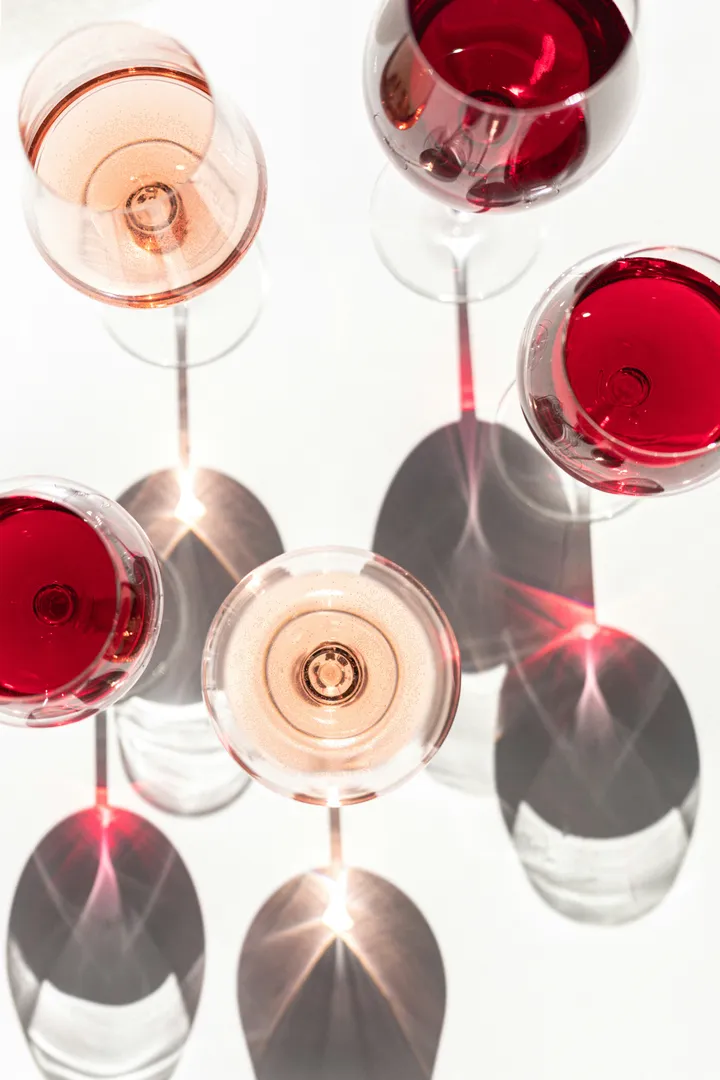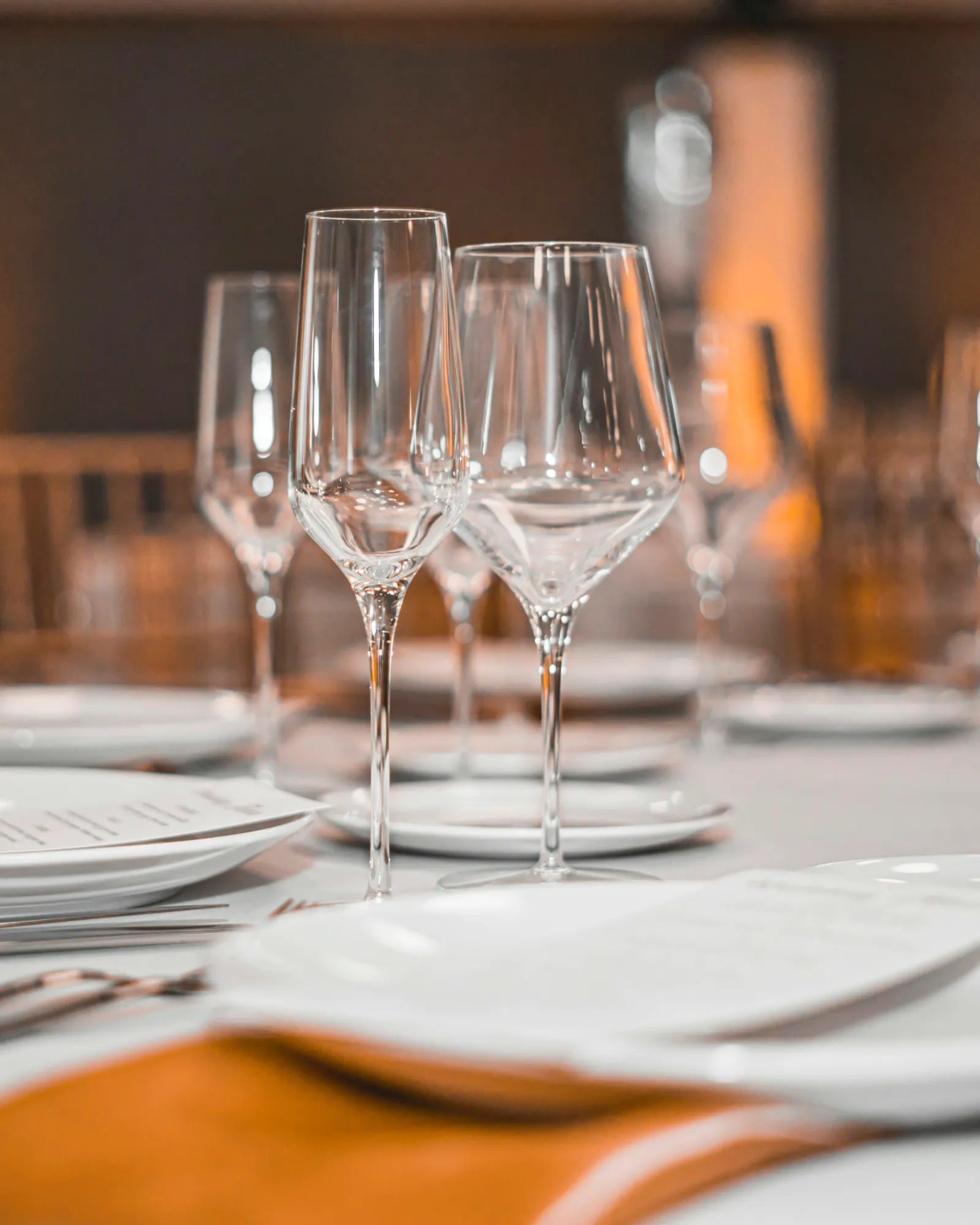
Most wine glass guides are written for people who own a wine fridge. This one is for the rest of us: you want a set that makes a Tuesday pour and a dinner for eight both feel intentional, without spending $85 a stem or hand-washing anything at midnight. The best wine glasses for a real home are the ones you will actually use, drop occasionally, and put in the dishwasher without wincing.
Here are the picks that hold up, sorted by budget and by how you drink, plus the number almost nobody tells you: how many glasses you actually need to host.
Who this is for
You drink wine at home and want to serve it in something better than a tumbler, but you are not building a tasting collection. You want a small, good-looking set that covers red, white, and a bottle of bubbles, survives real life, and does not require a second mortgage. If you want the full breakdown of shapes and sizes first, our types of wine glasses guide is the companion to this one. This article is the shopping list.
TL;DR: our top wine glass picks
- Best all-purpose value: Libbey Signature Kentfield. Around $10 to $12 a glass, dishwasher-safe, the one to buy if you buy one.
- Best everyday durability: Spiegelau Style. Crystal clarity that actually survives the dishwasher.
- Best mid-range performance: Riedel Veritas. The jump in feel and thinness that a wine person notices.
- Best splurge (one glass for everything): Gabriel-Glas StandArt, with the Zalto Denk’Art Universal as the ultimate step up.
- Best stemless / party glass: Riedel O. Sturdy, stackable in a cabinet, fine in the dishwasher.
- How many to own: eight matching universal glasses covers most homes. Twelve if you host dinners of eight or more.
Everything below is a stemmed or stemless universal-first approach: one great shape you own a lot of, not six shapes you own two of.
Best wine glasses at a glance
| Pick | Best for | Approx. price | Material | Dishwasher |
|---|---|---|---|---|
| Libbey Signature Kentfield | Best all-purpose value | $10 to $12 a glass | Machine-made glass | Yes |
| Spiegelau Style | Everyday durability | $8 to $12 a glass | Reinforced crystal glass | Yes |
| Riedel Veritas | Mid-range performance | around $35 a glass | Machine-made crystal | Yes |
| Gabriel-Glas StandArt | Splurge, one glass for all | $20 to $25 a glass | Lead-free crystal | Yes |
| Zalto Denk’Art Universal | Ultimate splurge | $60 to $90 a glass | Handblown crystal | Hand-wash |
| Riedel O | Stemless / outdoor | $12 to $15 a glass | Machine-made crystal | Yes |
Prices move with sales and set sizes, but the tiers hold: about $10, about $35, and about $60-plus per glass are the three real decision points.
Why the glass matters (and why most of the hype does not)
A wine glass does one job that a tumbler cannot: it gathers aroma. A bowl wide enough to swirl, tapering inward to the rim, funnels the smell of the wine toward your nose, and smell is most of what you register as taste. That is the whole case for a proper glass, and it is real. It is also where the industry stops being honest.
The expensive part of the market sells you a different bowl for every grape: Bordeaux, Burgundy, Chardonnay, Riesling, each in three sizes. For a home, that is a cabinet-management problem pretending to be a flavor upgrade. The meaningful difference is between a juice cup and a real wine glass. The difference between a good $12 universal glass and a $60 handblown one is smaller than the price gap suggests, and most of it is weight, thinness, and how the glass feels in your hand, not how the wine tastes. Independent lab testing backs this up: Wirecutter’s wine glass testing also lands on an inexpensive all-purpose glass as its top pick over the luxury options.
So the strategy for a real home is simple: buy one excellent universal shape, buy a lot of it, and spend the money you saved on wine.
The best all-purpose wine glass
If you own one wine glass, make it a universal (all-purpose) glass: a medium bowl of roughly 15 to 18 ounces, clear and undecorated, with a rim that pulls in slightly. It pours red, white, rose, and even sparkling in a pinch, and it looks right on any table.
Our value pick is the Libbey Signature Kentfield, an American-made glass (Libbey has been making glassware in Ohio since the 1800s) that lands around $10 to $12 a glass, comes in sets, and goes in the dishwasher. It is not the thinnest glass you will ever hold, but it has the right bowl shape, a clean rim, and it survives a house full of guests. For the overwhelming majority of homes, this is the glass, full stop.
Want the upgrade without leaving the all-purpose category? Skip to the splurge tier below for the Gabriel-Glas StandArt, which is the same one-glass-does-everything idea executed in featherweight crystal.
Best wine glasses by budget
Budget: about $8 to $12 a glass
At this tier you want machine-made glass or reinforced crystal that shrugs off the dishwasher. The Libbey Signature line is the anchor. Crate & Barrel house lines like the Oregon glass sit here too and are easy to reuse and replace since the store rarely discontinues them, which matters when you break one and want a match. Buy these in sets of eight and do not think twice about everyday use.
Mid-range: about $30 to $45 a glass
This is where a wine person starts to notice the glass. Spiegelau (owned by Riedel and made in Germany) uses a reinforced crystal that is genuinely dishwasher-safe while feeling far finer than budget glass, which makes its Style and Authentis lines the sweet spot for people who host often and hate hand-washing. Step up to the Riedel Veritas line and you get a thinner, lighter, machine-made crystal glass that reads as expensive and still handles the dishwasher. If you want one nice glass without going handblown, this is the tier to shop.
Splurge: about $50 to $90 a glass
Handblown crystal is where the money goes, and it buys thinness, lightness, and a seamless pulled stem, not better flavor. The Gabriel-Glas StandArt (Gabriel-Glas) is the smart splurge: one Austrian-designed universal glass, around $20 to $25 depending on whether it is the machine-made or handmade version, light as a soap bubble, and marketed as dishwasher-safe. The Zalto Denk’Art Universal is the glass wine obsessives reach for, roughly $60 to $90 a stem, breathtakingly thin, and firmly hand-wash-only. Beautiful, fragile, and completely unnecessary for a weeknight, which is exactly why you buy two, not eight.
Crystal or glass: what the price actually buys
The word crystal sounds like a safety upgrade, and it is an upgrade, but not for the reason most people assume. Crystal contains added minerals that let it be blown thinner and more brilliant than ordinary glass, with a finer cut rim. That is why a Zalto feels weightless and a cheap tumbler feels chunky. Modern crystal is almost always lead-free, so the old worry about leaching lead is largely gone. What you are paying for is thinness, clarity, and that rim, not flavor or safety. Ordinary glass is heavier and tougher; crystal is finer and more fragile. For everyday hosting, good glass wins. For the bottles you fuss over, crystal earns its keep.
Best wine glasses by use
You can host your whole life on universal glasses. But if you drink one style constantly, a shape built for it is a reasonable second glass to own.
Everyday reds
Bold reds open up with air, so a larger bowl (18 to 22 ounces) gives them room. If you drink a lot of Cabernet, Syrah, or Zinfandel, one set of larger red glasses alongside your universals is worth it. The Riedel Veritas and Spiegelau lines both make a “cabernet” or “full-bodied red” bowl that is the natural pairing with the universals you already bought.
Crisp whites
White wine glasses are smaller and narrower (12 to 14 ounces) with a tighter rim, which preserves the cool temperature and keeps the aromatics tight since you are holding less wine at a time. Honestly, most people do not need a dedicated white glass; a universal handles it. Buy these only if you drink Sauvignon Blanc and Pinot Grigio far more than anything else.
Sparkling
The flute is fading for a reason: its narrow bowl looks elegant but strangles the aroma of good sparkling wine. For prosecco and cava you serve at parties, a flute is fine and photographs well, and our champagne flutes guide covers the best of them; the best champagne glasses roundup adds tulips, coupes, and stemless picks by price. For nicer Champagne, pour it into your universal glass and you will smell far more. If you want the vintage-cocktail look instead, the coupe is the move.
Stemless and outdoor
Stemless glasses trade the temperature and smudge advantages of a stem for being nearly tip-proof and cabinet-friendly. That is a good trade for patios, pools, big parties, and anywhere a stem is a liability. The Riedel O series is the benchmark: a real crystal bowl with the stem simply removed, dishwasher-safe, and stackable. Keep six to eight of these for casual use and your stemmed glasses stay nice.
How many wine glasses you actually need to host
Here is the number the wine sites skip. For a home that entertains normally:
- Two people, everyday: four universal glasses. Enough for a dinner with a spare when one is in the dishwasher.
- Regular small dinners (up to six): eight matching universal glasses. This is the single best set to own.
- You host dinners of eight or more: twelve universals, plus six stemless for the overflow crowd and the patio.
- You throw parties: add a dozen inexpensive stemless or even good disposable glasses. Do not serve a standing party of 20 out of your nice stems; you will lose three and chip two.
Buy them all matching and all universal. A shelf of twelve identical glasses looks more intentional than a mismatched museum of shapes, it is cheaper, and it means a broken glass is a $10 replacement, not a hunt for a discontinued Burgundy bowl. If you are setting a proper table around them, our how to set a table guide shows where the wine glass actually goes.
How we chose these
The picks above weigh five things, in this order:
- Bowl shape. Wide enough to swirl, tapering to the rim. This is 80 percent of what a glass does.
- Rim. A thin, cut (not rolled) rim delivers wine more cleanly. Budget glasses cut corners here; it is the most noticeable upgrade as you spend more.
- Durability and dishwasher reality. For a home, a glass you are afraid to wash is a glass you will not use. Machine-made crystal from Spiegelau and Riedel is the honest sweet spot.
- Value and replaceability. Glasses break. A pick you can rebuy in a set beats a discontinued splurge.
- Feel. Weight and thinness, the reason handblown glass costs what it does. It is real, and it is last on the list on purpose.
These criteria line up with how the major independent testers (Wirecutter, Epicurious) rank glasses too, which is why an inexpensive universal keeps winning their tests. For the deeper background on glass shapes and materials, the Wikipedia entry on the wine glass is a solid, non-commercial primer.
Caring for your wine glasses
The fastest way to make budget glasses look expensive is to keep them clear. A few habits do it:
- Load them right. In the dishwasher, secure the bowls so they cannot knock into each other, and skip the high-heat dry cycle, which is what usually cracks a stem. Machine-made glasses from Libbey and Spiegelau are built for this; handblown crystal is not, so wash those by hand.
- Kill the cloudiness. That white film on an old glass is almost always hard-water minerals, not a scratch. A dishwasher rinse aid, or a ten-minute soak in white vinegar followed by a rinse, clears it. Drying with a lint-free cloth while the glass is still warm keeps it from coming back.
- Store them upright. Standing glasses rim-up, or hanging them by the foot, avoids the trapped, musty smell that ruins the first pour of the night. Do not stack stemmed glasses inside each other; that is how rims chip and stems snap.
Follow that and a $10 glass keeps looking like a $30 one for years, which is the entire reason to buy the affordable ones and not baby them.
What to skip
- Grape-specific 12-piece collections. A Riesling glass, a Chardonnay glass, a Nebbiolo glass. Unless wine is your hobby, this is storage cost disguised as sophistication. Buy universals.
- Colored or etched bowls. They look festive and hide the one thing you want to see, the wine. Save the color for the dinnerware.
- Gold or platinum rims. Pretty, not dishwasher-safe, and the metal wears. A trap for a set you actually use.
- The flute, for good sparkling. Fine for a party pour, wrong for a wine you paid for. Use your universal.
- Ultra-thin handblown crystal as your everyday glass. A Zalto is a joy and a liability. Own a couple; do not stock your whole cabinet with glasses you cannot machine-wash.
- Buying two of everything. The classic mistake. Two reds, two whites, two flutes, and you cannot serve a table of six. Own a lot of one shape instead.
FAQ
Does the shape of the wine glass really matter? Yes. Shape affects how aroma reaches your nose, and smell is most of what you taste. A bowl wide enough to swirl that tapers at the rim concentrates aroma. But the effect is oversold: a good universal glass captures the bulk of the benefit, and the real jump is from a tumbler to any real wine glass, not from a $10 glass to a $60 one.
What is the best all-purpose wine glass? A universal glass with a 15 to 18 ounce bowl that tapers slightly at the rim handles red, white, and rose without a cabinet full of shapes. The Libbey Signature Kentfield is the best-value version and the Gabriel-Glas StandArt is the upgrade. One universal shape covers roughly 90 percent of home wine drinking.
Are expensive wine glasses worth it? For most people, no. A $10 to $15 universal glass performs close to a $60 one for everyday drinking. Handblown crystal like Zalto is thinner, lighter, and lovelier in the hand, which matters if wine is a real hobby, but it is also more fragile and hand-wash only. Buy a good mid-price glass and stop there unless you are chasing the last few percent.
Are stemless wine glasses good? For casual and outdoor use, yes: sturdier, harder to tip, usually dishwasher-friendly. The trade-off is that your hand warms the wine and smudges the bowl, which matters more for a chilled white or a slow tasting than a weeknight pour. Keep stems for nicer dinners and use stemless for the patio and big parties.
Can wine glasses go in the dishwasher? Machine-made glasses from Libbey and Spiegelau are built to survive it; load them so the bowls cannot knock together and skip the high-heat dry cycle. Thin handblown crystal like Zalto should be hand-washed, since dishwasher heat and jostling can cloud or snap the bowl. The same brand often sells both, so check the specific line.
What is the best wine glass brand? There is no single best brand, but by tier: Libbey and Bormioli for budget, Spiegelau and Riedel for mid-range durability, Gabriel-Glas and Zalto for a splurge. The better question is how you will wash them: pick a machine-made line if the dishwasher matters, and save handblown crystal for glasses you will wash by hand.
The bottom line
The best wine glasses for a real home are not the ones a critic rates highest; they are a stack of eight identical universal glasses you are happy to fill on a Tuesday and unafraid to wash. Start with the Libbey Signature at about $10 a glass, add a set of stemless for parties, and if you fall for wine later, treat yourself to a pair of Gabriel-Glas or Zalto for the bottles that deserve them. That is the whole system, and it costs less than one shelf of single-grape glasses you would use twice a year.
Setting up the rest of the bar while you are at it? Our bar cart guide covers the glasses, tools, and bottles worth owning, and the best whiskey glasses roundup does for spirits what this one does for wine.