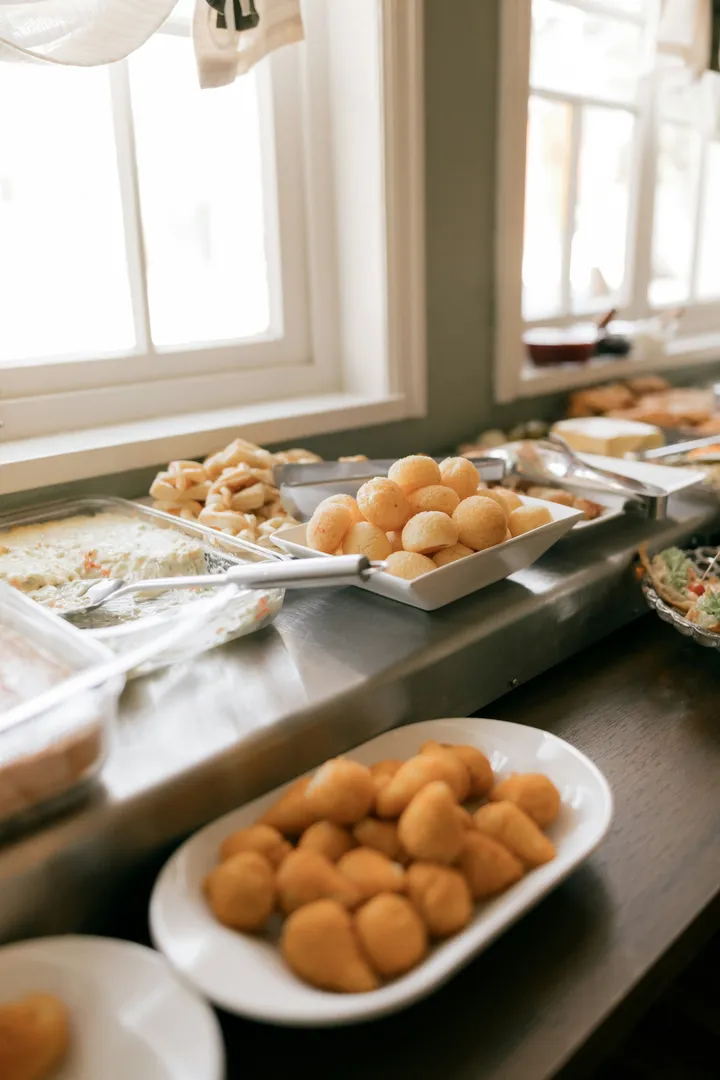
A finger-food menu is not a list of 113 recipes. It’s a category framework, a per-person math equation, and a make-ahead timing plan.
Most published finger-food articles dump 40, 50, or 113 recipes in random order. The reader scrolls, picks four they like the look of, and ends up with three dippable items and no hot food. The party feels unbalanced even though the host worked hard.
This is the planning system. Five categories, pick 1-2 from each, scale to your guest count, build a menu that covers every guest in every mood.
TL;DR
- 5 categories: cold, hot, dippable, skewered, sweet. Pick 1-2 from each.
- Per-person math: 8-12 pieces per person for a 2-hour party. 12-15 for a 3-hour party. 4-6 if finger foods supplement a real meal.
- Make-ahead rule: at least 60% of the menu should be made the day before or the morning of. Fresh assembly only for things that actively need it.
- Hot vs. cold balance: at least 1 hot category item even at a “no-cook party”, guests notice when everything is cold.
- Cross-link to charcuterie: a charcuterie board covers cold + dippable in one category. Often the easiest path.
Why a 5-category menu beats a 113-recipe list
Recipe-list articles are SEO content. They rank because they’re long and have many internal links. They’re not how anyone actually plans a party.
Three problems with the 100-recipe format:
1. The host can’t choose. Faced with 113 options, hosts pick what looks good in photos rather than what works as a menu. You end up with three crostini and zero hot food. Or four sweet items and one savory. Or all dippable and nothing skewered.
2. The recipes don’t compose. A great deviled egg, a great bruschetta, and a great caprese skewer don’t make a great menu. A great menu has 1-2 items from each category, balanced.
3. The format hides the math. A “113 finger foods” article doesn’t tell you how many to make for 12 people. Hosts under-shop because they don’t realize that 12 people eating finger foods for 2 hours need 100+ individual pieces.
The 5-category framework solves all three. Pick the structure, pick what fits, do the math.
How much per person (the math nobody publishes)
Recipe blogs almost never give per-person numbers. Here are the actual ones, calibrated against what gets eaten.
When finger foods are the meal (no dinner after)
- 2-hour party: 8-12 pieces per person, total
- 3-hour party: 12-15 pieces per person, total
- 4-hour party: 15-20 pieces per person, total
For a party of 12 over 3 hours: that’s 144-180 individual finger foods. Spread across 5-7 different items (so each item is 20-30 servings).
When finger foods supplement a meal (pre-dinner appetizers)
- 30-60 minutes of pre-dinner finger foods: 4-6 per person
- A “few snacks” before guests sit down: 2-3 per person
For a dinner party of 6 with 45 minutes of pre-dinner appetizers: 24-36 total pieces, across 2-3 different items.
Always round up
Running out of food at 90 minutes is the single most-noticed hosting failure. Add 15-20% to whatever the math says.
The composition split
Within the total, aim for:
- 30% cold (no oven time, easy to refill)
- 20% hot (the wow factor, requires more day-of work)
- 20% dippable (the easy crowd-pleaser)
- 20% skewered or one-bite (the elegant option)
- 10% sweet (the closer)
A party of 12 needing 144 finger foods would split: ~45 cold pieces, ~30 hot, ~30 dippable, ~30 skewered, ~15 sweet.
Category 1: Cold finger foods (the make-ahead anchor)
The category that does the most hosting work. Made hours or days ahead, sits on the table, refills easily.
The reliable picks
Deviled eggs (the universal). 12 deviled eggs disappear in 25 minutes at any party. Make 24 for a party of 12 (don’t underestimate, they go fast). Boil eggs the day before; mash filling the day before; pipe filling and assemble morning of.
Caprese skewers. Mozzarella ball + cherry tomato + basil leaf, on a small skewer, drizzled with balsamic glaze. Made in 15 minutes morning of. Holds 4-6 hours assembled.
Prosciutto-wrapped melon. Cantaloupe or honeydew chunks wrapped in thin prosciutto, served on a platter with a small glass of toothpicks for self-service. Made 1-2 hours ahead.
Smoked salmon canapés. Small piece of toasted bread or blini + cream cheese or crème fraîche + smoked salmon + capers + dill. Made 30 minutes ahead (any earlier and the bread softens).
Asparagus or roasted vegetable rolls. Lightly cooked asparagus or roasted red pepper, wrapped in prosciutto or thin sliced ham. Made the morning of.
The charcuterie option
A charcuterie board is essentially a self-service cold finger-food category. It covers cold + dippable + sweet in one well-built board. For parties of 8 or fewer, a charcuterie board can replace three separate cold-category items.
The make-ahead schedule
- Day before: boil eggs, prep vegetables, marinate or roast components
- Morning of: assemble (deviled eggs, skewers, canapés)
- 30 minutes before: plate, garnish, set out
Category 2: Hot finger foods (the wow factor)
The category most parties skip and shouldn’t. Even one hot item dramatically changes the perceived effort of the menu.
The reliable picks
Mini quiches or savory tarts. Made the day before in a mini-muffin tin; reheated 8-10 minutes at 350°F before serving. Holds at room temp for 60-90 minutes after reheating.
Stuffed mushrooms. Cremini mushrooms stuffed with sausage + breadcrumbs + cheese. Assembled the day before; baked 20 minutes morning of (or right when guests arrive, they’re best fresh from the oven).
Mini meatballs. Made the day before, stored in sauce in a slow cooker. Reheat in the slow cooker on low; serve with toothpicks. Holds at temp for 3+ hours.
Bacon-wrapped dates. Soft pitted dates, optional almond stuffing, wrapped in bacon, baked 15-20 minutes at 400°F. Made fresh; can be assembled (not baked) the day before. Best when warm.
Chicken satay or skewers. Marinated chicken on small skewers, grilled or broiled. Made fresh (chicken is hard to make-ahead). Serve with peanut sauce.
Mini sliders or savory biscuits with ham. Pre-baked biscuits filled with ham + cheese + mustard, wrapped in foil, warmed 8 minutes at 325°F. Holds wrapped for 30+ minutes.
The “hot at the right time” trick
Hot foods cool down faster than guests eat them. Two strategies:
- Stagger the bakes. Don’t put everything in the oven at once. Send out one batch, then bake another 30 minutes later. Refresh the table mid-party.
- Use the right vessel. Slow cookers (for meatballs), warming trays (for any tray-based hot food), or simply a sheet pan kept just-warm on a low oven setting. Don’t try to keep finger foods hot on a regular plate; they’re cold in 15 minutes.
Category 3: Dippable finger foods (the easy crowd-pleaser)
The category every party needs. Dippable finger foods are forgiving (made ahead, hold well), crowd-friendly (everyone likes at least one dip), and easy to refill.
The reliable picks
Hummus + warm pita. Buy quality hummus (Sabra Classic is the bottom; Cedar’s or a local hummus bar is the upgrade) or make from scratch. Serve with warm pita wedges (warm in oven 5 min before serving) or pita chips.
Spinach-artichoke dip. The most universally loved hot dip. Made the day before; reheated 20 minutes at 350°F before serving. Serve with crackers, sliced baguette, or vegetables.
Whipped feta or goat cheese with honey. Whip block feta with cream cheese in a food processor; spread in a shallow bowl; drizzle with honey; serve with crackers, pita, or vegetables. Made 1-2 hours ahead.
Guacamole or pico de gallo with chips. Guacamole made within 2 hours of serving (lime juice slows browning). Pico de gallo can be made earlier; it improves over a few hours.
French onion dip. The retro classic. Caramelized onions + sour cream + mayo + Worcestershire + chives. Made the day before, gets better. Serve with sturdy chips or crudité.
Crudités with a real dip. Carrots, celery, cucumber, peppers, snap peas, radishes, broccoli florets, cut the day before, stored in airtight containers. Serve with whipped feta, hummus, ranch, or French onion dip.
The dipping vessel matters
Set out 3-4 small bowls of different dips, not one giant bowl of one dip. Variety reads as more intentional even if the actual food is the same.
Category 4: Skewered or one-bite finger foods (the elegant option)
The category that elevates a casual party into a real party. Skewered foods photograph beautifully, eat cleanly with one hand, and feel intentional.
The reliable picks
Caprese skewers (covered in cold category, also belongs here).
Watermelon-feta-mint skewers. Watermelon cube + small feta cube + mint leaf, on a small pick. Assembly: 20 minutes morning of for 24 skewers.
Antipasto skewers. Olive + mozzarella ball + cherry tomato + folded salami, on a small skewer. Made 1-2 hours ahead.
Shrimp cocktail. Pre-cooked shrimp on small picks, with a small bowl of cocktail sauce. The retro-revival appetizer. Buy good cooked shrimp (Whole Foods or your fish counter); make cocktail sauce from ketchup + horseradish + lemon juice + Worcestershire.
Fig and prosciutto skewers. Fresh fig half + prosciutto + arugula leaf + small piece of blue cheese. Made 30-60 minutes ahead.
Cucumber rounds with whipped feta. Cucumber slice + whipped feta + a small piece of pickled red onion + dill. Made 30 minutes ahead.
The size rule
A finger food should be one bite, two at most. If a guest needs three bites to finish it, it’s not a finger food, it’s an entrée plated tiny. Aim for pieces that fit comfortably in your mouth in one go.
Category 5: Sweet finger foods (the closer)
The category that tells guests “the party is winding down.” A small sweet finger food at hour 2 or 3 of a party signals dessert without forcing a sit-down moment.
The reliable picks
Mini cheesecakes or tarts. Made in mini-muffin tins or small foil cups. Topped with fresh fruit. Made the day before.
Chocolate-dipped strawberries. Strawberries + melted dark chocolate. Made 4-6 hours ahead (any earlier and the chocolate sweats).
Mini fruit tarts. Pre-baked tart shells + pastry cream + fresh berries. Components made the day before; assembled 1-2 hours ahead.
Bite-sized brownies or blondies. Made the day before. Cut into 1-inch squares.
Macarons. Buy these. Don’t make them at home for a party. A box of 24 macarons from a real bakery costs $40-60 and feels like a serious dessert.
Cookies (one type, simple). A single great cookie (chocolate chip, oatmeal raisin, shortbread) cut into small pieces. Made the day before.
The “sweet at the end” timing
Set out the sweet category 60-75 minutes before the party ends. Earlier feels weird (guests ate dinner-time food and dessert simultaneously). Later misses the window (guests are leaving). The mid-party-to-end transition is the sweet-spot.
Building a balanced menu (3 examples)
Three menus that work, scaled for different party sizes.
Cocktail party for 10 (2 hours, no dinner)
Total target: ~100-110 pieces.
- Cold: 24 deviled eggs (make day before)
- Hot: 30 mini quiches (make day before, reheat morning of)
- Dippable: spinach-artichoke dip + crackers + crudités (3 servings of dip from one batch, 30+ servings of dip)
- Skewered: 30 caprese skewers (make morning of)
- Sweet: 24 chocolate-dipped strawberries (make 4 hours ahead)
Total prep time: ~3 hours, mostly the day before. Day-of: 30 minutes of plating.
Cocktail party for 20 (3 hours)
Total target: ~250 pieces.
- Cold: 48 deviled eggs + a charcuterie board
- Hot: mini meatballs in slow cooker (50 servings) + 30 stuffed mushrooms
- Dippable: 3 dips (whipped feta, hummus, French onion) + crackers + pita + crudités
- Skewered: 50 antipasto skewers
- Sweet: 30 mini cheesecakes + a box of bakery macarons
Total prep time: ~5-6 hours, mostly day before. Day-of: 60-90 minutes plus periodic refills.
Pre-dinner appetizers for 6 (45 minutes)
Total target: ~30 pieces.
- A charcuterie board (covers cold + sweet + dippable)
- 12 stuffed mushrooms (the hot anchor)
- A small bowl of marinated olives or Castelvetranos with toothpicks
Total prep time: ~90 minutes, mostly the day before. Day-of: assemble the board (30 minutes), bake mushrooms when guests arrive.
The day-of timeline
A 5-category menu, executed correctly, means the host has 30-45 minutes of day-of plating, not 4 hours of cooking.
Day before (or earlier):
- Boil eggs, make deviled-egg filling
- Cut crudité vegetables, store in airtight containers
- Make any dips (improve overnight)
- Bake any baked components (mini quiches, brownies, mini tarts)
- Cook mini meatballs; refrigerate in sauce
Morning of, T-3 hours:
- Assemble skewers (caprese, antipasto, prosciutto-wrapped melon)
- Pipe deviled-egg filling
- Set out platters and serving boards
- Wash and tear lettuce or arugula garnish
T-90 minutes:
- Slow cooker on low for meatballs
- Warm dips that need warming (spinach-artichoke at 350°F for 20 min)
- Bake mushrooms or any hot finger foods
- Pour first drinks for early arrivers
T-30 minutes:
- Plate everything except hot items (those go on the table at T-15)
- Set out cold dips with crackers and crudités
- Open champagne or chill final beverages
T-15 minutes:
- Hot items to the table
- Light candles
- Sit down for 5 minutes before guests arrive
T+30 minutes (mid-party):
- Refill any depleted items
- Set out fresh hot batches if staggered
T+60-75 minutes before party ends:
- Set out sweet category
- Refill drinks
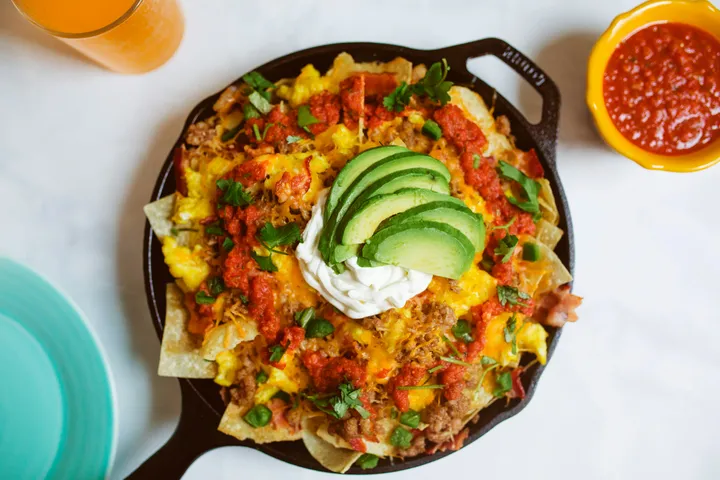
For the broader hosting framework that this finger-food menu sits inside, see how to host a dinner party (the cornerstone hosting guide). And if you are bringing finger foods to someone else’s gathering instead of hosting, our potluck ideas guide covers what survives the car ride and the two-hour table. For a casual crowd, a self-serve nacho bar feeds a lot of people with almost no plating, and a veggie platter is the cheap, make-ahead fresh option that rounds out any spread.
What to skip
A short list of finger-food patterns that don’t earn their effort.
- The 25-different-finger-foods menu. Five to seven well-executed items beat 25 half-finished ones. Guests don’t eat one of each; they pick three favorites and eat those repeatedly.
- Anything that requires individual plating per guest. Plated appetizers (a single shrimp on a small plate per person) are restaurant work, not home work.
- Foods served in tiny shot glasses or spoons. “Soup shots” and “salad spoons” are catering tricks that look fussy at home. Skip.
- Anything that needs to be eaten with a fork. That’s a side dish, not a finger food. Finger foods go from hand to mouth, not via cutlery.
- Hot foods that lose quality fast. Tempura, fried wontons, fried calamari. These are restaurant foods because restaurants serve them straight from the fryer. At home, they’re a degrading experience by minute 5.
- Anything labeled “fancy” or “fancy-style.” “Fancy deviled eggs,” “fancy cheese plate.” Real fancy is restraint. Don’t telegraph effort with adjectives.
- The mason jar trap. Salads in mason jars, dips in mason jars, drinks in mason jars. Pick a regular bowl. Same dip, less wedding-Pinterest.
- Themed everything. A “Hawaiian luau” menu with pineapple skewers, coconut shrimp, and rum punch is a costume, not a menu. Pick good food; the theme emerges from your house and your guests.
- Pre-made grocery store appetizer trays. The plastic trays of cubed cheese, cubed melon, and pre-rolled deli meat read as office party. Build from real components.
A short FAQ
How many finger foods per person?
8-12 for a 2-hour party. 12-15 for 3 hours. 4-6 if finger foods supplement a real meal. Always round up; running out is more memorable than having a small amount of leftovers.
What are the top 10 finger foods?
By reliability: deviled eggs, charcuterie skewers, mini quiches, bruschetta, stuffed mushrooms, mini meatballs, shrimp cocktail, caprese skewers, baked brie bites, chicken satay. Rotate seasonally but these 10 are the universal core.
What can I put in a finger buffet?
Pick 1-2 items from each of 5 categories: cold (deviled eggs, charcuterie), hot (mini quiches, stuffed mushrooms), dippable (hummus + crudités, spinach-artichoke dip), skewered (caprese skewers, antipasto skewers), sweet (chocolate-dipped strawberries, mini cheesecakes).
Can I make finger foods the day before?
Most yes. Deviled-egg filling holds 24 hours; assemble morning of. Crudités cut and stored airtight. Dips improve overnight. Bake components (quiches, mini tarts, brownies) the day before. Avoid making fried foods or anything bread-based that softens.
What’s the easiest no-cook finger food menu?
A charcuterie board (cold + sweet + dippable in one) + caprese skewers + crudités with two dips + a fruit platter. Total cook time: 0. Total prep time: 90-120 minutes. Feeds 12 generously.
What’s the hottest appetizer trend?
The mini-toast: small toasted bread with one composed topping (whipped feta + roasted tomato; ricotta + honey + pistachio; smashed avocado + chili crisp). Replaced bruschetta as the default modern hot appetizer. Also rising: the crudité plate as a real dish, the elaborate dirty-martini olive plate, and mini Yorkshire puddings filled with savory toppings.
How do I handle dietary restrictions?
Build the menu so at least one item per category is vegetarian, gluten-free, and dairy-free. Crudité + hummus covers vegetarian + vegan + gluten-free. Caprese skewers cover vegetarian + gluten-free. Smoked salmon covers gluten-free + dairy-free. Plan for the most common restrictions; ask guests in advance about anything more specific.
For deeper dives into specific finger-food categories, see charcuterie board (the cold-and-savory category in detail). For the broader hosting framework that finger-food menus fit inside, see how to host a dinner party. For seasonal hosting menus that incorporate finger foods, see 4th of july menu, christmas dinner ideas, and mother’s day brunch ideas.