Most vegetarian charcuterie board advice is really just meat-board advice with the salami crossed out. You end up with a beautiful platter that has a hole in the middle where the substantial, savory thing used to be, and you fill it with more crackers. This guide does the opposite: it builds the board around the role each food plays, so a vegetarian charcuterie board feels complete on its own terms, not subtracted from someone else’s.
It also covers the one thing nearly every other guide gets wrong, which is whether your cheese is even vegetarian in the first place. If you are feeding an actual vegetarian, that detail matters, and it is easy to get right once you know what to look for.
Who this is for
You are hosting and at least one guest is vegetarian, or you are vegetarian and tired of grazing boards that treat you as an afterthought. You want a board that everyone at the table reaches for, not a “veggie option” parked at the end. You also want to get the details right, because serving a vegetarian a cheese made with animal rennet is the kind of small miss that a careful host would rather avoid.
If you want the full method behind any grazing board, our charcuterie board guide is the foundation this builds on. This article is the vegetarian-specific version, with the meat-replacement logic and the cheese rule worked out.
TL;DR: the vegetarian board plan
- Build by role, not by subtraction. Cured meat is the salty, savory, substantial anchor. Replace that role on purpose with marinated, smoked, and oil-cured items, not extra crackers.
- Check your cheese. Many traditional cheeses use animal rennet and are not vegetarian. Authentic Parmesan is one. Look for “microbial,” “vegetable,” or “suitable for vegetarians” on the label.
- Hit five textures: salty/savory anchor, cheese, creamy dip, crunchy, fresh, and a touch of sweet.
- Plan one board the whole table eats from, so the vegetarian guest is not handed a separate sad plate.
- Budget roughly $3 to $6 per person for a snack-style board, depending on the cheeses.
- Skip the all-cheese-and-cracker board, the lone hummus tub, and the wilting raw-veggie pile.
Our free Dinner Party Checklist has a timeline you can fold this into if the board is part of a bigger gathering.
Why “remove the meat” leaves a hole
On a traditional board, cured meat does specific work. It is salty. It is savory and a little fatty. It is substantial, the thing you eat when you want more than a nibble. And it carries umami, the deep savory note that makes a bite feel satisfying. Take it away and three of those jobs go unfilled, which is why a meat-free board so often reads as pleasant but slight.
The fix is not to mourn the meat. It is to give those jobs to vegetarian foods that genuinely do them. Marinated and oil-cured items bring the salt and the savory richness. Smoked items bring the depth. Roasted, marinated, and protein-dense foods bring the substance. Once you think in roles instead of ingredients, the board fills back in, and nobody stands over it wondering what is missing.
That is the whole method below: figure out which role each food plays, then make sure every role is covered.
The cheese problem nobody mentions: is your cheese even vegetarian?
Here is the detail almost every vegetarian charcuterie board guide skips. A lot of cheese is not vegetarian.
Traditional cheese is made by curdling milk with rennet, and rennet is “a complex set of enzymes produced in the stomachs of ruminant mammals,” per its entry on Wikipedia. In other words, classic rennet comes from the stomachs of young animals like calves. Cheese set with it is not vegetarian, even though it contains no visible meat.
The clearest example is Parmesan. Authentic Parmigiano-Reggiano is made to a traditional method in which, as Wikipedia describes it, “calf rennet is added, and the mixture is left to curdle.” So the wedge of real Parmesan you were about to grate over the board is not vegetarian. The same caution applies to many traditional European cheeses, which have historically been made with animal rennet. Rather than memorize a list (it varies by producer and changes over time), check the label.
The good news is that vegetarian cheese is easy to find. Cheesemakers now widely use non-animal coagulants, and Wikipedia notes the common alternatives are vegetable rennet, microbial rennet, and fermentation-produced chymosin. On a label this usually shows up as “microbial enzymes,” “vegetable rennet,” or a plain “suitable for vegetarians” line. A great many supermarket cheddars, goudas, and fresh cheeses already qualify. So the rule is simple: if a guest is a strict vegetarian, read the label or choose cheeses marked vegetarian, and skip the authentic Parmesan in favor of a vegetarian hard cheese.
This is the kind of thing a thoughtful host gets right quietly, and it is exactly what separates a real vegetarian board from a meat board with the meat picked off.
The savory anchors that replace cured meat
This is the section that makes the board work. These are the foods that take over salami’s job: salty, savory, substantial, and full of umami. Put two or three of them on every board.
- Marinated artichoke hearts. Tangy, meaty texture, and they look generous piled in a small bowl.
- Oil-cured and marinated olives. A mix of types (Castelvetrano, Kalamata, oil-cured black) covers salty and rich in one move.
- Sun-dried tomatoes, oil-packed. Intensely savory and a little sweet, the closest thing to a cured-meat punch on the board.
- Marinated mozzarella (bocconcini or ciliegine). Creamy and substantial, especially tossed with herbs and oil.
- Roasted or marinated mushrooms. Mushrooms are the umami workhorse of the vegetarian kitchen. Marinated, they eat almost like a cured item.
- Smoked or marinated tofu, sliced. The smoked kind, sliced thin and fanned out, is the single best visual and textural stand-in for sliced meat.
- Spiced roasted chickpeas. Crunchy, savory, and protein-dense, they add the substance a board can otherwise lack.
- Cornichons and pickled vegetables. Cornichons, giardiniera, or quick-pickled red onions cut the richness and reset the palate.
You do not need all eight. Two or three anchors, chosen for variety, do the work of the missing meat.
The cheeses
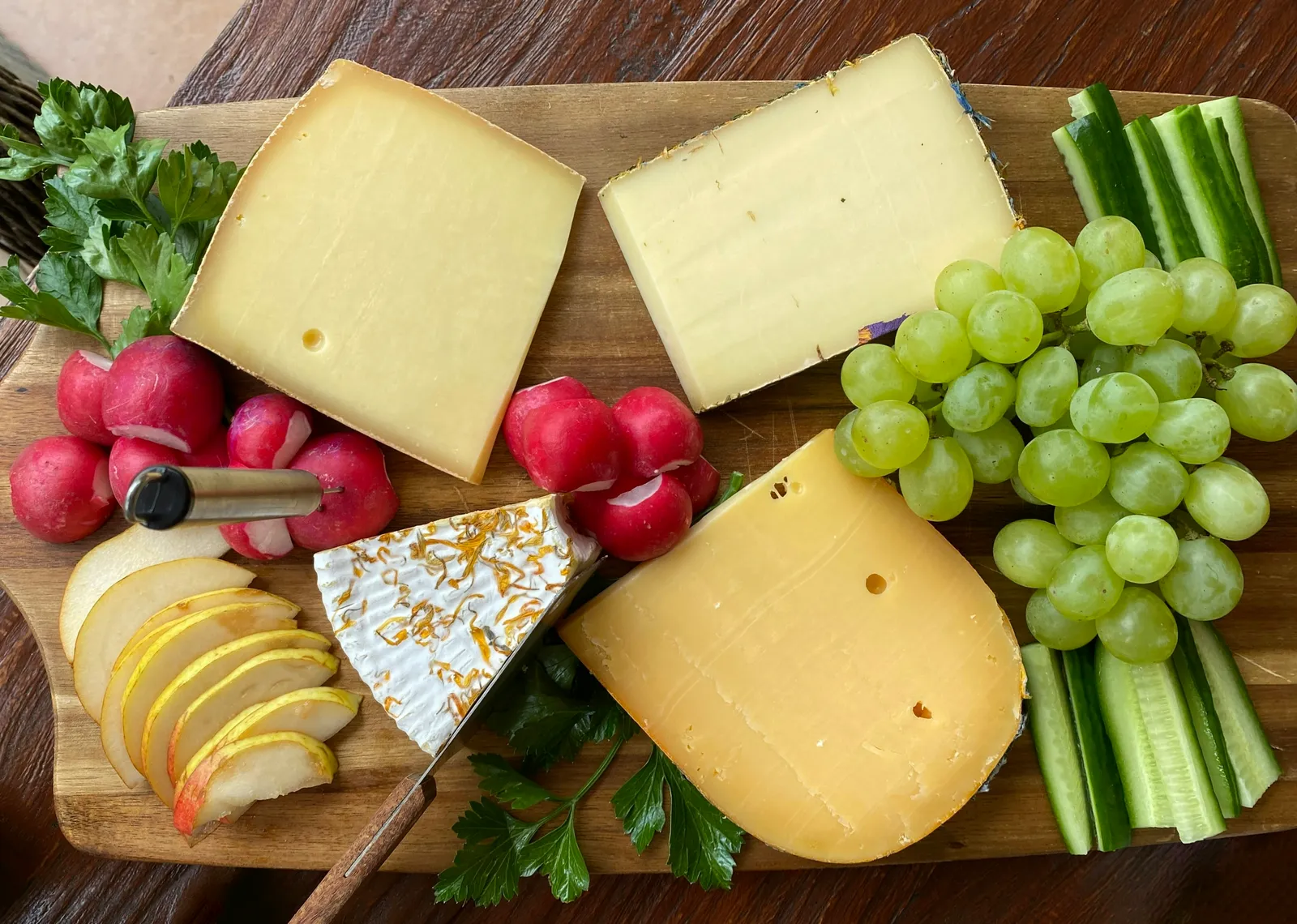
Pick two or three, in different styles, and make sure each is vegetarian (see above).
- A soft cheese: fresh chevre, a brie-style cheese, or burrata. Creamy contrast to everything salty.
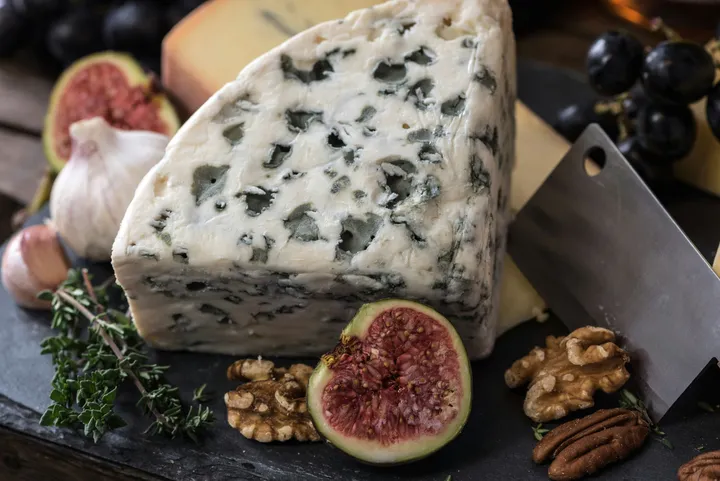
- A firm cheese: a vegetarian-rennet cheddar or gouda. These are the easiest to find labeled vegetarian.
- An aged or flavored option that you have confirmed is vegetarian. Reach for a vegetarian hard cheese here instead of authentic Parmesan.
The creamy dips
A dip gives the board a place to land and makes the crackers and vegetables more interesting.
- Hummus, plain or roasted red pepper, the reliable anchor of the dip family.
- Whipped feta or herbed goat cheese, thick enough to scoop without dripping (check the feta’s rennet if it matters).
- Baba ganoush or a white bean dip, for an earthier, less expected option.
The crunchy
Crunch is the texture that keeps a board from feeling soft and one-note.
- A spread of crackers, seeded crisps, breadsticks, and toasted baguette. Vary shape and sturdiness so there is a vehicle for every dip and cheese.
- Marcona almonds and spiced or candied nuts. They double as crunch and as little savory-sweet bites on their own.
The fresh
Fresh produce brightens the board and gives the eye somewhere to rest between the rich items.
- Fruit: grapes, fresh or dried figs, apple or pear slices (toss with a little lemon so they do not brown), berries.
- Vegetables as vehicles, not filler: cherry tomatoes, cucumber spears, endive leaves, snap peas. The trick is to treat them as scoops and bites, not a raw pile nobody touches.
The sweet and the condiments
A small sweet element and a condiment or two tie the savory side together.
- Fig jam or quince paste (membrillo), the classic sweet partner for cheese.
- Hot honey, which is worth a note: honey is vegetarian but not vegan, so it is fine for a vegetarian board but skip it if anyone is vegan.
- Grainy mustard, dark chocolate squares, and dried apricots round things out without much effort.
Building the board by role: a real spread for 6 to 8
Forget arranging by color or by what looks full. Arrange so every role is covered. For 6 to 8 people grazing before a meal:
- 2 to 3 savory anchors (say, marinated artichokes, a bowl of mixed olives, and smoked almonds)
- 3 cheeses, all confirmed vegetarian, in different styles (one soft, one firm, one aged)
- 2 dips (hummus plus whipped feta)
- A crunchy spread (two or three cracker types plus a handful of nuts)
- A fresh section (grapes, figs, cucumber, endive)
- 1 to 2 sweet or condiment touches (fig jam, dark chocolate)
Plan on roughly 2 to 3 ounces of cheese per person for a board that is the pre-dinner nibble, more if it is the main event. A board like this runs about $3 to $6 per person depending on how fancy the cheeses are, and most of it holds fine at room temperature for the length of a gathering. Place the dips and bowls first, set the cheeses in the open spaces, then fill the gaps with crackers, fruit, and the savory anchors so there are no bare patches. Our how to set a table guide covers the rest of the spread if the board is the opening act of a sit-down dinner.
One board the whole table eats from
The point of getting this right is that you build one board everyone enjoys, not a main board plus a vegetarian consolation plate. A well-built vegetarian board is genuinely good food, so omnivores graze it happily and the vegetarian guest is not singled out.
If you also want to put out cured meat for the meat-eaters, keep it on a separate small board rather than on the main one. That way the main board stays truly vegetarian (no stray prosciutto touching the cheese), and a vegetarian guest can dig into the big beautiful spread without picking around anything. It is a small logistics choice that makes the vegetarian guest the default, not the exception. The same one-board-everyone-eats logic runs through our finger foods for a party and housewarming party food guides.
What if a guest is vegan, not vegetarian?
It is worth being precise, because vegetarian and vegan are not the same and a board built for one does not automatically work for the other. A vegetarian board still leans on dairy cheese, and it often includes honey, neither of which is vegan. So the board above is not a vegan board.
Making it vegan is straightforward if you plan for it. Swap the dairy cheeses for vegan cheeses (cashew and almond-based wheels have gotten genuinely good), drop the honey in favor of fig jam or maple, and double down on the savory anchors that were already plant-based: the marinated artichokes, olives, sun-dried tomatoes, smoked tofu, and spiced chickpeas carry the board on their own. If you are hosting one vegan among vegetarians, the easy move is to keep those plant-based anchors in their own bowls so the vegan guest has a clear, safe section to eat from.
Make-ahead and assembly
A board looks like a lot of work and is mostly shopping plus 20 minutes of arranging.
- The day before: Marinate anything that benefits from it, make the dips, roast the chickpeas or nuts, and portion the cheese. Confirm each cheese is vegetarian while you are at it.
- An hour before: Pull the cheese out so it comes to room temperature, where it actually tastes like something. Wash and slice the fruit and vegetables.
- Twenty minutes before: Assemble. Bowls and dips first, cheeses next, then fill every gap with crackers, fruit, nuts, and the savory anchors.
Cheese served cold from the fridge is half its flavor. The room-temperature step is the one not to skip.
What to skip
The vegetarian board mistakes that show up again and again:
- The all-cheese-and-cracker board. Without a savory anchor it tastes flat and rich and nothing else. This is the single most common vegetarian board failure.
- The lone tub of hummus. One dip is not variety. It reads as an afterthought, which is exactly the impression we are trying to avoid.
- The wilting raw-veggie tray. Raw vegetables are great as vehicles for a dip, not as a sad pile sweating in the middle of the board.
- Unchecked cheese for a strict vegetarian. If a guest genuinely does not eat animal rennet, do not assume. Read the label or choose cheeses marked vegetarian.
- Too many sweets. A little fig jam and some chocolate is right. Five sweet items and the savory side disappears.
- Treating it as the backup. A vegetarian board built with care is the centerpiece, not the alternate. If you build it like an afterthought, it tastes like one.
A short FAQ
What do vegetarians put on a charcuterie board? Build by role: savory anchors (marinated artichokes, olives, sun-dried tomatoes, smoked tofu, spiced chickpeas) in place of the meat, two or three vegetarian cheeses, a dip or two, something crunchy, fresh fruit and vegetables, and a touch of something sweet.
What cheese is vegetarian? Only cheese made without animal rennet. Traditional rennet comes from the stomachs of young ruminant animals, so cheese set with it is not vegetarian. Authentic Parmesan uses calf rennet. Look for “microbial,” “vegetable,” or “suitable for vegetarians” on the label.
What is a charcuterie board without meat? Technically it is a cheese or grazing board, since charcuterie means cured meat. “Vegetarian charcuterie board” is just the common search term. The build is the same minus the meat, with savory anchors filling that role.
What is the 3-3-3 rule for charcuterie? A popular guideline, not an official rule: commonly three cheeses, three meats, and three accompaniments. For a vegetarian board, swap the three meats for three savory anchors. Treat it as a starting ratio.
What are five things to avoid on a vegetarian charcuterie board? An all-cheese-and-cracker board with no savory anchor, a single lonely dip, a wilting raw-veggie pile, unchecked cheese for a strict vegetarian, and too many sweets crowding out the savory.
What’s next
A vegetarian charcuterie board is one of the most forgiving things you can put in front of guests, as long as you build it around what each food does instead of around what you took out. Cover the savory-anchor role, check your cheese, hit your textures, and you have a board that the whole table reaches for.
When you are ready to scale the idea up, our charcuterie board guide covers the full method, the dinner party menu ideas show where a board fits into a bigger meal, and the cornerstone hosting guide handles everything around it. For now: read the cheese labels, marinate something savory, and build the board everyone eats from.