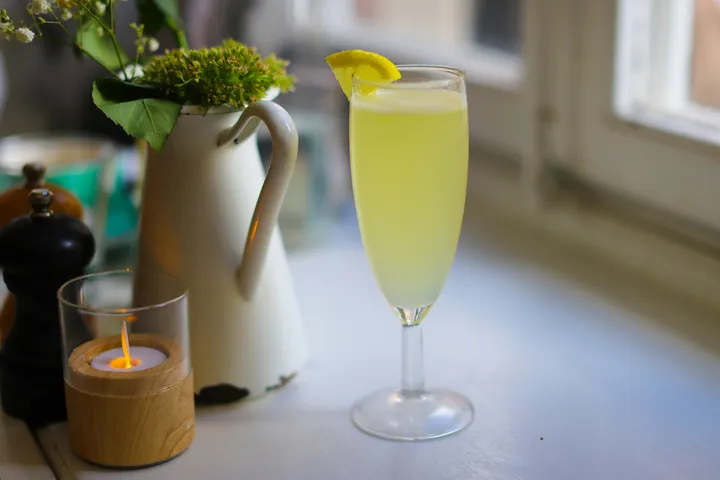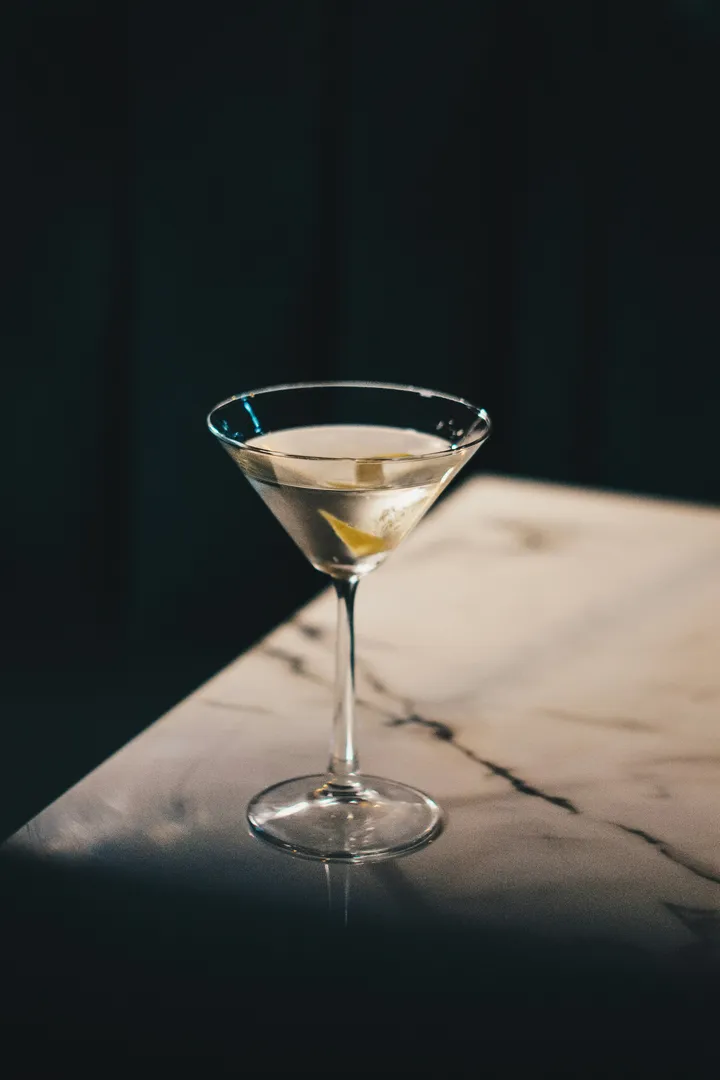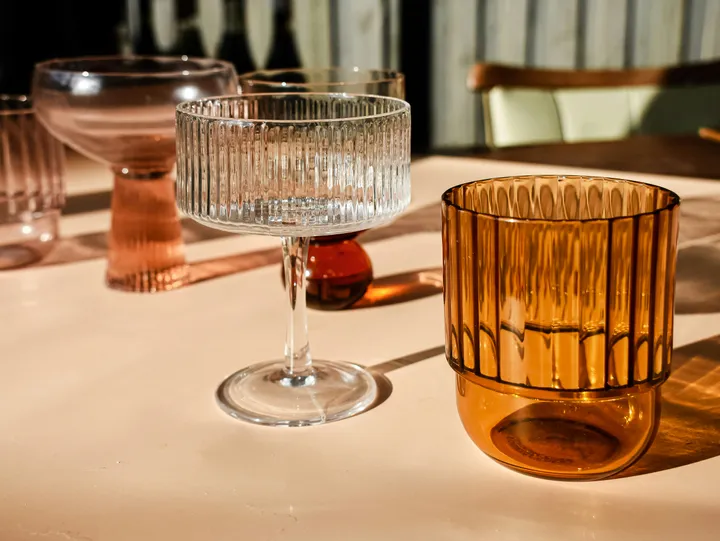
Champagne glasses are the category where the shape most people own is the shape the experts have quietly walked away from. Flutes look right, keep bubbles alive, and hide most of what a good bottle smells like. The best champagne glasses for a real home cover three jobs, the toast, the party, and the bottle you actually want to taste, and none of them needs to cost more than $50 a glass. The $99 ones are lovely and optional.
These are the picks worth buying, by shape and by budget, with prices read live from the makers’ own sites, plus how many you need to host and the glasses to skip.
Who this is for
You are buying champagne glasses for a home: a New Year’s Eve toast, a wedding-registry decision, a mimosa bar, or the first nice bottle you plan to open slowly. You want specific glasses that earn their price, not a lecture on Champagne (capital C, the region) versus sparkling wine. If you want the deeper argument about whether a flute is ever the right glass, our champagne flutes guide is the companion piece; this article is the shopping list.
TL;DR: the best champagne glasses
- Best overall: the Riedel Performance Champagne glass, a tulip, about $99 a pair. It wins nearly every professional test for a reason: wide opening, wide base, dishwasher-safe.
- Best tulip for less: Viski Raye Angled Crystal Prosecco glasses, about $34 a pair. Same idea, a third of the price, hand-wash.
- Best flute for most homes: Schott Zwiesel Pure, about $11 to $17 a glass. Tritan crystal, dishwasher-safe, tall and slightly angled.
- Best cheap flutes: IKEA STORSINT ($24.99 for six) and SVALKA ($14.99 for six), or Libbey Signature Kentfield ($44.99 for four, often on sale) if you want the same glass in ten years.
- Best coupe for champagne: IKEA FROJDA ($19.99 for four) for the crowd, Waterford Elegance Belle ($110 a pair) for the gift shelf.
- Best stemless: Lenox Tuscany Classics stemless flutes, $54.95 for six on sale (MSRP $79).
- Best plastic: Tossware POP 6 oz flutes, from $19.99 for twelve. Recycled PET, shatterproof, snap-on stems.
- Best splurge: Josephinen Josephine No. 4, $99 a glass. If money is not the question, this is the answer.
Best champagne glasses at a glance
| Pick | Shape | Best for | Size | Price per glass | Washing |
|---|---|---|---|---|---|
| IKEA SVALKA / STORSINT | Flute | Big parties, mimosa bars, a first set | 7 oz | $2.50 to $4 | See IKEA’s care label |
| Libbey Signature Kentfield | Flute | Everyday glass flute, made in the USA | 8 oz | $9 to $11 | Dishwasher |
| Schott Zwiesel Pure | Flute | The flute to own | about 7 oz | $11 to $17 | Dishwasher |
| Riedel Vinum Champagne | Flute (crystal) | The best-tested flute | 5.7 oz | $30 to $43 | Dishwasher |
| Waterford Elegance Classic | Flute (crystal) | Gifts, the guest shelf | 8 oz | $55 | Hand-wash |
| Viski Raye Prosecco | Tulip | Best budget tulip | 8 oz | about $17 | Hand-wash |
| Glasvin The Champagne | Tulip (handblown) | Featherweight tulip | 11.8 oz | about $40 | Dishwasher, bottom rack |
| Riedel Performance Champagne | Tulip | Best overall | 13.2 oz | about $50 | Dishwasher |
| Josephinen No. 4 | Tulip (handblown) | The splurge | 13.5 oz | $99 | Hand-wash in practice |
| IKEA FROJDA / STORHET | Coupe | Toasts and cocktails on a budget | 7 oz / 10 oz | $5 to $6 | See IKEA’s care label |
| Waterford Elegance Belle | Coupe (crystal) | The coupe as a gift | 7 oz | $55 | Hand-wash |
| Lenox Tuscany Classics stemless | Stemless flute | Brunch, patios, casual | 9 oz | $9 to $13 | Dishwasher |
| Libbey stemless flutes (set of 12) | Stemless flute | A crowd, cheaply | 8.5 oz | about $3.30 | Dishwasher |
| Tossware POP 6 oz | Plastic flute | Pools, lawns, 50 guests | 6 oz | about $1.70 | Hand-wash |
Sizes for the Riedel, Glasvin, Viski, and Vinum glasses are the capacities Serious Eats measured in its August 2026 test; the rest are the makers’ listed sizes. Prices were read on each brand’s site in September 2026 and move with sales, but the tiers hold: under $5, about $10 to $17, about $50, and $99.
Why the glass shape matters for champagne
A champagne glass has to balance two things that fight each other: keeping bubbles and releasing aroma. A narrow flute keeps the fizz longest and mutes the smell. A wide coupe smells better for ten minutes and then goes flat. A tulip, wider in the bowl and narrowed at the rim, does most of both, which is why it is now the professional default.
That is the whole science, and the evidence is not just sommelier fashion. A 2022 study published by the Wine and Spirit Education Trust had 89 wine students taste two grower champagnes from four Riedel shapes, half of them blindfolded. The blindfolded group rated the flute’s aroma intensity significantly lower than the tulip flute, the white wine glass, and the bowl. When participants could see the glasses, they rated the flute lower still. The physical effect is real, and so is the psychological one.
The mechanism, per the Wikipedia entry on champagne glasses, is surface area: the flute’s inward taper near the lip reduces the surface that lets carbonation escape, and the deep column shows the bubbles rising. The same narrowness gives your nose nothing to work with. Serious Eats measured it in its 2026 test: the tulips it liked had openings of about 2.25 inches against the flutes’ average of 1.8, and the difference in aroma was, in its word, stark.
Two practical corollaries. First, a good white wine glass is a fine champagne glass, so if you own the universal glasses from our best wine glasses picks, you already own something better than most flutes. Second, temperature barely matters to the glass choice: Serious Eats found sparkling wine warmed about 6.5 degrees in 15 minutes in nearly every glass, flute or tulip, and nobody could taste the difference.
The best champagne glass overall is a tulip
If you searched for tulip champagne glasses, this is your section. A tulip is a champagne glass with a bowl that swells wider than a flute and then curves back in at the rim. It is, functionally, a small white wine glass with a narrower mouth, and it is the shape every tested roundup and most champagne houses now recommend.
Riedel Performance Champagne, about $99 a pair
The consensus winner, and in this case the consensus is right. Riedel’s Performance champagne glass has an opening wide enough to get your nose in, a 3.5-inch base, the widest in Serious Eats’ test, which is why it does not tip, and a 13.2-ounce capacity that gives a 4-ounce pour room to breathe. It is machine-made crystal and goes in the dishwasher, which is the difference between a glass you use monthly and one you use on Tuesday. Riedel sells it in pairs, so plan on about $50 a glass; both Serious Eats and Food and Wine list it at $99 for two.
Riedel has argued for years that flutes are one-dimensional, and the Performance line is the company putting its money where its mouth is. It is the one glass on this list that is both the best and the sensible everyday choice, if you can stomach the price of four.
Glasvin The Champagne, $79 a pair
Handblown, weightless, and the tulip small restaurants have adopted. Glasvin’s champagne glass holds 11.8 ounces and weighs about 3 ounces, and the brand says it is dishwasher-safe on the bottom rack, which is rare for a handblown glass. The trade-off Serious Eats flagged: the base is light, so a full glass feels a little tippy. Buy this if you want the handblown feel at $40 a glass instead of $99.
Viski Raye Angled Crystal Prosecco glasses, $33.99 a pair
The budget tulip, and the pick that changes the most for the least money. The Viski Raye Prosecco glass is a hybrid, the outward bulge of a tulip on the tall body of a flute, holding 8 ounces. It is hand-wash only and the base is small, so it is a glass for a seated table rather than a standing crowd. At about $17 a glass it is a third of the Riedel and does most of the same job. Viski also makes a Raye flute ($37.39 a pair) if you want the family without the bulge.
The best champagne flutes
A flute is still the right glass for a toast, a mimosa bar, a wedding, or any evening where glasses sit around while people talk. The bubbles last 30 minutes or more; in a coupe they are gone in 10 to 15. Buy flutes at 6 to 8 ounces, which suits a 3- to 4-ounce pour; the champagne flutes guide explains why the 12-ounce department-store flute is a mistake.
Best budget flutes: IKEA and Libbey
For a party or a first set, buy IKEA’s STORSINT flute, 7 ounces, $24.99 for six. It is made from what IKEA calls crystalline glass, clear with a real ring when you clink, and it matches the rest of the STORSINT wine glasses if you own them. The SVALKA flute is the same size for $14.99 a six-pack, about $2.50 a glass, and the DYRGRIP flute, 8 ounces at $4.99 each, is the prettier one, designed by Swedish glass designer Ingegerd Råman. Twelve SVALKAs for a New Year’s Eve party cost $30. Nobody at that party will know or care.
If you want a glass flute you can rebuy identically for a decade, the Libbey Signature Kentfield champagne flute is the pick: 8 ounces, 9.4 inches tall, made lead-free in the USA, dishwasher-safe, $44.99 for four and regularly on sale for $36.99. It is the flute sibling of the Kentfield universal glass that leads our wine roundup, so the two match on a table.
Best flute for most homes: Schott Zwiesel Pure, $11 to $17 a glass
The flute we would buy if buying one set. Zwiesel Glas makes the Pure line from its Tritan crystal, a reinforced lead-free glass that goes through the dishwasher for years without clouding. The flute is tall (about 10 inches, the tallest Food and Wine tested, so check your cabinet shelf), holds about 7 ounces, and has slightly angled walls that taper toward the rim, which is the detail that separates a good flute from a straight glass tube. Sold in pairs at about 26 euros on Zwiesel’s own site; in the US it runs roughly $68 to $102 for a set of six depending on the retailer, so budget $11 to $17 a glass.
The crystal upgrade: Riedel Vinum and Waterford Elegance
Two flutes for when you want crystal without going handblown. The Riedel Vinum champagne flute was Serious Eats’ best flute outright: 5.7 ounces, a 1.75-inch opening that still lets your nose in, sturdy, dishwasher-safe, about $60 to $85 a pair. Its size is petite, so it suits toasting pours more than a full glass.
For a gift or a guest shelf, the Waterford Elegance Champagne Classic flute is 8 ounces and $110 a pair on Waterford’s site, real crystal that reads as an occasion (Serious Eats’ luxury pick was the Elegance trumpet flute pair at about $100). Like most fine crystal, hand-wash it. If you want crystal for less, the Marquis by Waterford Moments flute is $80 for four, about $20 a glass, and looks like a lot more.
Best coupe glasses for champagne
The honest answer first: a coupe is the worst of the three shapes for the wine itself. The wide bowl loses bubbles fastest and does nothing to gather aroma. It is also the most stable glass in a crowd, the easiest to sip from standing up, and the only champagne glass that doubles as the glass for a daiquiri, a French 75, or a manhattan. Historically it is the original champagne glass: Wikipedia traces the design to about 1663 and Venetian glassmakers working in England, and it was fashionable in France until the 1970s.
Our coupe glasses guide covers the shape in depth. For champagne specifically:
- Budget: IKEA’s STORHET coupe, 10 ounces at $5.99, is the coupe-page pick and still the value answer; its 7-ounce FROJDA coupe, $19.99 for four, is closer to the right size for a 4-ounce pour.
- Everyday: the Libbey Signature Greenwich line, the coupe we recommend for cocktails, has a matching champagne flute at $44.99 for four if you want one family across the bar.
- Gift: the Waterford Elegance Belle coupe, 7 ounces, $110 a pair, is a deep V-shaped crystal coupe that Food and Wine named its most versatile glass because it moonlights as a martini glass. Hand-wash.
Best stemless champagne glasses
Stemless flutes trade elegance and a cool drink for stability. Your hand warms the wine faster, the glass is nearly impossible to tip, and it stacks in a cabinet. That is the right trade for brunch, patios, and any table with toddlers or a big dog.
The Lenox Tuscany Classics stemless flute set is the pick: six crystal glasses, 9 ounces each, dishwasher-safe, listed at $79 on Lenox and $54.95 on sale, so $9 to $13 a glass. Food and Wine, which named it the best stemless glass, notes they are mouth-blown and no two are exactly alike, which at this price is charming rather than a flaw.
For a crowd, Libbey’s stemless champagne flutes come twelve to a box for $39.99, lead-free and dishwasher-safe, about $3.30 a glass. If you want the crystal version, the Riedel O champagne tumbler is about $39 a pair and was Serious Eats’ stemless winner, with the one complaint that the narrow opening bumps your nose.
Best plastic champagne flutes for outdoors
Plastic flutes are wrong indoors and right at a pool, on a lawn, or at any event where broken glass on grass is a real problem. The one brand worth buying is Tossware. Its POP 6-ounce champagne flute is made from recycled PET (the company says recycled water bottles), is BPA-free and shatterproof, and is curbside recyclable rather than landfill. The stems snap on and off, which solves the classic problem of the stem popping loose mid-toast. A 12-pack starts at $19.99 and a 48-pack is available, so a backyard wedding toast for 48 costs well under $100. They are hand-wash only; Tossware’s dishwasher-safe line is its RESERVE tumblers.
Skip the 100-count acrylic flutes from party stores. They are cloudy, the stems fall off, and at the lip they feel like exactly what they are.
The splurge: handblown champagne glasses
Handblown crystal buys thinness, lightness, and the feeling that the glass has disappeared. It does not buy better-tasting champagne; the tulip shape does that at $17. Buy this tier because you want the object.
The Josephinen Josephine No. 4 is the current benchmark: a mouth-blown champagne glass designed by Kurt Josef Zalto, $99 a glass or $198 for a boxed pair direct from Josephinen, with a bowl shaped to keep the mousse and a narrow rim that focuses aroma. Food and Wine’s caveat is the right one: there is a divot in the bottom of the bowl that needs a brush, so it is dishwasher-safe on paper and hand-washed in practice. It is also, unusually, a good glass for sweet wines, which makes it slightly more versatile than a flute of the same price.
Zalto’s Denk’Art champagne glass is the other name at this level, from the Austrian house behind the universal glass in our wine roundup; it is sold through retailers rather than priced on Zalto’s own site. And the Glasvin above is the budget entry to the same category at $40 a glass, with a dishwasher-safe claim the others cannot make.
Champagne glasses as a gift
Champagne glasses are one of the safest gifts in the house, because a pair is always useful and a pair is always the right quantity. The reliable moves, by budget:
- Under $50: Libbey Signature Kentfield flutes, four for $44.99. The host gift that gets used at the next party, not stored.
- About $100: Riedel Performance Champagne pair ($99) for the friend who cooks and drinks well, or the Waterford Elegance Classic flutes ($110 a pair) for the wedding, anniversary, or the parent who has a crystal cabinet. Waterford engraves.
- About $200: the Josephinen No. 4 boxed pair ($198). The gift for the one person you know who would never buy it for themselves.
What to skip as a gift: engraved novelty flutes with names and dates (used once, boxed for 30 years), gold-rimmed anything that cannot be machine-washed, and any set of two that does not match a set the recipient already owns, unless it is nice enough to become the new set.
How many champagne glasses you need to host
The math starts with the bottle. A standard 750 ml bottle pours about six 4-ounce glasses or eight 3-ounce toasting pours. From there:
| Occasion | Guests | Glasses to own | Which glass |
|---|---|---|---|
| Dinner party with a toast | 6 to 8 | 8 flutes or tulips | Schott Zwiesel Pure or Riedel Performance |
| New Year’s Eve at home | 12 | 12 to 14 flutes (spares for breakage) | IKEA STORSINT or Libbey Kentfield |
| Mimosa bar or brunch | 20 | 24 to 30 flutes | IKEA SVALKA, Libbey stemless |
| Backyard wedding or pool party | 30 to 50 | one per guest plus 10 percent | Tossware POP |
| Just the two of you, often | 2 | 2 to 4 tulips | Riedel Performance, Glasvin, or Josephinen |
Two hosting rules that save money. First, glasses only need to match within an occasion, so six identical IKEA flutes beat two Riedels and four mismatched hand-me-downs. Second, if you host big parties twice a year, buy the $2.50 flutes for the party and put the money into two or four tulips you use the rest of the year. Our how to host a dinner party guide covers the rest of the glassware count, and the bar cart guide covers what sits beside the bottle.
How we chose these
- Shape first. Tulip for tasting, flute for toasts and time, coupe for stability and cocktails. Shape is most of the decision and it is free.
- Professional testing where it exists. Serious Eats (14 glasses, August 2026) and Food and Wine (13 glasses, January 2026) both tested the field with real bottles and thermometers. Where our picks overlap theirs, it is because their measurements agree with the shape logic, not because we copied the list; where we differ, it is on price.
- Live prices, per glass. Every price here was read on the maker’s own site or, for Riedel, in both tests; roundups that quote $99 without saying it is for two are hiding the number that matters.
- Dishwasher reality. A champagne glass you are afraid to wash comes out twice a year. The budget and mid tiers here survive a machine; the crystal tier mostly does not, and we say so.
- Replaceability. Glasses break. IKEA, Libbey, Zwiesel, and Riedel lines can be rebought identically for years.
Caring for champagne glasses
- Machine-wash the machine-washable ones. Libbey, IKEA STORSINT, Zwiesel, Riedel Performance and Vinum, Lenox, and Glasvin are all listed as dishwasher-safe by their makers. Load tall flutes so the bowls cannot knock into each other, and skip the high-heat dry cycle, which is what cracks a stem.
- Hand-wash thin crystal. Waterford, Josephinen, Zalto, and the Viski Raye want warm water, a drop of detergent, and a rinse. Hold a handblown glass by the bowl, never the stem, while you wash it; the stem is where it breaks.
- Rinse well. Detergent film is the enemy of a clean pour. Rinse until the glass squeaks and dry with a lint-free cloth.
- Store them upright. Rim-down storage traps cabinet smells in a glass that is all about aroma.
- Serve the wine less cold than you think. Serious Eats’ master sommelier source recommends about 40 to 45F for a simple non-vintage brut and 50 to 55F for finer bottles; the ice bucket that makes it painfully cold hides the wine you paid for.
What to skip
- 12-ounce flutes. A 4-ounce pour looks lost in them and the wine warms while it waits. Stay at 6 to 8 ounces.
- Any flute for your best bottle. If you are opening something worth savoring, pour it into a tulip or your universal wine glass. The flute is for the toast, not the tasting.
- Coupes if you mostly drink champagne. They are the right second glass and the wrong first one; the bubbles are gone in 15 minutes.
- Handblown crystal as your only set. A Josephinen is a joy and a liability. Own a pair; do not stock a party with glasses that cannot see a dishwasher.
- Whisper-thin stems for a standing party. Serious Eats’ test found the lightest tulips tippy when full. For a crowd on its feet, the wide-based Riedel Performance or a plain IKEA flute survives the gesturing.
- Gold rims and metallic paint. They rule out the dishwasher and, on cheap glasses, wear off within a year.
- Party-store acrylic. Buy Tossware or buy real glass; there is no good middle.
- Buying twelve of anything at $50 a glass. Buy four good tulips and eight cheap flutes. The math is the same and the cabinet is happier.
FAQ
What type of glasses are best for champagne? A tulip-shaped glass is best for tasting champagne: its bowl is wider than a flute’s, so the wine releases more aroma, and the rim still narrows enough to hold the bubbles. A flute is best for toasts and long parties because it keeps the fizz longest. A coupe loses bubbles fastest but is the most stable glass for a crowd and doubles as a cocktail glass. If you already own good universal wine glasses, they work well for fine champagne too.
Is a coupe or flute better for champagne? For the wine, the flute: its narrow bowl keeps bubbles for 30 minutes or more, while a coupe goes flat in 10 to 15. For a toast in a crowded room, the coupe is easier to hold, harder to tip, and doubles as the glass for daiquiris and French 75s. Neither is the best glass for tasting fine champagne; that is a tulip or a white wine glass. Buy flutes if you pour sparkling wine often, coupes if you mostly want one glass for cocktails and the occasional toast.
What is the best champagne glass brand? There is no single best brand, only a best brand per budget. IKEA and Libbey make the best cheap flutes, at about $2.50 to $11 a glass. Schott Zwiesel makes the best mid-priced flute. Riedel’s Performance line is the tulip that wins nearly every professional test, at about $50 a glass. Waterford is the safe crystal gift. Josephinen, Zalto, and Glasvin make the handblown glasses wine professionals reach for, from $40 to $99 a glass.
What glass do the French drink champagne in? Historically the coupe, fashionable in France from the 18th century until the 1970s, and then the flute. Today the big houses’ own guidance has moved on: Laurent-Perrier, for example, keeps flutes and coupes for celebrations and says modern tastings favor tulip-shaped glasses or fine white wine glasses that let the aromas show. The French drink it from whatever reveals the wine, and that is increasingly not a flute.
What is the best champagne flute? For most homes, the Schott Zwiesel Pure: a tall, slightly angled Tritan crystal flute, dishwasher-safe, about $11 to $17 a glass depending on the retailer. If you want a glass flute for less, Libbey’s Signature Kentfield flute (about $9 to $11 a glass, made in the USA) or IKEA’s STORSINT (about $4) are the honest budget answers. The best crystal flute in professional testing is the Riedel Vinum, at roughly $30 to $43 a glass.
Are expensive champagne glasses worth it? Rarely, and only for one reason: a handblown glass like the Josephinen No. 4 or a Zalto is thinner, lighter, and lovelier to hold, which matters if champagne is a hobby rather than a once-a-year toast. The champagne tastes the same in a $4 IKEA flute. The upgrade that genuinely changes the flavor is not price but shape: moving from a narrow flute to a tulip, which you can do for $17 a glass with the Viski Raye or $50 with the Riedel Performance.
The bottom line
The best champagne glasses for a real home are a stack of cheap flutes for the nights you toast and a pair or four of tulips for the bottles you want to taste. That is six IKEA STORSINTs and two Riedel Performances for about $125 total, or the same idea for half that with SVALKAs and the Viski Raye. Spend more only for the feel of handblown glass or for a gift, and pour the good bottle into a tulip, or into the wine glasses you already own, rather than into the flute the picture in your head insists on.