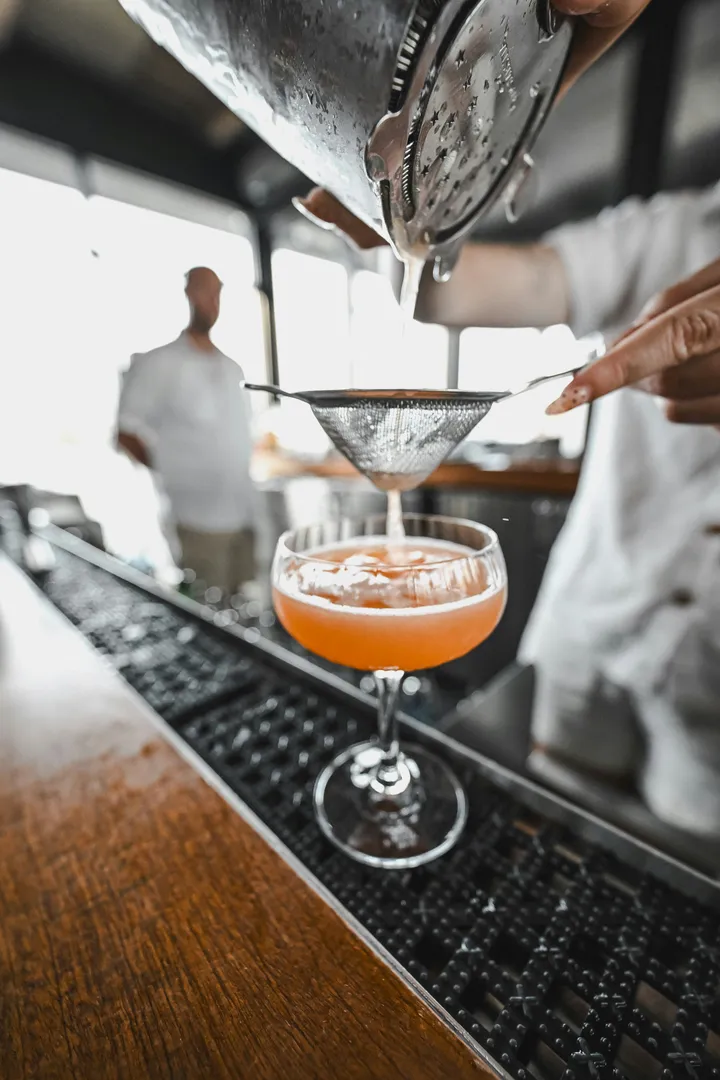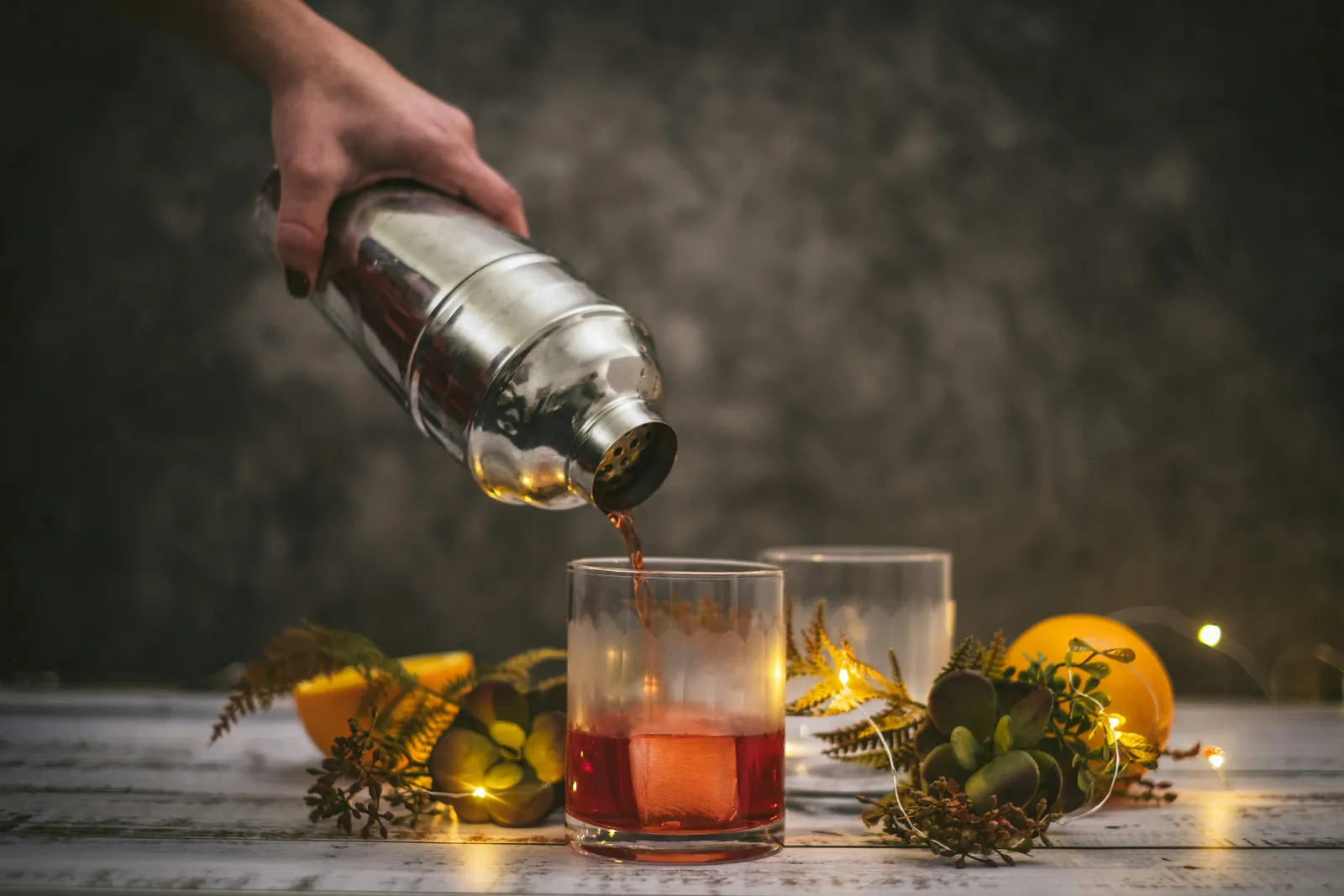
If you’re shopping for a cocktail shaker, the honest answer is: buy a Boston shaker. Skip the 3-piece cobbler that comes with most bar kits. Below: why bartenders use Bostons almost exclusively, the 3 sets we’d buy at every budget, and how to use one without making a mess.
TL;DR: the quick answer
- Boston shaker (two-piece, all metal) is the right shaker for almost every home bar. Bartenders use them; they freeze less; they open reliably.
- Cobbler shaker (the 3-piece one with a built-in strainer cap) is what comes in most bar kits. Skip it. It freezes shut, traps ice, and the cap pops off mid-shake.
- French (Parisian) shaker is a stylish two-piece design that’s fine but offers no advantage over a Boston.
- Get Cocktail Kingdom’s Koriko weighted tins ($26.98 a pair) plus a strainer, or A Bar Above’s $44 4-piece set if you want the strainer and jigger in the box. Our best cocktail shaker sets roundup has the full list with live prices.
- You don’t need a “set” of bar tools. A shaker, jigger, hawthorne strainer, and bar spoon, bought separately, costs less and works better than the influencer-marketed 12-piece kits.
The 3 types of shaker
Three designs exist. Only one of them is the right answer for home use.
Boston shaker (the right answer)
Two pieces of metal: a larger tin (typically 28 oz) and a smaller tin (typically 18 oz). The smaller tin sits inside the larger; you tap the top to seal, shake, then strike the side to release.
- Used by approximately every professional cocktail bar
- Cheapest of the three types
- Easiest to open after shaking
- No moving parts to break or trap ice
- Pairs with a separate hawthorne strainer (sold separately, $5-10)
The “tin-on-tin” Boston is the version we recommend. Some Boston shakers use a glass mixing pint instead of a smaller tin, fine for stirred drinks, but for shaking, all-metal is better.
Cobbler shaker (the one to skip)
Three pieces: a metal tumbler, a fitted top with a built-in strainer holes, and a small cap that covers the strainer. This is what comes in 90% of “starter bar kits” sold on Amazon, and it’s the wrong tool.
The problems:
- They freeze shut. Metal contracts when cold; a cobbler’s tight fit becomes immovable after 10 seconds of shaking. You’ll see bartenders banging cobblers against the counter to open them.
- The cap pops off. Mid-shake, ice pressure can launch the cap. Not dramatic, just annoying, and now your cocktail is on the floor.
- The strainer holes clog. Citrus pulp and herbs get stuck in the integrated strainer, which means cleanup is more involved than a Boston.
- Smaller capacity. Most cobblers max out at 16-18 oz; a Boston pair holds 28+ oz, fine for double-batching.
If you already own a cobbler and it works for you, keep using it. But don’t buy one new.
French (Parisian) shaker
A two-piece all-metal shaker that’s stylish, usually with a more rounded silhouette than the straight Boston. Used in some classic cocktail bars (especially European ones) for its presentation.
Functionally, it works just like a Boston. We don’t recommend buying one as your first shaker because they’re typically more expensive than a Boston without any practical advantage. If you specifically want the look, get one as a second shaker, it doesn’t replace the Boston.
Why bartenders prefer the Boston (and why cobblers fail at home)
Shakers with built-in strainers date to a run of patents in the 1870s and 1880s, so the cobbler is not a new idea. So why do most bartenders reach for a Boston?
- Speed. A cobbler is slower to seal, slower to open, and slower to clean between drinks. Behind a busy bar, those seconds add up.
- Reliability. A frozen-shut cobbler at a bar is a workflow stop. A Boston tin you can pop open with a tap of the heel of your hand.
- Capacity. Cobblers cap out at one cocktail. A Boston shaker can batch a round of 4, useful at home when you’re making the same drink for the table.
- Modular. The Boston pairs with a separate hawthorne strainer, which is a more precise tool than the cobbler’s built-in strainer holes. The strainer can also be swapped (some bartenders prefer Hawthornes with finer springs for citrus drinks).
For home use, the case is even stronger because:
- You’re not shaking 50 drinks a night, but the one drink you make should not turn into a frozen-shaker fight in front of your guests
- You probably don’t have specialized tools beyond what comes with the shaker, a Boston is cheaper because it’s just two tins, leaving budget for the strainer, jigger, and bar spoon
If you’ve only ever used a cobbler and you switch to a Boston, the difference is immediate. The drink is colder (better metal contact), the shake is louder (you’ll know when you’re done), and the open is satisfying, no fighting required.
What to look for when buying
The Boston shaker is two pieces; the differences are small but real.
Size
- Big tin: 28 oz is the standard. 24 oz works in a pinch but limits batch size.
- Small tin: 18 oz is standard. Some sets pair a 28 oz with a 16 oz; the 18 oz pair is more versatile.
Weight
A weighted big tin (Cocktail Kingdom’s Koriko tins are the best-known example) sits on the counter without tipping. A non-weighted tin is fine if you keep a hand on it but feels less premium.
Material
18/8 stainless steel is the standard. Copper-plated and gold-plated tins cost more and are the ones makers ask you to hand-wash; buy plain steel for everyday use.
Polish vs. matte
Personal preference. Matte black hides fingerprints; polished steel looks classic; brushed steel is a middle ground. None affect performance.
Our picks
Prices below were checked on the makers’ sites in October 2026. For nine sets compared side by side, including insulated and cobbler options, see our best cocktail shaker sets roundup.
Best value: A Bar Above 4-Piece Cocktail Shaker Set ($44)
A 28 oz weighted tin and an 18 oz tin, a Hawthorne strainer, and a double Japanese-style jigger, in 304 stainless steel that the maker lists as dishwasher-safe. Add a bar spoon and you have the full four-tool kit for about $62.
If you’re starting a home bar from scratch, this is the right first set.
Best bar-grade: Cocktail Kingdom Koriko tins ($26.98 a pair)
Koriko is Cocktail Kingdom’s own house brand (the same company makes the Leopold coupe glass we’ve recommended before), so “Koriko” and “Cocktail Kingdom” tins are the same product. Both tins are weighted: 28 oz and 18 oz, with a two-drink capacity. Pair them with the Koriko strainer ($21.99) and a Japanese jigger ($13.49).
If you want the bar-grade tool: this one.
Best splurge: Cocktail Kingdom Essential Cocktail Set ($139.99)
Koriko tins and strainer, a Japanese jigger, a long bar spoon, and a 550 ml mixing glass in a gift box. Worth it if you make stirred drinks as often as shaken ones, or as a gift. For occasional use, the tins and strainer above are most of the experience for about a third of the price.
If you want a luxury shaker rather than a set, the exception to our skip-the-cobbler rule is the Birdy, a hand-polished cobbler made in Japan by Yokoyama Kogyo (about $205). It is a pleasure in practiced hands and not a first shaker.
How to actually use a Boston shaker
If you’ve never used a Boston, the technique is briefly different from a cobbler. Step-by-step:
- Fill the smaller tin with all your ingredients (spirit, modifier, citrus, sweetener). Don’t use the bigger tin for measuring, it’s harder to control.
- Add ice to the smaller tin until it’s about 2/3 full.
- Place the bigger tin upside-down on top of the smaller tin at a slight angle (10-15 degrees). The angle is important, straight-down can lock the tins together too tightly.
- Tap the top of the bigger tin firmly with the heel of your hand. You’ll hear a soft pop when it seals.
- Hold both tins (one hand on top, one on bottom) and shake hard for 10-12 seconds. The shake should be loud, that’s the ice doing its work.
- To open: set the shaker on a flat surface bigger-tin-down. Strike the side of the bigger tin near the seam with the heel of your hand. The two tins separate cleanly.
- Strain through your hawthorne into your serving glass.
That’s it. The technique becomes muscle memory after 5-10 cocktails.
What to skip
- Cobbler shakers if buying new. Use what you have if it works; don’t buy a replacement.
- “Bar kits” with 12 tools. The shaker quality is invariably poor. Buy each tool separately.
- Copper-plated or gold-finished shakers as your only set. They cost more and are hand-wash pieces; plain steel does the same job.
- Glass cocktail shakers. Fragile, slower to chill, harder to seal.
- Etched or branded shakers that look like wedding favors. They’re for the photo.
- Shakers without a hawthorne strainer in the box. You’ll need one anyway; a $5-10 hawthorne pairs with any Boston.
A short FAQ
Which shaker is best for cocktails? A Boston shaker (two-piece, all metal). It’s what professional bartenders use; it freezes less; it opens reliably. Skip the cobbler that comes in most starter kits.
What shakers do professional bartenders use? Almost universally, two-piece Boston shakers, typically a 28 oz weighted tin paired with an 18 oz tin.
Who makes the best cocktail shakers? For home use: Cocktail Kingdom’s Koriko tins ($26.98 a pair) or A Bar Above’s $44 4-piece set. For a luxury cobbler, Birdy (made in Japan). Skip the 12-piece kits. Our best cocktail shaker sets has the full comparison.
Is a glass or metal cocktail shaker better? Metal. Glass mixing pints work for stirred drinks but for shaking, all-metal Bostons chill faster, seal better, and last longer.
How do you use a Boston shaker? Add ingredients to the smaller tin, add ice, set the bigger tin on top at a slight angle, tap to seal. Shake 10-12 seconds. Strike the side of the bigger tin to open. Strain through a hawthorne.
How a shaker fits into the bar-cart setup
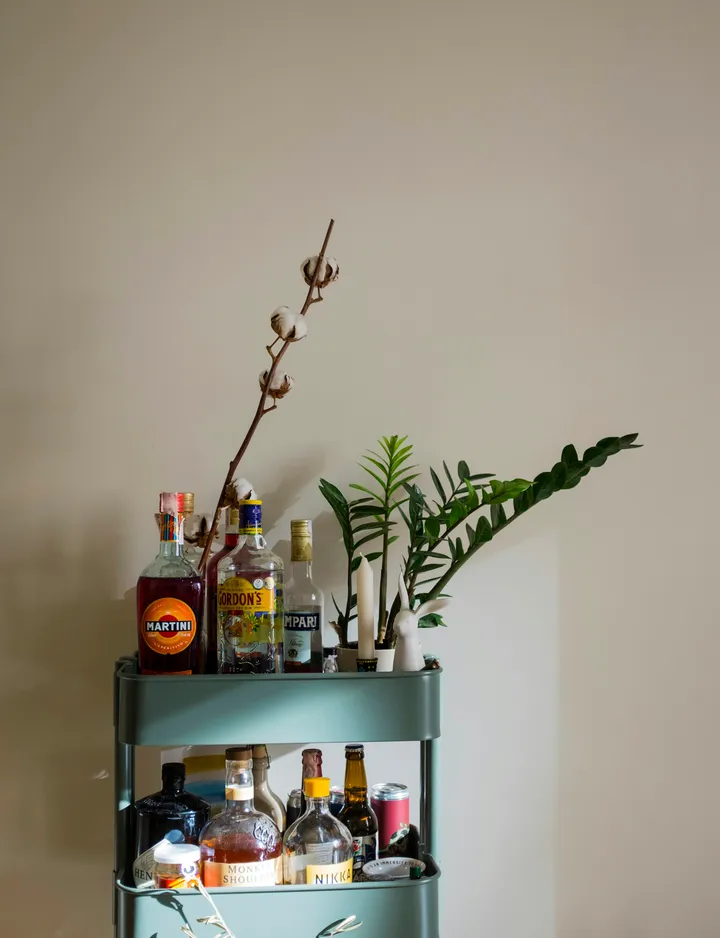
A shaker is one of the four tools that earn space on a bar cart, alongside a jigger, hawthorne strainer, and bar spoon. Together they’re enough to make almost any cocktail without specialized equipment.
The bar-tool buy order:
- Boston shaker + hawthorne strainer (~$30 for both, the highest-leverage purchase)
- Double jigger (~$10), measures cocktails accurately
- Bar spoon (~$8), for stirred drinks (old fashioned, manhattan, negroni)
- Citrus juicer (~$15), the yellow lemon-press / green lime-press
Total: ~$60 for the entire bar-tool kit. Add the glassware you’ll actually use (rocks, coupes) and you can make most cocktails on most cocktail menus.
For the broader home-bar setup that the shaker fits into, see our bar cart guide, the 8 bottles, 4 tools, 6 mixers we’d actually buy. For the non-alcoholic version of the cocktails this shaker makes, see our vodka mocktails guide. The full home bar library covers the rest of the setup.