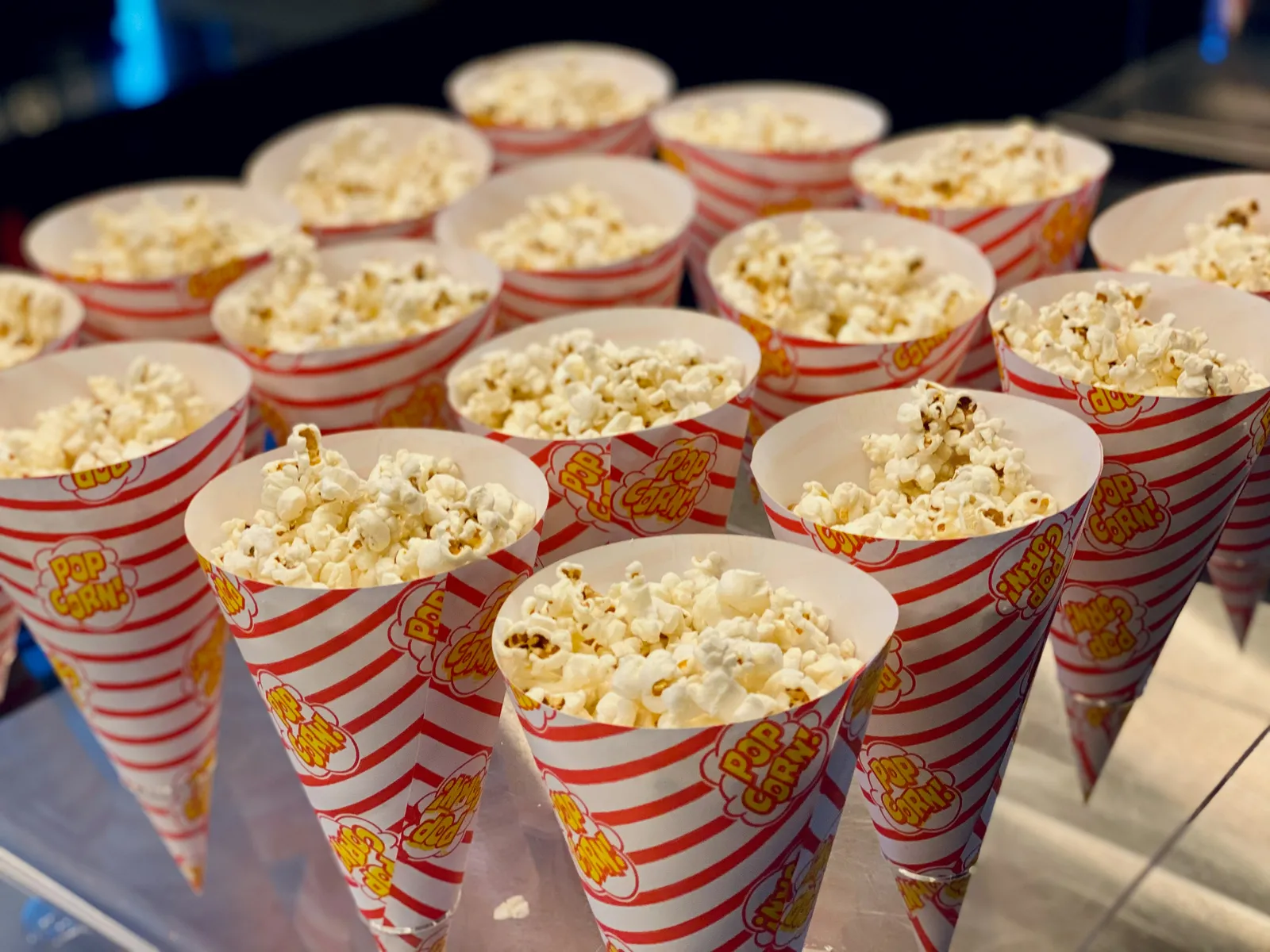
A popcorn bar is one of the cheapest, easiest crowd-pleasers in hosting: one big batch of popcorn, a row of sweet and savory toppings, and a stack of cups, and guests build their own while you do almost nothing. It works for a movie night, a game night, a kids’ party, a wedding, or the late-night snack at any gathering.
The catch is that most popcorn bar guides stop at a toppings list and skip the two things that actually decide whether it works: how much popcorn to make so you do not run out, and how to keep it from going stale and chewy before the party even starts. This guide gives you the real setup, the exact popcorn math for 10, 25, or 50 guests, the keep-it-fresh trick nobody mentions, the sweet and savory toppings worth putting out, and an honest list of what to skip.
Who this is for
You want a fun, self-serve snack that costs almost nothing and runs itself. Maybe it is a movie night, a game day, a kids’ birthday, a wedding favor station, or the thing that keeps people happy late in the evening. You are not running a concession stand. You want to set it up, point people to it, and get back to your guests.
This is the salty, all-ages cousin of our build-your-own mimosa bar, hot chocolate bar, and nacho bar: same self-serve logic, different snack.
TL;DR: the popcorn bar plan
- A popcorn bar is 3 parts: the popcorn base, the toppings (split sweet and savory), and the supplies (cups, scoops, bags).
- Do the math: about 2 to 3 cups of popped popcorn per guest. The table below scales it for 10, 25, and 50, and you need surprisingly few kernels.
- The one rule nobody mentions: keep it fresh. Pop it the day of, seal it airtight, and refill the bar from the sealed stash. Popcorn goes chewy fast.
- Five to eight toppings is plenty. Split them sweet and savory on opposite ends of the table.
- Do not pre-mix wet or sticky toppings into the base ahead of time; they soften it. Keep caramel corn separate.
- Budget is the whole appeal: a solid popcorn bar for 25 people runs about $25 to $40.
For a full event built around it, a popcorn bar pairs naturally with a movie or game night; our free Dinner Party Checklist gives you a printable countdown for any gathering.
Why most popcorn bars go stale (and run short)
Two failures sink a popcorn bar, and every toppings-list guide ignores both.
The first is staleness. Popcorn is mostly air and starch, and it constantly trades moisture with the room. When a kernel pops, the moisture inside turns to steam, and as popped corn sits, it slowly reabsorbs humidity and turns chewy. The Popcorn Board notes that the steam released during popping is exactly why fresh popcorn needs that moisture to escape rather than settle back in, which is why a vented lid keeps stovetop popcorn crisp. The same principle applies at the bar: popcorn popped the night before and left out is chewy by party time. Pop it the day of and keep it sealed until the last minute.
The second is running short, because hosts underestimate how much a crowd eats and overestimate how many kernels they need. Popcorn expands enormously, so a little goes a long way, but people graze on it all night, so you still need real volume. Getting both numbers right is the whole game.
Nail freshness and quantity and a popcorn bar is close to foolproof, which is the entire appeal, the same do-the-work-up-front principle behind our guide to hosting a dinner party.
What goes in a popcorn bar (the 3 parts)
Strip away the styling and a popcorn bar is three things, in this order:
- The base. A big batch of popped popcorn, plain or lightly buttered and salted, kept fresh in airtight containers. This is 90 percent of the bar. Keep it simple so it pairs with every topping.
- The toppings. A short row of add-ins, split between sweet (candy, chocolate, sprinkles) and savory (cheese, seasonings, pretzels, nuts).
- The supplies. Individual cups, bags, or boxes for serving, plus a scoop for the base, small spoons for the toppings, and a stack of napkins.
Nail the base, keep the toppings tight and split sweet from savory, and have enough cups, and you have a great bar. The rest of this guide is how to do each part at party scale.
How much popcorn do you need? Quantities by guest count
This is the part no competitor publishes, and the #1 question hosts ask. Plan on about 2 to 3 cups of popped popcorn per guest when it is a party snack (not the meal). The good news: popcorn expands so much that you need very few kernels.
| Guests | Popped popcorn | Unpopped kernels | Microwave bags (if buying) |
|---|---|---|---|
| 10 | 25-30 cups | ~1 cup | ~3-4 bags |
| 25 | 60-75 cups | ~2.5 cups | ~8 bags |
| 50 | 125-150 cups | ~4.5 cups | ~16 bags |
A few notes on the math. About 1/2 cup of kernels yields roughly 15 to 16 cups of popped popcorn, so even a 50-guest bar needs only about 4 to 5 cups of unpopped kernels (one regular bag of kernels goes a long way). A standard microwave bag makes about 8 to 10 cups popped. Pop slightly more than the table says, because popcorn settles and a half-empty bowl reads as “gone” to guests even when there is plenty in the sealed stash. If popcorn is the main snack at a long movie night rather than one option among several, bump these up by about a third.
The popcorn base (how to pop a lot without standing at the stove)
You need volume, so pick a method that makes a lot at once:
- Air popper (best for a crowd). Cheap to run, no oil, pops continuously, and the plain result takes any topping. The easiest way to make 100-plus cups without babysitting a pot.
- Stovetop in a big pot (best flavor). Oil-popped tastes richer. Use a wide pot with a vented or loose-fitting lid so the steam escapes and the popcorn stays crisp. Work in batches and pour each one into a sheet pan to cool.
- Microwave bags (best shortcut). Fine for a small bar; just buy plain or lightly salted, not heavily buttered, so it pairs with toppings. The math table above converts bags to guests.
- Bagged popcorn from the store (the real shortcut). Good ready-made popcorn stays crisp until you open it, which sidesteps the staleness problem entirely. No shame in it for a big party.
Whatever you use, keep the base lightly seasoned. A plain or lightly salted base is a blank canvas; a heavily flavored one fights the toppings. Pop it all the day of the party.
Keep it fresh (the part nobody mentions)
This is the single biggest popcorn-bar failure and the thing no competitor addresses. Popcorn stales fast, so treat freshness as the main job:
- Pop the same day. Ideally within a few hours of serving. Popcorn popped the night before is chewy by the party.
- Cool it completely, then seal it. Spread fresh popcorn on sheet pans to cool (trapped steam is what makes it soggy), then store it in airtight containers or large zip-top bags until the last minute.
- Refill in small batches. Put out a medium bowl or fill the bags to order, and refill from the sealed stash. The less popcorn sitting open to the air, the crisper the bar stays all night.
- Keep sticky things separate. Do not pre-mix caramel, chocolate drizzle, or any wet topping into the base ahead of time; it softens fast. Keep caramel corn and candy-coated mixes in their own bowls so guests add them per cup.
- Re-crisp if needed. If popcorn has gone slightly chewy, a few minutes in a 250 degree oven on a sheet pan brings back most of the crunch.
That one discipline, pop fresh and keep it sealed, is what separates a popcorn bar people keep going back to from a bowl of chewy, sad popcorn nobody finishes.
The toppings (sweet and savory, the ones that get used)
A tight row beats an overloaded table. Split the toppings into two groups and put them on opposite ends so nobody gets ranch dust on their chocolate.
Sweet:
- M&Ms, chocolate chips, or a warm chocolate drizzle
- Crushed candy (toffee bits, peppermint, cookie pieces)
- Caramel bits or a caramel drizzle
- Sprinkles and cinnamon sugar
- Mini marshmallows
Savory:
- Grated parmesan or cheddar cheese powder
- Ranch seasoning, everything-bagel seasoning, or furikake
- Chili-lime or smoked paprika
- Crushed pretzels and mixed nuts
- Flaky salt and cracked pepper
Put each topping in a small bowl with its own spoon, and offer one or two finishing drizzles (melted chocolate, caramel) in small squeeze bottles. Five to eight toppings total is the sweet spot. Laying out fifteen just means most go home untouched (see the what-to-skip section).
How to set up the station
Arrange the bar in the order a guest builds a cup, left to right:
- Cups or bags first. A stack of paper cups, treat bags, or popcorn boxes, then a scoop.
- The popcorn base next. A big bowl (refilled from the sealed stash) with a scoop, so guests fill their own cup.
- Sweet toppings on one end, savory on the other. Each in its own small bowl with a spoon, grouped so the two flavor worlds do not collide.
- Finishing drizzles and napkins last. Squeeze bottles of chocolate or caramel, then a big stack of napkins and a spot for trash.
A small sign or labels help, especially with seasonings that are not obvious by sight (ranch and cheese powder look identical). You do not need a balloon arch; the cups and the toppings carry it. The same self-serve flow makes our grazing table work for a crowd.
What it costs: budget, mid, and splurge
The whole appeal of a popcorn bar is how cheap it is. These are typical ranges for serving about 25 people.
- Budget (about $25 to $40). A bag of kernels popped in an air popper or pot, plus 5 or 6 toppings from the baking aisle and bulk bins, paper cups, and a printed sign. Almost all of it is the toppings.
- Mid (about $50 to $75). Nicer toppings (good chocolate, specialty seasonings, candy), treat bags or boxes, a couple of drizzles in squeeze bottles, and a chalkboard sign.
- Splurge (about $90 to $140). Gourmet popcorn or multiple flavored bases, a wide topping spread, individual popcorn boxes, branded or styled signage, and a tabletop popcorn machine (the reusable workhorse if you host often).
The honest take: the budget version is genuinely good, because the base is the same cheap popcorn. The extra money buys presentation and a wider topping spread, not better popcorn.
The make-ahead timeline
A popcorn bar is mostly a same-day project, by necessity (freshness), but the setup is make-ahead friendly.
- A few days before: buy kernels or bagged popcorn, toppings, cups, and bags. Make or print the sign. Test your popper.
- The day before: portion shelf-stable toppings into their serving bowls and cover them. Set out the cups, scoops, and table.
- The morning of (or a few hours before): pop all the popcorn, cool it completely on sheet pans, and seal it airtight. Fill the topping bowls.
- Just before guests arrive: put out a starting batch of popcorn (keep the rest sealed), set the toppings sweet-on-one-end and savory-on-the-other, and stack the cups.
The one rule the timeline is built around: do not pop early. Everything else can wait; the popcorn cannot.
Themed popcorn bars
The same setup takes a theme easily, which is why it works for so many events:
- Movie night: classic butter base, theater-style boxes, and candy you would buy at the concession stand (M&Ms, Raisinets, gummies). Pairs with our game night snacks for a fuller spread.
- Game day: savory-forward with cheese powder, ranch, pretzels, and nuts, in team colors if you want.
- Wedding or shower: pretty boxes or bags as a favor station, a sweeter topping spread, and a sign. A popular low-cost favor that doubles as a late-night snack.
- Holiday: red-and-green or orange toppings from real candy, peppermint and white chocolate for Christmas, candy corn and chocolate for Halloween.
What to skip
Half of a good popcorn bar is leaving things off. Skip these:
- Popping the night before. The cardinal sin. Day-old popcorn left out is chewy. Pop the day of and seal it.
- Pre-mixing wet or sticky toppings into the base. Caramel and chocolate drizzle soften the popcorn fast. Keep them separate and let guests add per cup.
- The 15-topping table. Beyond about eight, toppings stop getting used and start getting knocked into each other. Pick the ones above and stop.
- Mixing sweet and savory in one zone. Ranch dust drifting onto the chocolate ruins both. Split them to opposite ends.
- A heavily flavored base. Kettle corn or heavy caramel as the main base fights every topping. Keep the base plain or lightly salted.
- Tiny scoops and no refill plan. Guests grind to a halt if the bowl is empty and there is nothing to refill it with. Keep the sealed stash nearby.
- Skipping the sign on seasonings. Cheese powder and ranch look the same; an unlabeled bowl gets ignored or causes a surprise.
FAQ
What goes in a popcorn bar? A popcorn base (kept fresh in airtight containers), a row of toppings split sweet and savory, and supplies (cups or bags, scoops, napkins). The toppings that get used: M&Ms or chocolate, crushed candy, sprinkles, caramel, cheese or ranch seasoning, pretzels, nuts, and a finishing salt or sugar.
How much popcorn do you need? About 2 to 3 cups popped per guest: roughly 25 to 30 cups for 10 people, 60 to 75 for 25, and 125 to 150 for 50. Because popcorn expands so much, that is only about 4 to 5 cups of unpopped kernels for 50 guests.
How do you keep popcorn from going stale? Pop it the same day, cool it completely, and seal it airtight until serving. Refill the bar in small batches from the sealed stash, and keep sticky toppings separate so they do not soften the base.
What are good toppings? Split sweet (M&Ms, chocolate, caramel, sprinkles, cinnamon sugar) from savory (parmesan, ranch or everything seasoning, pretzels, nuts, flaky salt), and put the two groups on opposite ends of the table.
Can you make it ahead? Prep the toppings, cups, and sign a day or two ahead, but pop the popcorn the day of (within a few hours) and keep it sealed. Good bagged popcorn is a fine shortcut that sidesteps staleness entirely.
What this earns you
A popcorn bar is the rare crowd snack where cheap and good are the same thing: a big batch of fresh popcorn, a tight row of sweet and savory toppings, and enough cups. And there is a small bonus in what you are serving, since plain popcorn is a whole grain with about 30 calories a cup, it is one of the few party snacks that is genuinely light. Pop it fresh, keep it sealed, split the toppings, and the bar runs itself while you enjoy the party.
If you like the build-your-own format, it is the same engine behind our mimosa bar, hot chocolate bar, and nacho bar guides. Four stations, one principle: do the prep up front, then let your guests do the building.