A grazing table is the move when a board is not enough: a party, a shower, an open house, a reception, anywhere you are feeding a crowd and want the food to be the centerpiece and the thing that keeps people mingling. Build it once, spread it down the table, and it feeds 40 people while you go enjoy the party.
The trouble with most grazing table guides is that they show you a beautiful spread and a flat ingredient list for exactly 40 guests, and leave you stuck the moment your number is 22, or 55, or you are trying to do it without spending a fortune. This guide gives you the part they skip: a per-person formula that scales to any crowd, a budget plan that works at any store, how to actually build it, how to keep it safe across a long party, and what to skip.
Who this is for
You are hosting a crowd, 20 people or 70, and you want one abundant spread to carry the food instead of plating and refilling all night. You want to buy the right amount, neither running out at hour one nor throwing away ten pounds of cheese, and you would like it to look generous without costing a fortune. The math section below is the part to bookmark.
A grazing table runs on the same method as our charcuterie board guide; this is the crowd-scale version of it, with the quantities and the build worked out.
TL;DR: the grazing table plan
- It is a charcuterie board, scaled up and spread out. Same roles, built on the table itself, for a crowd.
- Buy by the per-person formula: about 3 oz cheese, 2 oz cured meat, 3 oz fruit and veg, 1.5 to 2 oz crackers per person. (Full scaling table below.)
- Halve the cheese and meat if a full meal is also being served.
- Build on butcher paper down the center of the table, anchored with a few boards and bowls, in zones.
- Go cheap on volume, splurge on one or two accents. Seasonal produce does the visual work.
- Mind the clock. A spread sits out for hours, so watch the cured meat and soft cheese (the 2-hour rule).
- Budget about $4 to $8 per person, depending on the cheeses.
Our free Dinner Party Checklist timeline folds the build into the rest of your hosting day.
Grazing table vs charcuterie board
These two terms get used interchangeably, but the difference is just scale and presentation, and it is worth being clear on before you shop.
A charcuterie board is a single board or platter, sized for a few people to gather around. A grazing table is the party version: a large spread built directly on the table, usually on a runner of butcher or kraft paper, for a crowd to graze from all sides. It is more abundant, it spreads out instead of piling up, and it often includes more than charcuterie alone, with fruit, vegetables, dips, and baked goods filling the table between the cheese and meat.
The building logic is identical, which is the good news: if you can build a board, you can build a grazing table. You are just doing it bigger, and on the table instead of on a board. Everything in our charcuterie board method applies, scaled up.
What goes on a grazing table
Arrange by the job each food does, not by color, so the spread stays balanced (salty, creamy, crunchy, fresh, sweet) across its whole length.
- The savory anchor: cured meats (salami, prosciutto, soppressata) folded and clustered along the table. For vegetarian guests, marinated mushrooms, olives, and marcona almonds anchor a meat-free zone.
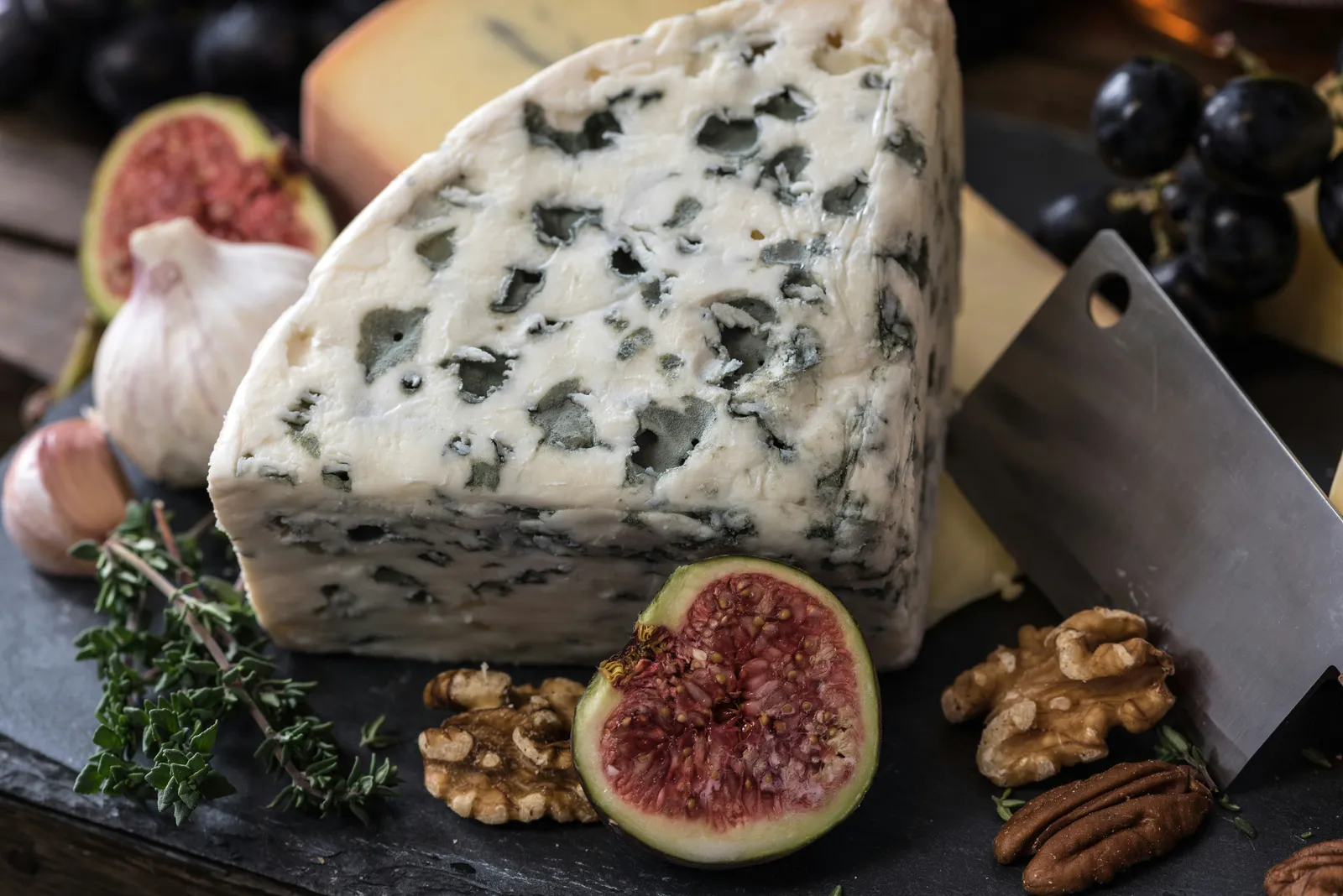
- The cheeses: several styles for contrast, one soft (brie), one firm and aged (cheddar, gouda, manchego), one with character (blue, or a herbed cheese). Cut some ahead and leave a wedge or two whole with a knife.
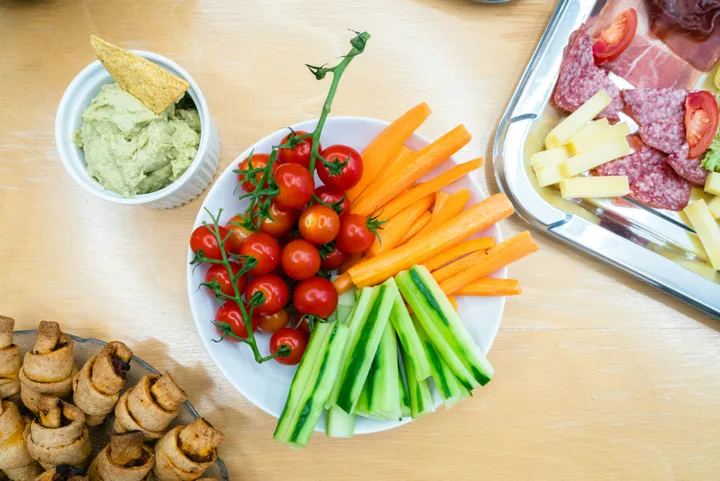
- The fresh: grapes, berries, sliced apples and pears, cherry tomatoes, cucumber, snap peas, and other seasonal produce. This is where most of the color and most of the volume come from, and it is the cheapest part.
- The crunch: crackers, sliced baguette, breadsticks, pretzels.
- The sweet: dried fruit, dark chocolate, a little honey or jam. For a sweets-only spread, build a dessert charcuterie board instead.
- The dips and extras: small bowls of hummus, a spreadable cheese, olives, nuts, and mustard tucked along the spread.
If a guest is vegetarian, keep some of the cheeses vegetarian (several traditional ones, including authentic Parmesan, are not) and group the meat-free anchors together so there is a clear section to graze; our vegetarian charcuterie board guide covers the full meat-free build.
How much to buy: the host math
This is the part other guides leave out, so here is the whole thing. When the grazing table is the main thing guests are eating, plan per person on:
- Cheese: about 3 ounces
- Cured meat: about 2 ounces (closer to 1.5 if many guests do not eat meat)
- Fruit and vegetables: about 3 ounces
- Crackers and bread: about 1.5 to 2 ounces
- Plus dips, olives, nuts, and sweets to fill in.
The one adjustment that matters most: if a full meal is also being served, roughly halve the cheese and meat, because the table is now a starter, not the main event. Scaled out, that formula looks like this:
| Guests | Cheese | Cured meat | Fruit and veg | Crackers and bread |
|---|---|---|---|---|
| 20 | 3.5 to 4 lb | about 2.5 lb | 3.5 to 4 lb | about 2 lb |
| 40 | 7 to 8 lb | about 5 lb | 7 to 8 lb | about 4 lb |
| 50 | 9 to 10 lb | about 6 lb | 9 to 10 lb | about 5 lb |
Treat these as planning amounts, not exact science: a hungrier crowd or a longer party runs higher, and a spread alongside a full dinner runs lower. When in doubt, round the shelf-stable items (crackers, nuts, dried fruit) up, since they keep, and keep the perishable cheese and meat closer to the formula. Expect to spend roughly $4 to $8 per person depending on which cheeses you choose.
How to build it
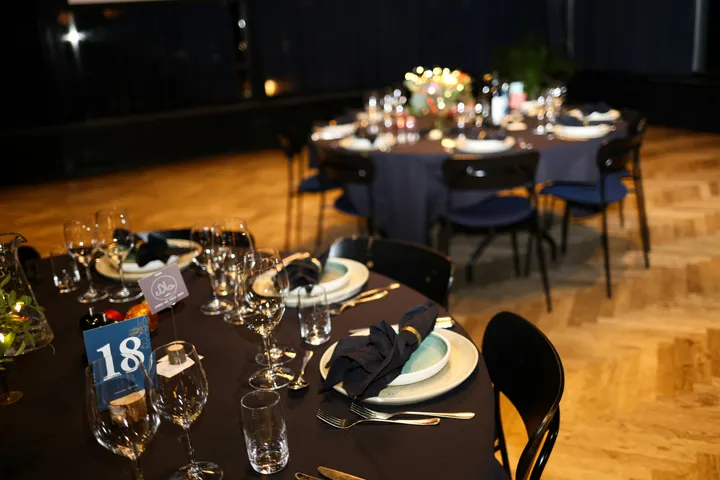
A grazing table is built on the table, which is what makes it feel abundant and what makes it fast.
- Lay the base. Run a strip of butcher or kraft paper down the center of the table. It protects the surface, gives a rustic backdrop, and lets you write labels right on it.
- Anchor it. Set a few boards, slates, and small bowls along the length first. These give the spread height and structure so it does not read as a flat carpet of food. The bowls hold the dips, olives, and anything loose.
- Place the big items. Put the cheeses down next, spaced along the table, then the clusters of cured meat. These are your landmarks.
- Fill with fresh. Pile grapes, berries, vegetables, and sliced fruit into the gaps. This is the step that makes it look generous, and it is the cheap step.
- Bridge with crunch. Fan crackers and bread between the cheeses, and tuck breadsticks and pretzels into the open spots so there are no bare patches.
- Finish. Add the sweets, a few sprigs of rosemary or other herbs for green, and labels for anything not obvious. If the board is part of a larger table setting, our how to set a table guide covers the rest.
Build in zones rather than one dense pile: a cheese-heavy stretch, a fruit stretch, a vegetarian corner. Zones spread the crowd along the whole table instead of bottlenecking everyone at one spot.
The budget grazing table
A grazing table can look like a small fortune and cost very little, because the parts that make it look abundant are the cheap parts. The strategy works at any store, no membership required.
- Buy volume cheap. Seasonal fruit and vegetables, grapes, crackers, pretzels, and bread are what fill the table, and they cost a fraction of cheese and meat per pound. Load up here.
- Buy a few block cheeses, not many small wedges. Two or three generous blocks (cheddar, gouda, a brie) cut into pieces cover far more table than a dozen tiny specialty wedges, for much less.
- Use one or two nicer cheeses as accents, not the bulk. A single wedge of something interesting reads as generous next to the blocks.
- Let bowls spread it out. Olives, nuts, hummus, and dips in small bowls take up space and cost little.
Done this way, a generous table lands around $4 to $6 per person without looking like you cut corners. For more crowd-feeding ideas in the same spirit, our finger foods for a party and housewarming party food guides have budget-friendly options that pair well alongside a grazing table.
Make-ahead for the day of the party
The table only saves you time if most of it is done before guests arrive. Here is the plan.
- The day before: Shop. Cut the hard cheeses and store them airtight. Make any dips. Portion olives and nuts into their bowls. Gather the boards, bowls, paper, and labels.
- The morning of: Wash and cut the fruit and vegetables (toss apples and pears with a little lemon so they do not brown). Lay the paper and set out the empty boards and bowls so you know your layout.
- An hour before: Build the table, fresh items and soft cheese last. Slice the bread. Set out the cured meat and soft cheese right before guests arrive, not hours early (see food safety below).
Assembled this way, the only thing left at go-time is placing the perishables, which takes minutes.
Food safety for a table that sits out
A party runs long and a grazing table sits out for hours, which is where crowd spreads get risky. Per FoodSafety.gov, you should never leave perishable foods out of refrigeration for more than two hours (one hour if the room is above 90°F), because of the danger zone between 40°F and 140°F where bacteria multiply fastest.
On a grazing table, the watch items are the cured meat and the soft cheese. The simple fix at scale: put out about half of those perishables and keep backups in the fridge, then refresh at the two-hour mark instead of letting one spread sit all afternoon. Hard, aged cheeses and the shelf-stable parts of the table (crackers, nuts, dried fruit, olives in brine) are more forgiving and can carry the spread once you pull the meat and soft cheese. We cover the same rule for a long-grazing party in our housewarming party food guide.
The “rules,” honestly
If you have searched grazing tables, you have seen the “3-3-3 rule,” and lately the “3-3-3-3” and even “3-3-3-3-3” versions. Here is the honest version: none of these are official standards. The original 3-3-3 is a handy starting ratio for a small board: three cheeses, three meats, three accompaniments. The longer viral versions just add more categories (crackers, fruit, dips) in threes.
They are memory aids, not laws, and a grazing table for a crowd scales well past any of them. Use 3-3-3 as a starting point for variety if it helps, then build out to the quantities in the table above. Do not let a number on the internet tell you a party of 50 needs exactly three cheeses.
What to skip
The grazing table mistakes worth avoiding:
- Under-buying. A crowd clears a table fast. Use the per-person math and round the shelf-stable items up.
- One tight pile. Building it all in one dense cluster jams everyone at one spot. Spread it down the table in zones.
- Leaving perishables out all afternoon. Tie this to the food-safety section: put out half, refresh at two hours.
- Over-spending on fancy cheese. Seasonal produce does the visual work for a fraction of the cost. Splurge on one or two accents, not the bulk.
- Forgetting the vegetarians. Group the meat-free anchors so there is a clear section; point guests to our vegetarian charcuterie board approach.
- Skipping the base. Building straight on the bare table looks flat and is harder to clean up. The butcher paper does real work.
A short FAQ
What should be on a grazing table? Build by role, scaled up: cured meats, several cheeses, fresh fruit and vegetables for color and volume, crackers and bread, a few sweets, and bowls of dips and olives, spread across the table in zones.
What is the difference between a grazing table and a charcuterie board? A board is a single platter for a few people. A grazing table is the crowd version, built large on the table itself (usually on butcher paper), with more abundance and often more than just charcuterie.
How much food do you need? Per person, about 3 oz cheese, 2 oz cured meat, 3 oz fruit and veg, and 1.5 to 2 oz crackers when the table is the main graze. For 50 guests, roughly 9 to 10 lb of cheese and 6 lb of meat. Halve the cheese and meat if a full meal is also served.
How do you do it on a budget? Fill the table with cheap volume (seasonal produce, crackers, grapes), buy a couple of block cheeses instead of many small wedges, and use one or two nicer cheeses as accents. Around $4 to $6 per person.
What is the 3-3-3 rule? A popular starting ratio, not an official rule: three cheeses, three meats, three accompaniments. The viral 3-3-3-3 versions just add categories. Scale past them for a crowd.
What’s next
A grazing table is one of the most generous-looking, least-stressful ways to feed a crowd, as long as you buy the right amount and build it for grazing rather than for one perfect photo. Use the per-person formula, fill the table with cheap fresh volume, build in zones on a paper base, and keep an eye on the clock once it is out.
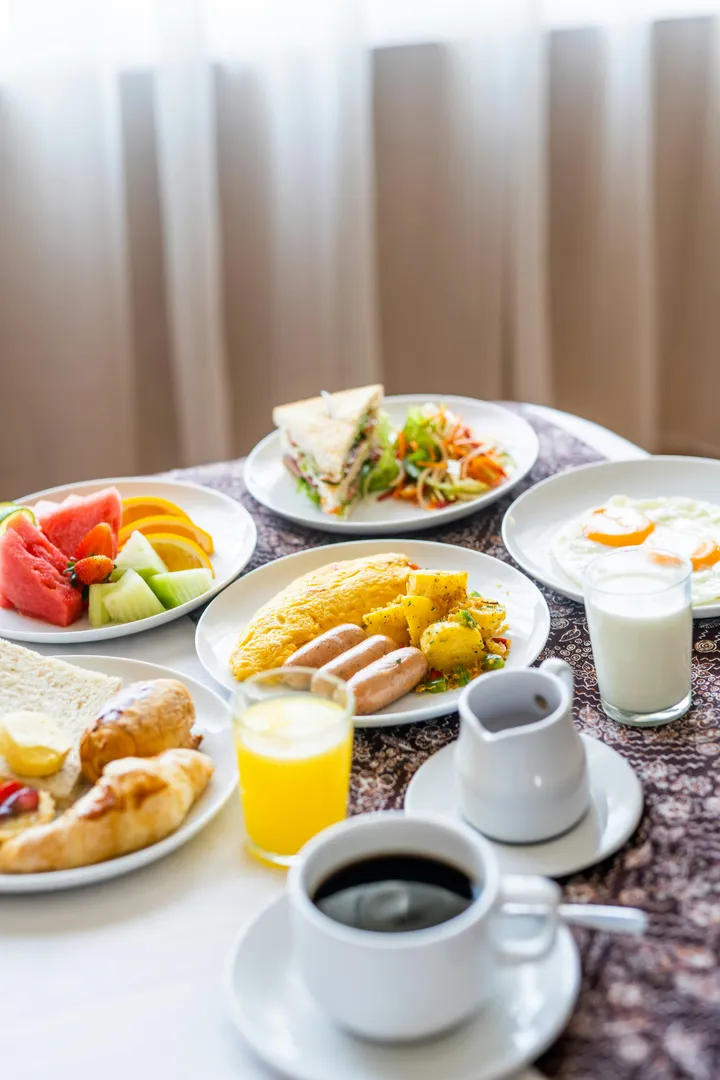
When you are planning the rest, the charcuterie board guide has the full method behind any spread, the seasonal versions (Christmas, Thanksgiving, and Halloween charcuterie boards) plus the breakfast charcuterie board and the all-vegetable veggie platter run on the same logic, and a mimosa bar pairs naturally with a brunch grazing spread (or a hot chocolate bar for a winter one, or a nacho bar for a casual crowd). For now: shop today, cut the hard cheese tonight, and build the table an hour before the crowd arrives.