The mocktail category has a quality problem. Most published mocktail recipes are either too sweet (juice + soda + a garnish), too bland (sparkling water + fruit), or trying so hard to mimic cocktails that they feel like compromises.
Good mocktails follow the same rules as good cocktails: balanced flavor, real ingredients, intentional ratios. They’re not consolation drinks for non-drinkers. They’re real drinks built for the same hosting moments cocktails are.
This is twelve mocktails worth making, organized by occasion. Pick the section that matches what you’re serving and you have your menu.
TL;DR
- Brunch mocktails: non-alc Mimosa, Virgin Mary, Espresso tonic
- Summer mocktails: cucumber-lime spritz, Watermelon-mint cooler, Virgin Mojito
- Dinner-party mocktails: Ghia tonic, non-alc Negroni Sbagliato, Black-pepper-grapefruit
- Holiday mocktails: Cranberry-rosemary spritz, Spiced apple cider, Hot honey-lemon (winter)
- The kid-friendly classic: Shirley Temple
- The 3 rules: quality mixers, fresh citrus, real garnish
For the broader non-alcoholic spirits category, what to buy, which brands lead, see our non-alcoholic spirits guide.
Why occasion matters more than ingredient
Most mocktail recipe roundups dump 30 drinks in random order. The reader scrolls past most of them and picks one based on a photo, with no context for whether it’s a brunch drink or a dessert drink.
Occasion-based organization is how restaurants build menus. A bar menu has 4-6 categories: aperitifs, classics, longs, sours. Each cocktail lives in a category that signals when to drink it. Mocktails should work the same way.
The five occasions that cover ~95% of when mocktails actually get served:
- Brunch: something that pairs with eggs, holds up next to coffee, doesn’t compete with pastry
- Summer: cold, hydrating, low-sugar, refreshing in heat
- Dinner party: spirit-forward style, elegant, served like a real cocktail
- Holiday: warm spices, deeper colors, more dramatic flavors
- Kid-friendly: sweet, simple, recognizable as a “fancy drink” to a 7-year-old
Pick the occasion you’re hosting; pick from those 3 mocktails. Done.
The 3 rules for mocktails that aren’t sad
Before any recipe, the three rules that separate good mocktails from bad ones.
1. Use real mixers. A mocktail is mostly mixer (sparkling water, juice, soda) by volume. The single biggest improvement you can make to any mocktail is upgrading the mixer.
- Sparkling water: San Pellegrino, Topo Chico, or a real Italian sparkling water. Skip generic store brands.
- Tonic water: Fever-Tree, Q Tonic, or East Imperial. Premium tonic alone makes most mocktails work.
- Ginger beer: Fever-Tree or Bundaberg. Skip Schweppes ginger ale (it’s barely ginger).
- Citrus soda: Squirt or Jarritos for grapefruit; San Pellegrino Limonata for lemon-lime.
2. Fresh citrus, every time. Bottled lime juice ruins more mocktails than any single other ingredient. The metallic taste of preserved lime juice is unmistakable. Squeeze fresh limes, lemons, grapefruit. The bottle in the fridge has a shelf life of a week, not a year.
3. Real garnish. A garnish is what makes a mocktail feel like a cocktail. A drink with no garnish reads as juice. The same drink with a real garnish (a citrus wheel, a sprig of fresh herb, a few floating berries) reads as celebratory. Garnishes are 30 cents and 30 seconds; never skip them.
These three rules upgrade every recipe below. Apply them universally.
Brunch mocktails (3 recipes)
Brunch mocktails should be light, citrus-forward, and friendly to coffee and eggs. Avoid heavy or overly sweet drinks; brunch mocktails need to hold up next to a frittata, not compete with dessert.
1. Non-alcoholic Mimosa (the universal)
Serves 1.
- 2 oz fresh-squeezed orange juice
- 4 oz cold non-alcoholic sparkling wine (Surely, Töst, Gruvi) or sparkling water
- 1 small splash of non-alc gin or aperitif (optional, elevates significantly)
- Orange wheel garnish
Pour orange juice into a champagne flute, top with sparkling wine, garnish. The non-alc sparkling wine matters here: regular sparkling water makes the drink read as “juice with bubbles”; non-alc sparkling wine makes it a Mimosa.
2. Virgin Mary (the brunch standby)
Serves 1.
- 4 oz tomato juice (good quality, RW Knudsen or fresh)
- 0.5 oz fresh lemon juice
- 0.25 oz Worcestershire sauce
- 2 dashes hot sauce (Cholula, Tabasco, or Crystal)
- Pinch of celery salt and black pepper
- Optional: 1 dash horseradish, 1 oz dill pickle juice
- Garnish: celery stalk, lemon wedge, olive on a pick, optional bacon strip
Build directly in a tall glass over ice. Stir gently. The garnish is half the experience, load it.
3. Espresso tonic (the modern)
Serves 1.
- 1 shot of espresso (or 1 oz strong cold brew concentrate)
- 4 oz cold tonic water (Fever-Tree)
- Orange peel garnish
Fill a tall glass with ice. Pour tonic over the ice. Slowly pour the espresso over the back of a spoon so it floats on top, creating a layered effect. The drink should be drunk by stirring (combining the layers) or by drinking through them. Tastes complex, slightly bitter, slightly citrus from the tonic. The most “modern” brunch mocktail there is.
Summer mocktails (3 recipes)
Summer mocktails should be cold, hydrating, low-effort, and serve large groups. Avoid anything that requires a shaker or fresh muddling per drink.
4. Cucumber-lime spritz (the easiest)
Serves 1.
- 4 oz cold sparkling water (San Pellegrino)
- 0.5 oz fresh lime juice
- 0.25 oz simple syrup or 1 tsp sugar
- 3 cucumber slices
- 3-4 fresh mint leaves
- Crushed ice
Add cucumber slices and mint to a tall glass. Press gently with a spoon (don’t muddle hard). Add ice, lime juice, simple syrup. Top with sparkling water. Stir once. Garnish with a long cucumber slice.
The cleanest summer mocktail; tastes more grown-up than its three-minute prep time suggests.
5. Watermelon-mint cooler (the showstopper)
Serves 4 (a small batch).
- 4 cups fresh watermelon, cubed and blended
- 2 oz fresh lime juice
- 1 oz simple syrup (or skip if watermelon is sweet)
- 1/4 cup fresh mint leaves
- 8 oz cold sparkling water (added at serving)
Blend watermelon with lime juice, syrup, and mint. Strain through a fine-mesh sieve. Pour over ice in tall glasses, top with sparkling water. Garnish with a mint sprig.
Make the watermelon base 1-2 hours ahead; add sparkling water per glass at serving.
6. Virgin Mojito (the classic)
Serves 1.
- 8-10 fresh mint leaves
- 1 oz fresh lime juice
- 0.5 oz simple syrup
- 4 oz cold sparkling water
- Crushed or pebble ice
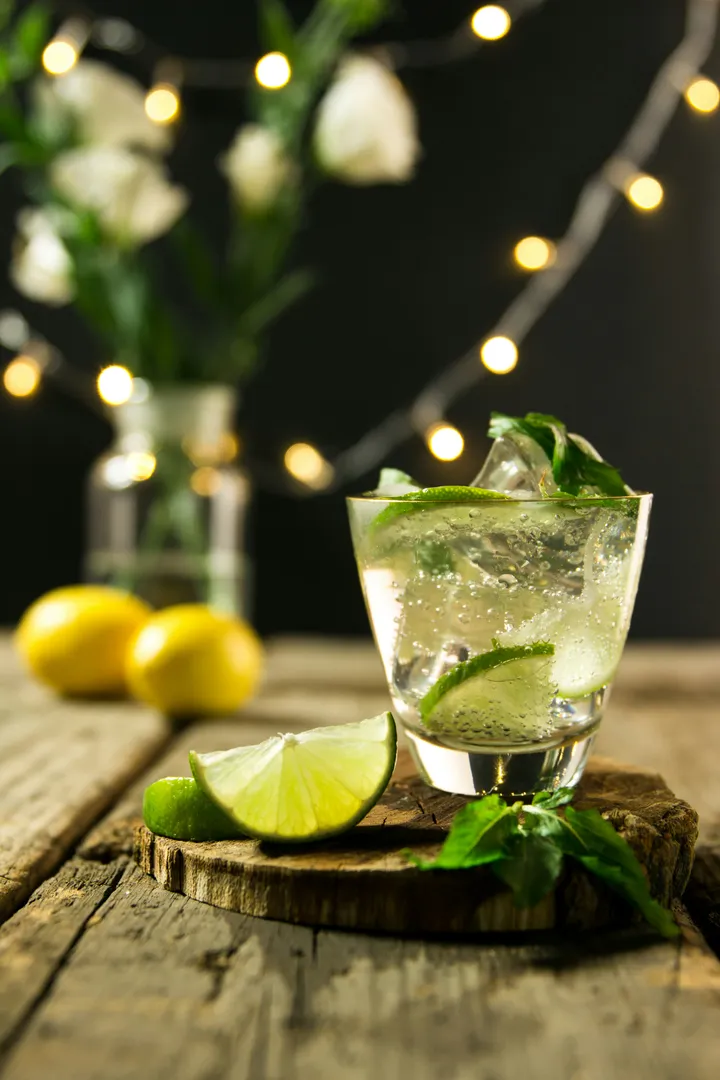
- Lime wheel + mint sprig garnish
Add mint and simple syrup to a tall glass. Press mint gently with a muddler or spoon (just enough to release oils, don’t pulverize the leaves; they get bitter). Add lime juice and crushed ice. Top with sparkling water. Stir gently. Garnish.
The non-alc Mojito is genuinely good. Don’t skip the muddling step.
Dinner-party mocktails (3 recipes)
Dinner-party mocktails should feel like cocktails, served with the same care you’d give a Negroni. Spirit-forward styles work better than fruit-juice styles. Use a non-alc spirit base (see non-alcoholic spirits).
7. Ghia and tonic (the easy elegant)
Serves 1.
- 1.5 oz Ghia (or any non-alc bitter aperitif: Wilfred’s, Lyre’s Italian Spritz)
- 4 oz cold tonic water (Fever-Tree)
- Lemon peel garnish
Build over ice in a stemmed wine glass or rocks glass. Stir once. Garnish with a long lemon peel twist.
The single most elegant non-alc cocktail you can make in 30 seconds. Bitter, citrus-forward, unmistakably grown-up.
8. Non-alcoholic Negroni Sbagliato (the showstopper)
Serves 1.
- 1 oz Lyre’s Italian Orange (or any non-alc Campari substitute)
- 1 oz Lyre’s Aperitif Rosso (or any non-alc sweet vermouth)
- 1 oz cold non-alc sparkling wine (Surely or Gruvi)
- Orange peel garnish
Build over a single large ice cube in a rocks glass. Stir gently. Garnish with an orange peel twist (express the oil over the surface first).
The 2022 cocktail-of-the-year, made non-alc. Almost indistinguishable from the alcoholic version in a blind test.
9. Black-pepper-grapefruit spritz (the unexpected)
Serves 1.
- 2 oz fresh grapefruit juice
- 0.5 oz fresh lemon juice
- 0.25 oz simple syrup
- 4 oz cold sparkling water
- A few cracks of fresh black pepper
- Grapefruit peel garnish
Build in a tall glass over ice. Crack black pepper directly into the glass (4-5 turns of the mill). Stir gently. Top with sparkling water. Garnish with a grapefruit peel.
The pepper is the unexpected element. It transforms a basic citrus spritz into something that tastes deliberately composed.
Holiday mocktails (3 recipes)
Holiday mocktails lean into warming spices and deeper colors. Cranberry, pomegranate, cinnamon, ginger. The visual matters at holiday parties; serve in coupes or rocks glasses, not plain tumblers.
10. Cranberry-rosemary spritz (the universal)
Serves 1.
- 1.5 oz cranberry juice (unsweetened, real cranberry)
- 0.5 oz fresh lime juice
- 0.25 oz simple syrup or maple syrup
- 4 oz cold sparkling water (or non-alc sparkling wine for a more festive version)
- Fresh rosemary sprig + 4-5 fresh cranberries
Build over ice in a coupe or rocks glass. Garnish with the rosemary sprig (smack it gently to release oils) and floating cranberries.
The most universally loved holiday mocktail. Photographs beautifully; tastes like the holiday season.
11. Spiced apple cider (the warm option)
Serves 4 (small batch, hot).
- 4 cups good apple cider (the cloudy unfiltered kind, not “apple juice”)
- 4 cinnamon sticks
- 1 orange, sliced into wheels
- 4 whole cloves
- 2 star anise pods
- 1 small piece of fresh ginger
- Optional: 0.5 oz non-alc bourbon (Spiritless Kentucky 74) per serving
Combine all ingredients in a saucepan. Heat on low for 20-30 minutes (don’t boil, boiling makes the spices bitter). Ladle into mugs or heat-safe glasses. Garnish with a cinnamon stick or fresh orange peel.
Holds at low heat for 2+ hours; gets better as it sits. The single most “smells like a holiday party” thing you can put on the stove.
12. Hot honey-lemon (the winter sipper)
Serves 1.
- 1 oz fresh lemon juice
- 1 oz honey (good honey, not the bear-shaped grocery brand)
- 4 oz hot water
- Optional: 1 cinnamon stick, 2 whole cloves, 1 small piece of fresh ginger
Combine lemon juice, honey, and any spices in a heat-safe mug. Stir to dissolve honey. Top with hot water. Steep 2-3 minutes. Garnish with a lemon wheel and cinnamon stick.
The winter version of the spritz. Made in 90 seconds, looks intentional, fixes a sore throat.
For more holiday cocktail and mocktail framework thinking, see christmas cocktail recipes.
The “kid-friendly” classic (1 recipe)
When the mocktail needs to work for children at a party.
The Shirley Temple
Serves 1.
- 4 oz ginger ale or lemon-lime soda
- 0.5 oz grenadine syrup (real grenadine, Liber & Co or Small Hand Foods)
- 2-3 maraschino cherries
- Lime wheel
Build over ice in a tall glass. The grenadine sinks; pour the soda gently to preserve the gradient. Garnish with cherries on a pick.
The full Shirley Temple recipe and variants (Dirty Shirley, Cinderella, no-grenadine version) are covered in detail in our Shirley Temple guide.
How to upgrade with non-alcoholic spirits
Every mocktail above can be upgraded by adding 1-1.5 oz of a non-alcoholic spirit. The category has matured to the point where the difference is real.
The pairings:
- Brunch mocktails: add 1 oz non-alc gin (Seedlip Garden 108) to the Mimosa for complexity. Add 1 oz non-alc gin to the cucumber-mint spritz.
- Summer mocktails: add 1.5 oz non-alc tequila (Ritual) to the Watermelon-mint cooler for a non-alc Margarita variation. Add 1.5 oz non-alc gin to the Mojito to make it taste closer to the original.
- Dinner-party mocktails: these already use non-alc spirits as the base. The Ghia tonic, non-alc Negroni Sbagliato, and any spritz built on a non-alc aperitif (Lyre’s, Wilfred’s) are the highest-impact mocktails you can serve.
- Holiday mocktails: add 1 oz non-alc bourbon (Spiritless Kentucky 74) to the cranberry-rosemary spritz for a non-alc Manhattan-style cocktail. Add 0.5 oz non-alc bourbon to the spiced cider for warmth.
- Shirley Temple: the Dirty Shirley adds vodka to make it alcoholic, but you can also add 1.5 oz non-alc vodka (Lyre’s, Ritual) for the same flavor structure without alcohol.
The upgrade is usually a $35 bottle of non-alc gin (lasts months) and one extra ounce per drink. The drinks become real cocktails, not “fancy juice.” For the full breakdown of which non-alc spirits to buy first, see non-alcoholic spirits.
What to skip
A short list of mocktail patterns that don’t earn their effort.
- All-juice mocktails. A glass of orange juice + cranberry juice + pineapple juice is fruit punch, not a mocktail. Mocktails need either acid (citrus), bitterness (tonic, aperitif), or carbonation (sparkling water) to balance the sweetness.
- Anything with “kid” or “family” in the name on a menu. Restaurants that label drinks “kid Shirley” or “family Mojito” are signaling that the mocktail is an afterthought. Real mocktails don’t need a kids-table label.
- Mocktails served in juice glasses. Use the right glass (coupe, Highball, rocks). The glassware is half of why a mocktail feels like a cocktail.
- Bottled “mocktail mixes.” Most are loaded with corn syrup, citric acid, and red dye. Build mocktails from real ingredients.
- Mocktails with elaborate edible flowers as the only flavoring. The drink should taste good first; the floral is a bonus, not a substitute.
- Anything labeled “low-cal mocktail” with three packets of artificial sweetener. Use real sugar in small quantities or skip the sweet entirely. Stevia and sucralose taste like chemicals; the drink is worse than just using less sugar.
- The “fancy water” trap. Sparkling water with a few raspberries is a glass of sparkling water with raspberries, not a mocktail. Mocktails have at least 3 ingredients beyond water and ice.
A short FAQ
What is the most popular mocktail?
By search: Shirley Temple, Virgin Mojito, Virgin Mary. By restaurant menus: cucumber-mint spritz, non-alcoholic Margarita, espresso tonic. By cultural footprint: the Shirley Temple is the most universally recognized.
What’s the easiest mocktail to make?
The cucumber-lime spritz: 4 oz sparkling water + 0.5 oz lime juice + 3 cucumber slices + mint sprig + ice. Three minutes, no shaker, ingredients you might already have.
What is a classic mocktail?
Shirley Temple, Virgin Mary, Roy Rogers, Virgin Pina Colada, Virgin Mojito, Arnold Palmer, Cinderella. All predate the modern “mocktail” label and have been served as non-alcoholic options for decades.
Are mocktails healthier than cocktails?
They have less alcohol, that’s the only universal claim. Sugar content is often the same or higher. For diabetics or anyone watching sugar, choose mocktails built on sparkling water + citrus + non-alc spirit (lower sugar) over juice-heavy mocktails (high sugar).
What’s the best mocktail for a dinner party?
A spirit-forward style mocktail using a non-alc gin, aperitif, or vermouth as the base. The non-alc Negroni Sbagliato (Lyre’s Italian Orange + Lyre’s Aperitif Rosso + non-alc sparkling wine) is the most elegant. The Ghia tonic is the easiest.
Can I make mocktails ahead for a party?
Some yes. Spritz bases (citrus + simple syrup, kept separate from the carbonated mixer) hold for 24 hours in the fridge. Holiday mulled drinks and warm sippers improve over a few hours. Avoid pre-mixing anything carbonated; it goes flat. For party hosting, batch the non-carbonated parts and add sparkling water per glass at serving.
What sparkling water is best for mocktails?
San Pellegrino, Topo Chico (the Mexican one, not the redesigned American one), or a real Italian sparkling water. Skip generic store brands and any flavored sparkling water (the artificial flavors fight the mocktail’s real flavors).
Do I need special glasses for mocktails?
Use the same glasses you’d use for the equivalent cocktail. Spritzes go in wine glasses or coupes. Highballs go in tall glasses. Rocks-style mocktails go in rocks glasses. Glassware matters for the visual; the drink reads as more intentional in the right glass. See our glassware guide for which glasses to actually buy.
For broader frameworks: non-alcoholic spirits (the spirit category that elevates these recipes), vodka mocktails (vodka-specific mocktail recipes), Shirley Temple (the kid-friendly classic), and christmas cocktail recipes (holiday mocktail framework). For the home bar setup that supports any of these drinks, see bar cart.