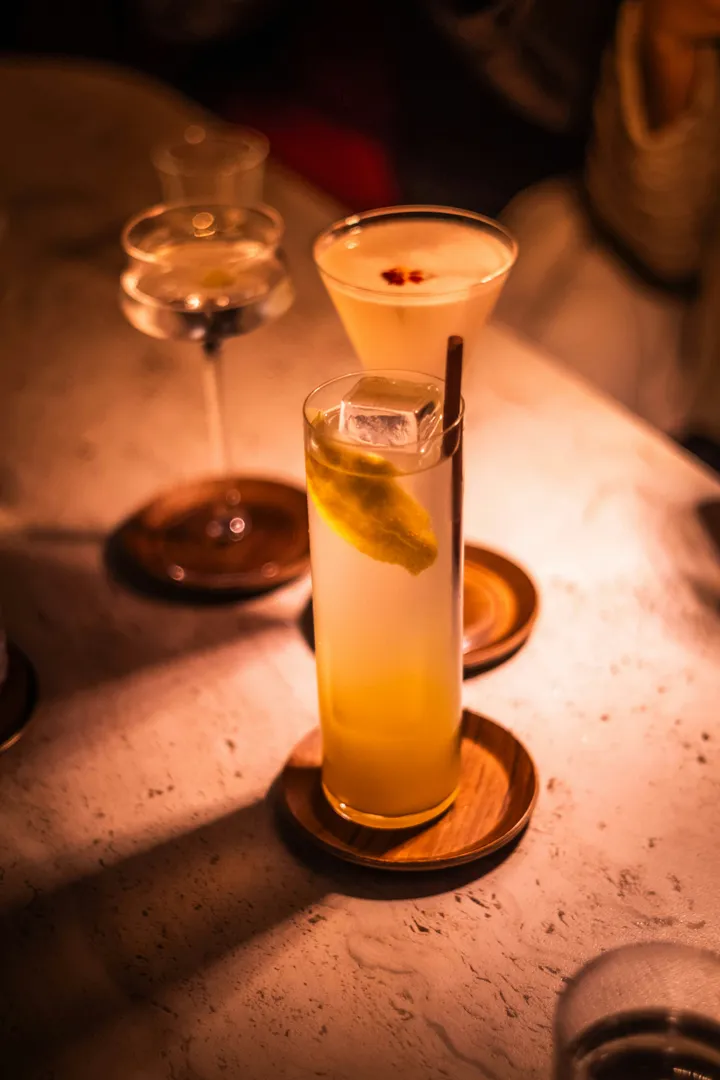
Highball glasses are the most-used and least-discussed glass in any working home bar. They hold the gin and tonic, the vodka soda, the rum and Coke, the whiskey ginger, the iced tea, and (when nothing else is clean) the morning orange juice. If you owned exactly one type of glass, it should probably be a highball.
But the category is also where most home bars go wrong. Drinkers buy random sets at TJ Maxx, accumulate mismatched glasses over years, and end up with twelve glasses that don’t pair with anything and aren’t quite the right size for any specific drink. The goal of this guide is the opposite: tell you what a highball glass is, what makes one worth buying, and which six are worth your money.
Quick context if you’re new to glassware as a category: highball glasses are the tall tumblers, the ones designed for drinks where the mixer outweighs the spirit. They’re not the same as Collins glasses (taller, narrower) and not the same as rocks or Old Fashioned glasses (shorter, wider). We get into the distinctions below.
TL;DR
- What it is: a tall, straight-sided tumbler that holds 8 to 12 ounces (240 to 350 ml), roughly 3 inches in diameter and 6 inches tall.
- What it’s for: spirit-plus-mixer drinks (gin and tonic, vodka soda, whiskey ginger, rum and Coke, Tom Collins, mojito, Japanese highball).
- Size to buy: 12 to 14 ounces for most home bars. Smaller glasses feel cramped with ice; larger drift into Collins territory.
- Material: lead-free crystal for entertaining (best clarity, ~$15-40 per glass), Tritan for durability (unbreakable, slightly less clear), soda-lime for daily use (durable, dishwasher-friendly, lower cost).
- How many to buy: 4 for a couple, 6 for dinners of 4 to 6, 8 to 12 for cocktail parties.
- What to skip: novelty etched glasses, mass-market sets that water-spot, plastic for adult entertaining, “cut crystal” that’s actually machine-pressed.
What makes a glass a “highball”
A highball glass is a tall, straight-sided tumbler that holds 8 to 12 ounces, roughly 3 inches across and 6 inches tall. Modern pours run bigger, so buy 12 to 14 ounces for a home bar; the Collins glass is its slightly taller, narrower cousin.
The defining feature is shape. A highball is tall, straight-sided, and roughly 8 to 12 ounces. By the most commonly cited reference (Sharon Tyler Herbst’s The Ultimate A-to-Z Bar Guide, 1998), the standard dimensions are about 3 inches in diameter by 6 inches in height. Many modern manufacturers push toward 13 to 14 ounces because cocktails today are typically poured with more ice and more mixer than they were a generation ago.
The shape is functional, not aesthetic. The tall column lets you build a drink in layers: ice fills the bottom two-thirds, the spirit goes in, and the mixer tops it off. The straight sides keep carbonation from dissipating quickly (round bowls accelerate bubble loss). The capacity is sized to a standard pour: 2 ounces of spirit + 4 to 6 ounces of mixer + ice = 10 to 12 ounces of finished drink, which sits comfortably in a 12 to 14-ounce glass.
The name itself comes from American railroad slang. A “highball” was a signal that meant “proceed at full speed” (a ball on a tall pole, raised high). By the 1890s, the term had migrated to bartending as shorthand for “a quick tall drink.” Whiskey and soda was the original highball; gin and tonic, rum and Coke, vodka soda, and everything in the family followed.
Highball vs Collins vs rocks vs tumbler
This is the most-asked question in the category and the most-buried in competing articles. Four different glasses, all called “tumblers,” all serving different drinks. Here’s the breakdown:
| Glass | Height | Capacity | Diameter | Used for |
|---|---|---|---|---|
| Rocks / Old Fashioned / Lowball | 3 to 4 in | 6 to 10 oz | 3.5 to 4 in | Spirits neat, on the rocks, Old Fashioned, Negroni, whiskey sour |
| Highball | 5.5 to 6 in | 8 to 12 oz | 3 in | Gin and tonic, vodka soda, whiskey ginger, rum and Coke, Mojito |
| Collins | 6.5 to 7 in | 12 to 14 oz | 2.5 to 3 in | Tom Collins, Long Island Iced Tea, Singapore Sling, taller sour cocktails |
| Pint / Pilsner / Pint Tumbler | 6 to 8 in | 16 to 20 oz | 3 to 4 in | Beer, water at restaurants, very tall drinks |
A few useful distinctions:
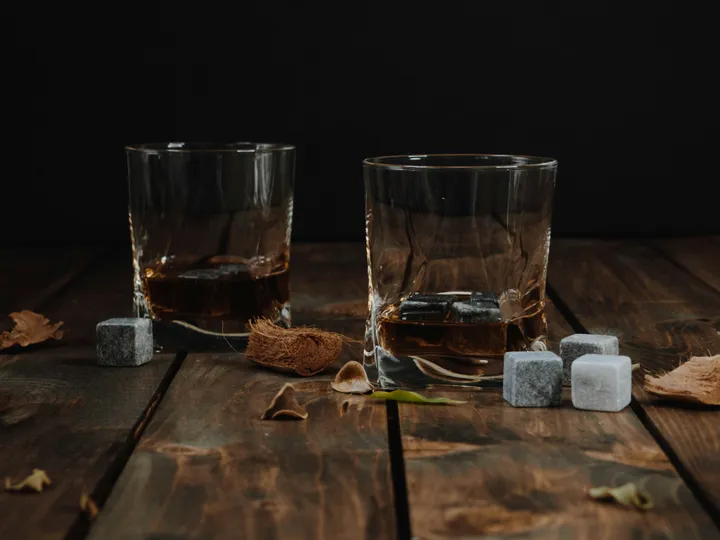
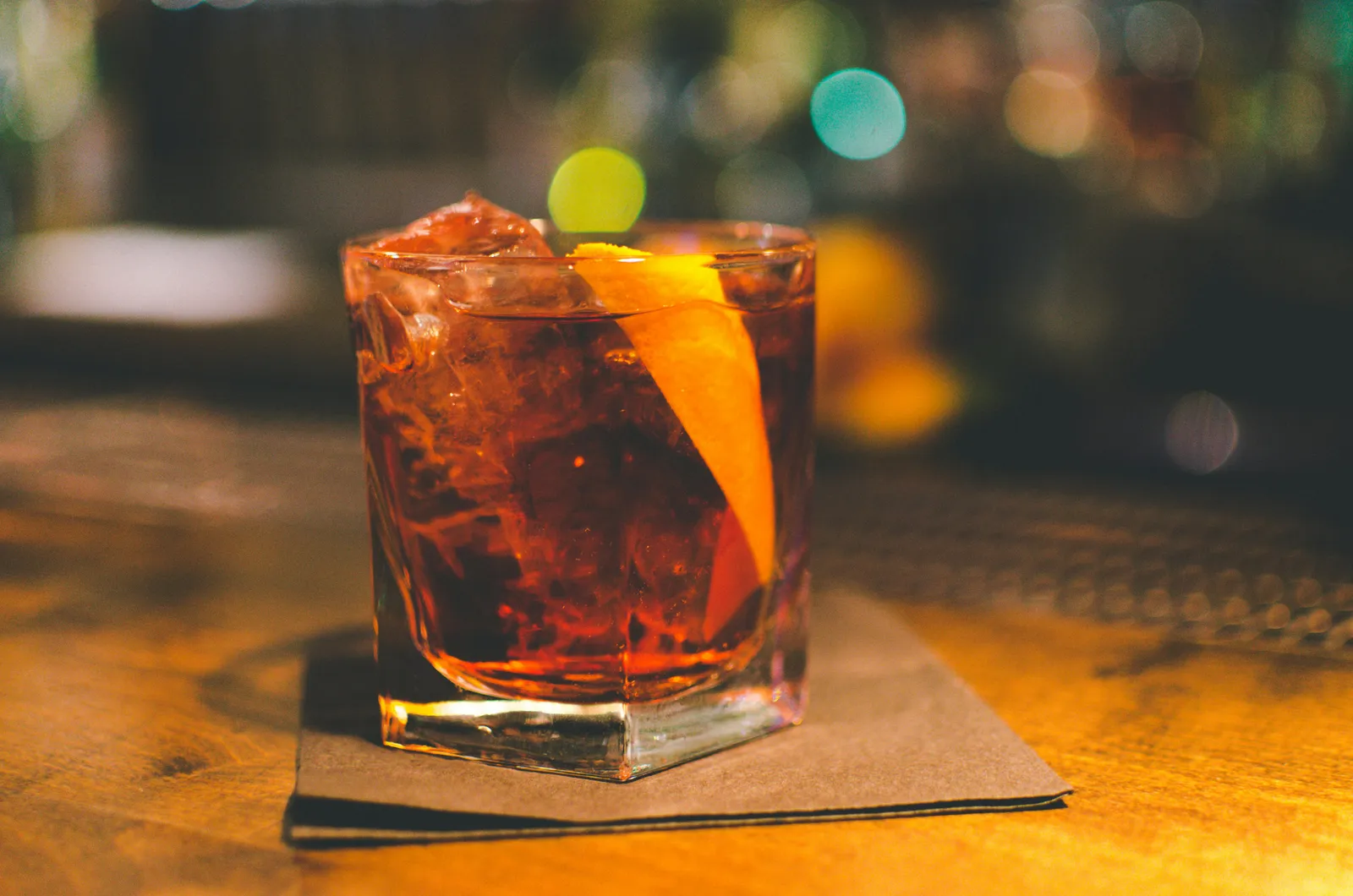
- Rocks vs highball: The rocks glass is shorter and wider, designed to feature the spirit. Pour a 2-ounce neat whiskey into a rocks glass and it looks intentional; pour it into a highball and it looks lonely.
- Highball vs Collins: Both are tall tumblers. The Collins is taller, narrower, and bigger (12 to 14 oz versus 8 to 12 oz). Most home bars don’t need both; the highball covers Collins-style drinks adequately. If you make a lot of Tom Collins or Singapore Slings, a dedicated Collins glass shows them off better. Our highball glass vs collins glass comparison breaks down the full difference.
- The “tumbler” word: “Tumbler” is the umbrella term for any flat-bottomed, stemless drinking glass. Rocks, highball, Collins, and pint glasses are all tumblers. The name dates to glasses without flat bottoms that would “tumble” if set down empty.
If you own one tall glass, make it a highball. If you have shelf space for two, add a rocks glass. The Collins is a luxury, not a necessity.
What size highball glass should you buy
The historical standard says 8 to 12 ounces. Most modern manufacturers and most current bartenders work with 12 to 14 ounces. Here’s why the standard has drifted up:
A modern cocktail pour assumes a generous mixer ratio. The classic gin and tonic of the 1960s was 1 part gin to 2 parts tonic, served over a few ice cubes. The modern version is 1 part gin to 3 or 4 parts tonic, served over a full glass of ice. The drink itself is bigger. The 10-ounce glass that was correct in 1965 feels cramped in 2026.
For most home bars:
- 12 oz: The new standard. Holds a generous 6-ounce mixer pour plus ice plus 2 ounces of spirit, with a small headroom for garnish.
- 13 to 14 oz: Slightly more headroom, looks fuller with ice, accommodates a Collins-style spear of ice if you have one. The size most quality manufacturers (Schott Zwiesel, Fortessa, JoyJolt) default to.
- 10 oz: Borderline. Works for compact drinks like a Cuba Libre or a small whiskey soda, but feels cramped for a gin and tonic with a full ice fill.
- 8 oz: Probably mislabeled. At 8 oz it’s closer to a rocks glass or a small juice glass. Avoid for highball cocktails.
If you’re buying one set, pick 13 or 14 ounces. It’s the size most contemporary recipes assume.
Materials: crystal, Tritan, soda-lime, plastic
What a glass is made of affects how it looks, how it feels, how it survives a dishwasher, and how much it costs. The four main materials:
Lead-free crystal. What most “good” glassware is made from. Despite the name, modern crystal contains no lead (the EU banned leaded crystal in 2010, and US manufacturers followed). The “crystal” designation today refers to the manufacturing process, glass with added minerals (typically barium oxide or zinc) that increase clarity and light refraction. Heavier, clearer, and more breakable than soda-lime glass. Examples: Fable, Williams-Sonoma Dorset, Nude Glass.
Tritan crystal. A trademarked formulation by Schott Zwiesel (used in their Modo line, among others). Combines crystal-like clarity with chip and break resistance. Dishwasher-safe over thousands of cycles, won’t cloud or scratch like soda-lime, and survives commercial use. Slightly less brilliant than true lead-free crystal but only marginally so. Sits at the top of the durability hierarchy. Best for hosts who entertain regularly.
Soda-lime glass. The everyday material. What most mass-market drinkware is made from. Durable, cheap, dishwasher-safe, but less clear than crystal and prone to water spots and minor scratches over time. Examples: La Rochère Perigord, Libbey Bar Essentials, Anchor Hocking. Fine for daily use, mid-tier for entertaining.
Plastic (polycarbonate, acrylic, Tritan plastic). Unbreakable, dishwasher-safe, and easy to identify as cheap. Acceptable for outdoor use, pool parties, and camping. Not acceptable for adult entertaining. The Crate & Barrel Liv Acrylic Highball ($8) is the exception that proves the rule, well-made for outdoor use, but still reads as outdoor.
If you can only own one material, lead-free crystal for entertaining or Tritan for everyday. Both look professional. Soda-lime is fine but lower-tier; plastic is for outside.
6 highball glasses worth buying
We tested or sourced reviews on twelve highball lines and narrowed to six that genuinely earn their place. Each fills a distinct role:
The everyday workhorse: Libbey Bar Essentials
- Capacity: 12 oz
- Material: Soda-lime glass (Duratuff treated)
- Set size: 6 glasses
- Price: ~$25 ($4 per glass)
- Dishwasher-safe: Yes
- Where to buy: Webstaurant Store, Amazon, restaurant supply
The American restaurant-bar default. Libbey makes the glasses you’ve drunk from at hundreds of restaurants without noticing. The Bar Essentials line is 12 oz, soda-lime, Duratuff treated (a thermal shock treatment that resists chips and cracks), and survives commercial dishwasher cycles for years. They’re not beautiful, they’re competent, and at $4 a glass you can replace one without thinking about it.
Buy these if you’re stocking a starter kit, you have kids, or you entertain enough that you’ll definitely break some. Don’t buy these if you want the glass itself to be part of the table-setting; they’re functional, not decorative.
The starter splurge: Crate & Barrel Otis
- Capacity: 19 oz (oversized highball)
- Material: Lead-free crystal, made in Italy
- Set size: Sold individually
- Price: $8.95 per glass
- Dishwasher-safe: Yes
- Where to buy: Crate & Barrel
The graceful tapered shape and Italian crystal at $9 each is the deal of the category. The Otis runs larger than typical (19 oz versus the 12 to 14 standard), which means it works for both highballs and Collins-style drinks; over-pour it for an iced tea or a Tom Collins, under-pour it for a standard gin and tonic. The tapered shape concentrates the carbonation and looks intentional on a table.
Buy these if you want one set that works for multiple drink types and looks more expensive than it is. The 19-oz capacity reads as substantial without crossing into “huge.”
The dinner-party set: Schott Zwiesel Modo
- Capacity: 14.6 oz
- Material: Tritan crystal
- Set size: 6 glasses
- Price:
$72 ($12 per glass) - Dishwasher-safe: Yes (thousands of cycles)
- Where to buy: Williams-Sonoma, Bloomingdale’s, Bed Bath & Beyond
The do-everything host glass. Schott Zwiesel’s Tritan crystal is the most durable cocktail glass on the market, it’s used in commercial restaurants because it survives commercial dishwashers. The Modo line is a clean, straight-sided cylinder with no taper, 14.6 oz, slightly wider opening than typical. It holds enough ice for any drink and works for water service when guests aren’t drinking cocktails.
The one drawback: water spots after dishwasher cycles. Rinse with a vinegar solution or buff dry with a microfiber cloth. Buy these if you entertain enough to want both quality and durability.
The retro option: La Rochère Perigord
- Capacity: 12.8 oz
- Material: Soda-lime glass, made in France
- Set size: 6 glasses
- Price:
$78 ($13 per glass) - Dishwasher-safe: Yes
- Where to buy: Williams-Sonoma, Food52
The diner-inspired fluted highball. La Rochère is the oldest active glassworks in France (founded 1475), and the Perigord line is their bistro-style fluted tumbler. The fluting catches light, the slight taper feels vintage, and the thick walls survive everything. Works for cocktails, beer floats, milkshakes, and iced coffee.
Buy these if your kitchen is warm and traditional rather than minimal-modern. The fluted shape doesn’t match a clean Scandinavian dinner table; it does match a French bistro one.
The outdoor/durable: Fortessa Jupiter Iced Beverage
- Capacity: 13 oz
- Material: Soda-lime glass with beaded exterior
- Set size: 6 glasses
- Price: ~$36-72 (depending on color)
- Dishwasher-safe: Yes
- Where to buy: Fortessa, Crate & Barrel, Amazon
The pool-party / patio / outdoor-dinner set. Fortessa’s Jupiter line has a thick beaded exterior that adds grip and visual texture, and the walls are thick enough that the glasses tolerate dropping (within reason, onto a soft surface). They come in eleven colors, which means you can color-coordinate to a table setting or buy a rainbow set so nobody loses track of their drink at a party.
The drawback: they don’t stack, which costs cabinet space. Buy these if outdoor entertaining matters to you, or if you want something durable that still looks intentional.
The Japanese highball: Toyo-Sasaki Hard Strong
- Capacity: 8 to 10 oz (smaller than American highballs)
- Material: Tempered soda-lime glass
- Set size: Sold individually or in sets of 6
- Price: ~$12 per glass
- Dishwasher-safe: Yes
- Where to buy: Specialty bar-supply, Cocktail Kingdom, Korin
The specialty pick. The Japanese highball (a tall, narrow glass for the Suntory whisky highball that Japan elevated into a national cocktail) is a different shape from the American highball: taller, narrower, thinner-walled, and smaller in capacity. Toyo-Sasaki’s Hard Strong line is the bar-standard glass in Tokyo cocktail bars; it’s tempered for durability and shaped for the specific drink.
The Japanese highball as a drink is precise: Toki or Hibiki whisky, served over a single tall ice spear (or hand-cut ice), topped with high-pressure soda water from a syphon, garnished with a single lemon twist. The glass shape matters because the narrow column preserves carbonation longer.
Buy these only if you make Japanese highballs regularly. For most home bars they’re a luxury.
How many highball glasses to buy
The honest answer depends on how often you entertain and how big your parties are. The math:
- Just a couple, casual entertaining: 4 glasses. Two for you, two for the friends who come over.
- Dinners of 4 to 6: 6 glasses. The standard set size, covers dinners with one drink each, plus replacements when one breaks.
- Dinners of 6 to 8: 8 glasses. Buy two sets of 4 from the same line so glasses match. Or one set of 8.
- Cocktail parties (10 to 16 guests): 12 glasses. This sounds like a lot, but at a cocktail party, every guest needs one, and you can’t wash glasses fast enough mid-party to share. Either buy a 12-glass set from a workhorse line (Libbey Bar Essentials at $50 total) or supplement a smaller set of nice glasses with a rental order for big parties.
A common mistake: buying 6 from an expensive line ($150) when 4 from the expensive line + 4 Libbey workhorse glasses ($120) covers more situations. The expensive glasses come out for dinner with friends; the workhorse glasses cover cocktail parties when breakage is more likely.
For most readers: buy 6 of one decent line (Schott Zwiesel Modo or Crate & Barrel Otis), then add 6 Libbey when you start hosting larger groups.
Which highball cocktails go in which size
Drink-to-glass pairing affects how a cocktail looks and tastes. The size you pick should match the drink:
| Cocktail | Recommended capacity | Ice |
|---|---|---|
| Gin and Tonic | 12-14 oz | Full glass, standard cubes |
| Vodka Soda | 10-12 oz | Standard cubes, 3/4 full |
| Whiskey Highball / Whiskey Soda | 10-12 oz | Single large cube or 3 standard cubes |
| Japanese Highball | 8-10 oz (Japanese highball glass) | Single tall ice spear or hand-cut |
| Rum and Coke / Cuba Libre | 10-12 oz | Standard cubes, fill 3/4 |
| Mojito | 12-14 oz | Crushed ice, packed |
| Tom Collins | 14-16 oz (or Collins glass) | Collins ice spear or tall cubes |
| Dark and Stormy | 12-14 oz | Standard cubes |
| Shirley Temple | 10-12 oz | Standard cubes, fill 3/4 |
| Mint Julep (when no julep cup) | 12-14 oz | Crushed ice, packed |
| Long Island Iced Tea | 14-16 oz | Standard cubes, full |
| Iced Tea (just iced tea) | 14-16 oz | Standard cubes |
A note on ice: sphere ice molds (the popular 2-inch silicone trays) don’t fit highball glasses. The sphere is sized for a rocks glass. For highballs, use standard cubes, or invest in Collins-style ice spear molds (~$15) that produce a single tall column of ice for taller drinks. Crushed ice is right for mojitos and juleps, wrong for everything else in this category.
What to skip
Novelty etched or “cut crystal” sets at $40+ per glass. Most “cut crystal” sold at department stores today is machine-pressed glass with shallow surface etching. It looks busy on a table, the etching catches food residue, and the glasses scratch faster than plain crystal. If you want decorative glassware, buy one decorative set you actually love (heirloom-quality, $80+ per glass from a known maker); don’t buy mass-market etched glass.
Mass-market sets that water-spot. Anchor Hocking, Libbey budget lines, and most $20-set highballs at Target or Walmart cloud over time and scratch in dishwashers. They’re fine as backup glasses; they shouldn’t be your primary entertaining set.
Plastic for adult entertaining. Plastic glasses (acrylic, Tritan plastic, melamine) are appropriate for outdoor use, kids, pool parties, and camping. They’re not appropriate for a dinner party. The weight of a real glass is part of the drink experience; lifting a plastic glass to your mouth signals “casual.” If the dinner is casual, that’s fine; if you want it to feel intentional, use glass.
Sets larger than you need. A 24-glass set of highballs takes shelf space you don’t have. Buy 6 to start, add more when you need them. The glasses you don’t have don’t matter; the cabinet space they occupy does.
The 8-ounce highball. Glasses labeled as highball but actually 8 ounces are sized to a 1965-era pour. They feel cramped for modern cocktails. Skip and buy 12+ oz.
Stemmed highballs. A “highball” with a stem isn’t a highball; it’s a beer pilsner or a footed iced-tea glass. The glass family is unstemmed. If you want stemmed glassware, that’s a different category.
A short FAQ
Can I use a highball glass for water? Yes, and it’s one of the best dual-purpose glasses. A 12 to 14-ounce highball is exactly the right size for water service at dinner. If you don’t own dedicated water glasses, highballs are the answer.
Are highball glasses microwave-safe? Most are not. Soda-lime glass without specific labeling can shatter under microwave thermal stress. Lead-free crystal definitely shouldn’t go in the microwave. If you need to warm a drink (a hot toddy, mulled cider), use a heatproof mug, not a highball glass.
How do I avoid water spots after the dishwasher? Use a rinse aid (Finish Jet-Dry or similar). For severe spots, soak in a 1:1 vinegar and water solution for 30 minutes, then hand-rinse. For prevention, run a vinegar rinse cycle through your dishwasher monthly to descale.
What’s a Tritan glass? Tritan crystal is a proprietary glass formulation by Schott Zwiesel (the same brand makes Tritan plastic, which is different). Tritan crystal combines crystal-like clarity with break and chip resistance. It’s used in commercial restaurants because it survives thousands of dishwasher cycles without clouding. The trade-off is a slightly less brilliant refraction than true lead-free crystal, though the difference is small.
Can I drink wine in a highball glass? You can, but it doesn’t show wine well. Wine is meant to be swirled (to aerate) and nosed (the rim shape directs aromas). A straight-sided highball does neither. For everyday wine drinking at a casual dinner it’s fine; for actual wine service, use wine glasses.
Where can I find replacements when one breaks? Stick to brands sold “open stock” rather than only in sets. Crate & Barrel, Williams-Sonoma, Schott Zwiesel, and Fortessa typically sell individual glasses online. Mass-market sets (Target, Walmart, Anchor Hocking) usually don’t, which means a broken glass orphans the set. Open-stock matters more than the glass quality for long-term ownership.
The highball glass is the workhorse of cocktail glassware. It holds the drinks people actually order, it doubles as water service, and a good one survives years of entertaining. Buy 6 of a quality line (Schott Zwiesel Modo, Crate & Barrel Otis, or La Rochère Perigord), add 6 Libbey workhorses for parties, and you’re set for the next decade.
For the rest of the home-bar build, see bar cart: how to set up a real home bar and cocktail shakers: the type bartenders actually use. For the full picture of which glasses to own, start with our guide to the types of cocktail glasses you actually need, then see the sibling pieces: whiskey glasses, coupe glasses, martini glasses, types of beer glasses, and champagne flutes. For the cocktails that go in the highball, gin cocktail recipes, vodka cocktail recipes, and bourbon cocktail recipes.