A Halloween charcuterie board should be the easy win of the party: set it out, let people graze between costumes and candy, go enjoy your own night. But most of the advice out there is a photo of plastic spiders sitting in the cheese and a grocery list, with nothing about how to make the spooky look from actual food, how to build it ahead, or how to keep it safe sitting out for a three-hour party.
This guide builds a Halloween charcuterie board that does the harder, better thing. Spooky, yes, with the orange-black-purple-green coming from real ingredients rather than dye or props, but organized by what each item does so it eats as well as it photographs, made ahead so you are not assembling it in a costume, and safe to leave out across a long party.
Who this is for
You are hosting a Halloween party, a kids’ trick-or-treat staging area, or a grown-up costume night, and you want the food handled: built ahead, set out, done. You would rather the board free you up than become one more October craft project. You also want it to taste like something, not look like a Pinterest photo and eat like a bowl of candy corn.
If you want the full method behind any grazing board, our charcuterie board guide is the foundation. This is the Halloween version, with the color plan, the edible decorations, and the make-ahead worked out.
TL;DR: the spooky-but-edible board plan
- Get the Halloween colors from real food, not dye. Orange from cheddar and carrots, black from blackberries and olives, purple from grapes and figs, green from rosemary and grapes.
- Make the spooky parts edible. A balsamic spiderweb on brie, olive spiders, mozzarella eyeballs, salami roses, cheese cut into pumpkins and ghosts. Keep plastic props around the board, never in the food.
- Build by role: a savory anchor (cured meat), cheeses, a spooky sweet, a crunch, and fresh fruit and veg for color.
- Make it ahead. Assemble a few hours early, refrigerate, set out 30 to 45 minutes before guests arrive.
- Mind the clock. A party board sits out for hours, so watch the cured meat and soft cheese (the 2-hour rule).
- Build one board with a kid zone, or a separate milder board if you have a crowd of trick-or-treaters.
- Budget about $4 to $8 per person, depending on the cheeses and meats.
Our free Dinner Party Checklist timeline folds neatly into the rest of your Halloween hosting.
Spooky from real food: the color palette
The Halloween look should come from the food itself, not from food coloring or novelty. The holiday’s palette (orange, black, purple, and a little ghostly white and green) is sitting in the produce aisle and the cheese case already, and real ingredients give you the color and the flavor in the same bite.
For orange, reach for sharp orange cheddar and mimolette, carrots and orange bell pepper, cantaloupe, mandarin segments, and dried apricots. For black and deep dark, use blackberries, oil-cured and other black olives, black or red grapes, dark figs, blackberries, and black-sesame or charcoal crackers. A cheese with an edible ash line, like Humboldt Fog or Morbier, reads dark and dramatic without a drop of dye. For purple, lean on purple and black grapes, figs, blackberries, purple cauliflower, and red endive. For green, use green grapes, green apple, rosemary sprigs, pistachios, snap peas, and castelvetrano olives. For the ghostly white, mozzarella, white cheddar, brie, and cauliflower do the work.
You do not need every square inch to be Halloween-colored. A few clear hits, a cluster of blackberries here, a fan of orange cheddar there, a couple of rosemary sprigs, read as Halloween against the natural creams and golds of the rest of the board. Trying to make the whole thing black and orange is how a board tips into looking dyed and staged rather than appetizing. This is the same principle our Christmas charcuterie board uses for red and green: real color, not coloring.
Edible spooky tricks (and where the plastic goes)
Here is the line that separates a board people actually eat from a board people photograph and avoid: the spooky elements should be edible, and anything inedible stays off the food. Every competitor roundup we read sets plastic spiders, skeleton hands, and a “bloody” knife directly in the cheese. It is not appetizing and it is not clean. Put those props on the table around the board, on the cake stand, on the cloth, and keep the food zone food.
The good news is that the edible versions are easy and they look better:
- Spiderweb brie. Pipe concentric circles of balsamic glaze (or melted dark chocolate, for a sweet board) on a wheel of brie, then drag a toothpick from the center outward to pull the rings into a web.
- Olive spiders. A whole black olive is the body; slices of another olive are the legs. Set them crawling across a cracker or a corner of cheese.
- Mozzarella eyeballs. Mini fresh mozzarella balls with a slice of black or green olive for the iris and a dot of something dark for the pupil. A tiny smear of pesto or sundried tomato makes them “bloodshot.”
- Salami roses. Fold salami slices over the rim of a small glass until they bunch into a rose, then lift the rose onto the board. They double as your deep-red color.
- Cheese pumpkins, ghosts, and bats. Small cookie cutters turn slices of orange cheddar into pumpkins and bats, and white cheese into ghosts. Two peppercorns or olive bits make ghost eyes.
- Pretzel-rod bones. Dip pretzel rods in white chocolate or white candy melts and press a mini marshmallow onto each end for the knob of the bone.
- A mummy baked brie. Wrap a brie wheel in thin strips of puff pastry, leave a gap for two olive eyes, and bake until golden for one warm showpiece in the center.
None of this needs a special product, and none of it needs food coloring. If you want a single centerpiece, the spiderweb brie or the mummy brie carries the whole theme on its own.
What goes on a Halloween charcuterie board, by role
Forget arranging by color alone. Arrange by the job each food does, the same way our charcuterie board method works, with the Halloween ingredients slotted into each role. That is how you keep the board balanced (salty, creamy, crunchy, fresh, sweet) instead of ending up with a pretty pile that all tastes the same.
The savory anchor (cured meat does the work)
The anchor is the salty, substantial role that keeps a board from feeling like a fruit-and-cracker plate. Two or three cured meats give variety without crowding.
- Salami or soppressata, sliced or folded into roses, and a natural source of deep red.
- Prosciutto, draped in loose folds, the classic salty-savory drape.
- Summer sausage or a peppered salami, sliced, sturdy, and a reliable favorite.
- For vegetarian guests, add a meat-free anchor like marinated mushrooms or marcona almonds; our vegetarian charcuterie board covers the full meat-free build.
The cheeses
Aim for two or three cheeses in different styles (one soft, one firm, one with character) so there is contrast. If a guest is vegetarian, check the label: several traditional cheeses, including authentic Parmesan, are made with animal rennet and are not actually vegetarian.
- A soft cheese: brie, ready to become a spiderweb or a mummy.
- A firm, aged cheese: sharp orange cheddar (your easy orange) or a nutty gouda.
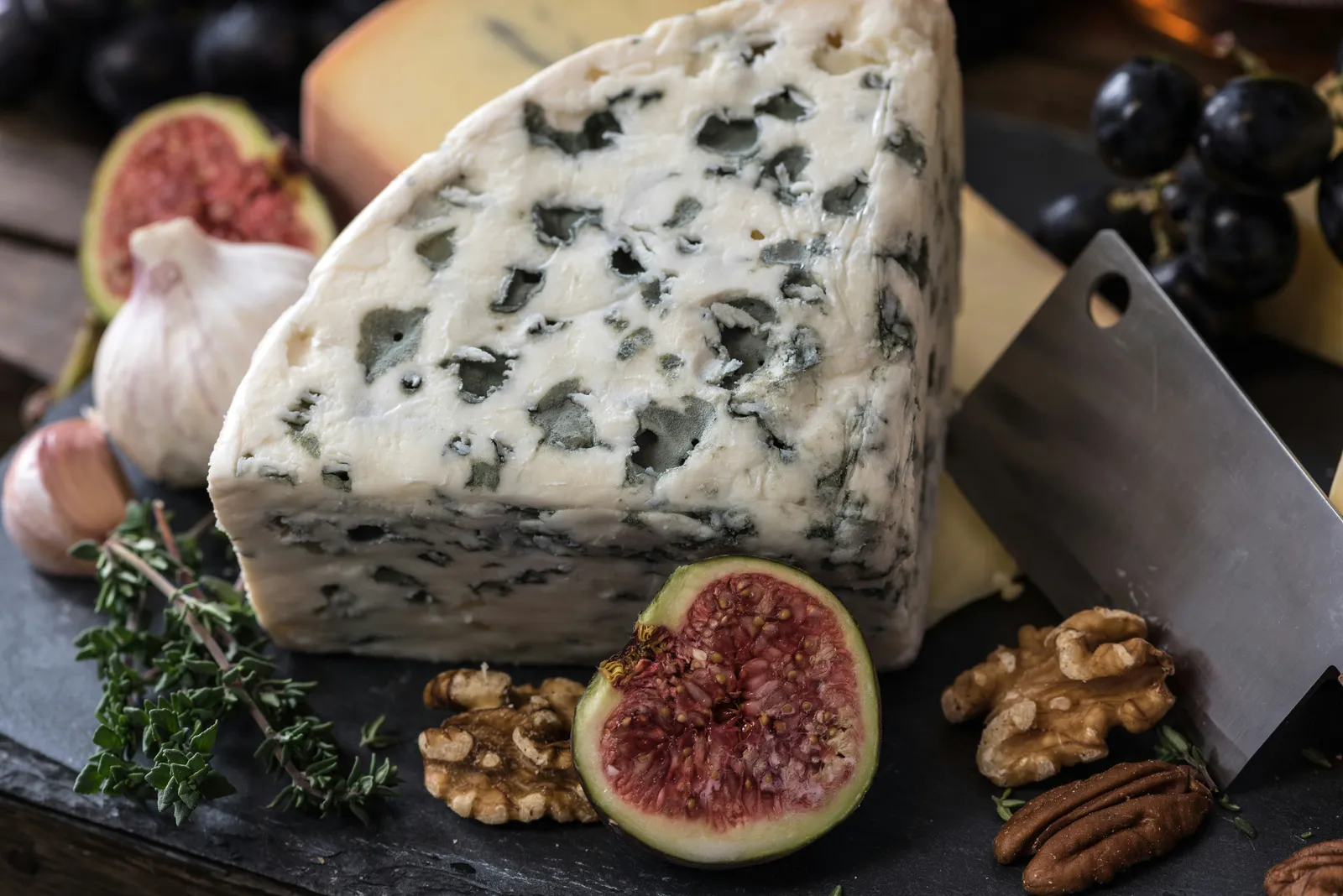
- A dramatic cheese: an ash-lined Humboldt Fog or Morbier for natural black, or a blue for bite.
The spooky sweet
- Dark chocolate or chocolate-covered almonds, a clean dark bite.
- Blackberries and dark figs, the natural black-purple fruit.
- Fig jam or blackberry preserves, the partner for the cheeses.
- A small candy corner (candy corn, chocolate eyeballs) if kids are coming, kept in its own spot. For an all-sweets version, see our dessert charcuterie board.
The crunch
- Pretzel rods, plain or dipped as bones.
- Pistachios, a natural source of green.
- Black-sesame, charcoal, or seeded crackers, the dark vehicles.
- Rosemary sprigs, an aromatic green garnish that also smells like the season.
The fresh (where most of the color comes from)
- Purple and black grapes, the easy Halloween two-tone.
- Carrots and orange bell pepper, crisp orange for a dip.
- Green apple slices, tossed with a little lemon so they do not brown.
- Cantaloupe or mandarin, bright orange and seasonal.
- Olives (black for spiders, castelvetrano for green) in a small bowl.
A real board for 8 to 12
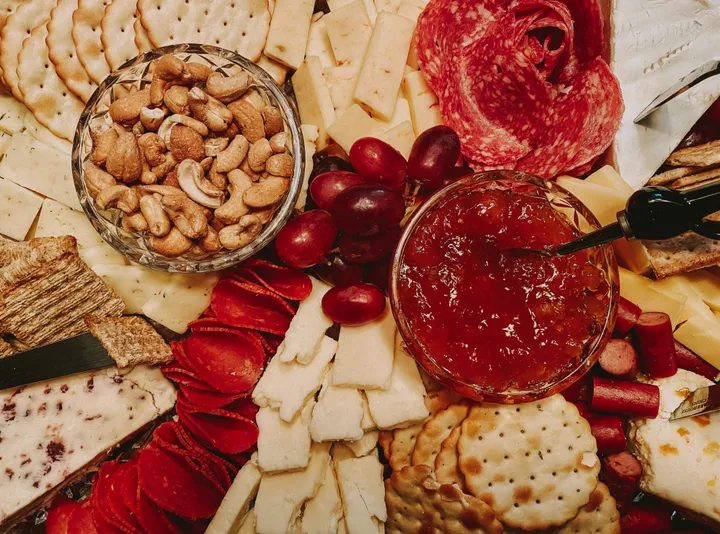
For a Halloween gathering of 8 to 12, build with two or three cured meats, three cheeses, a couple of spooky sweets, the crunch, the fresh and colorful section, and plenty of crackers and pretzel rods.
Plan roughly 2 to 3 ounces of cheese plus about 2 ounces of meat per person. A party board can run a little more generous than a pre-dinner appetizer, since it is often the main thing people graze on through the evening. For 8 to 12 that is about 1.5 to 2 pounds of cheese and a pound or so of meat, plus the extras. Expect to spend roughly $4 to $8 per person depending on the cheeses and meats. Lay the bowls and soft items first, set the cheeses (and your spiderweb brie centerpiece), then fill the gaps with meat, fruit, and crunch so there are no bare patches. If the board comes before a sit-down dinner, our how to set a table guide covers the table itself, and a grown-up board pairs naturally with something from our Halloween cocktail recipes.
Scaling it: a board for two or a big party
The 8-to-12 build is the standard, but Halloween hosting comes in every size.
For a board for two, a cozy horror-movie night in, a small slab or even a dinner plate does it: one cured meat, two cheeses, a little fig jam, a handful of pistachios, some crackers, and a few grapes and blackberries for color. Do not over-buy, because cut cheese and sliced meat do not keep well, and a small board can feel just as festive as a big one.
For a big party of 20 or more, do not build one enormous board that looks wrecked within the hour. Build two or three medium boards and place them in different rooms (one by the drinks, one near the candy bowl), or set out one large grazing board and keep a backup tray in the fridge to refresh it partway through. Spreading the food out spreads the crowd out too, which keeps any one corner from jamming up. Our finger foods for a party guide has more hand-held options to round out a big spread.
Two boards: the adult board and the kids’ board
Halloween is one of the few parties where you genuinely have two audiences, and the searches split the same way (people look for a board “for adults” and one “for kids”). You can serve both without making two completely separate spreads.
The adult board leans into the cheese and charcuterie: sharper and aged cheeses, olives and marinated items, dark chocolate and figs, the salami roses, and a wine-friendly or cocktail-friendly balance. This is the board you build the spiderweb brie for, and it is happiest next to a Halloween cocktail.
The kids’ board trades the strong flavors for milder, no-explanation crowd-pleasers: cubed mild cheese, mild deli meat or none, pretzels, plenty of fruit, cheese cut into pumpkins and ghosts, and a small candy or treat corner. Keep olives, blue cheese, and anything spicy off it.
If you are feeding both at once, build one board and give the kids a clearly separated zone at one end: milder cheese, fruit, pretzels, and the treat corner grouped together so younger guests have an obvious safe area to graze, with the grown-up items at the other end. This is the same crowd-zoning idea we use in our game night snacks guide.
Make-ahead for the night of the party
The board only saves you time if it is done before guests arrive, and Halloween night has enough going on. Here is the plan.
- The day before: Make any dips and the spiderweb-brie glaze, slice the hard cheeses, prep the edible decorations (cut cheese shapes, build a few olive spiders), portion jams into small bowls, and confirm any vegetarian guests’ cheese is suitable.
- A few hours ahead: Assemble the full board, bowls and soft items first, then cheeses, then meat, fruit, and crunch. Cover it and refrigerate. Bake the mummy brie now if you are serving one.
- 30 to 45 minutes before guests arrive: Pull the board from the fridge so the cheese loses its chill (cold cheese is half its flavor), slice the apples, set out the crackers and pretzels so they stay crisp, and place the board, ideally away from the kitchen so the crowd gathers there.
Assembled and chilled, the board waits for you, which is what you want on a night you are also answering the door and topping up drinks.
Food safety for a board that sits out
A Halloween party runs long, and a board can sit out for hours, which is where party spreads get risky. Per FoodSafety.gov, you should never leave perishable foods out of refrigeration for more than two hours (one hour if the room is above 90°F). The reason is the danger zone between 40°F and 140°F, where bacteria multiply fastest.
On a Halloween board, the watch items are the cured meat and the soft cheese. The simple fix is to put out about half of those perishables and keep backups in the fridge, then swap or refresh at the two-hour mark instead of letting one platter sit all evening. The shelf-stable parts of the board (pretzels, crackers, nuts, dried fruit, chocolate, and jam) are happy out the whole time and can carry the spread once you pull the meat and soft cheese. We cover the same rule in a longer-grazing context in our housewarming party food guide.
This is also the real reason to keep plastic props out of the food. Decorations that touch perishable food are one more thing to track and one more way to cross-contaminate. Edible decorations and around-the-board props sidestep the whole problem.
What to skip
The Halloween board mistakes worth avoiding:
- Plastic spiders and skeleton hands in the food. They are not appetizing, they are not clean, and they make people graze around them. Keep props around the board, not in it, and make the scary parts edible.
- Food coloring and dyed everything. Real blackberries, purple grapes, orange cheddar, and ash cheese give you the color and the flavor. Dye gives you only the color, and usually a strange one.
- The all-candy board. A pile of candy corn and chocolate eyeballs is a sugar dump, not a board. Let candy be one small corner, not the whole thing.
- A theme so fussy it is hard to eat. A board that is all delicate eyeballs and tweezered spiders looks staged and no one wants to wreck it. Build it loose enough that people dig in.
- Leaving the meat and soft cheese out all night. Tie this to the food-safety section: swap and refresh at two hours.
- Forgetting the vegetarian guests. Some of your Halloween crowd may not eat meat, so point them to our vegetarian charcuterie board, which also explains why some cheeses (including authentic Parmesan) are not actually vegetarian.
A short FAQ
What do you put on a Halloween charcuterie board? Build by role: a savory anchor (cured meats), two or three cheeses, a spooky sweet (dark chocolate, blackberries, figs), a crunch (pretzel rods, seeded crackers, pistachios), and fresh fruit and vegetables for natural color. Get the orange, black, purple, and green from real food rather than dye.
How do you make it spooky without fake decorations? Use edible tricks: a balsamic spiderweb on brie, olive spiders, mozzarella eyeballs, salami roses, cheese cut into pumpkins and ghosts, and white-chocolate pretzel bones. Keep any plastic props around the board, never in the food.
Can you make a Halloween charcuterie board ahead of time? Mostly, yes. Prep decorations and slice hard cheese the day before, assemble and refrigerate a few hours ahead, then set it out 30 to 45 minutes before guests arrive and add anything that browns or wilts at the last minute.
What is the difference between a kids’ and an adult board? The adult board leans into aged cheese, cured meat, olives, and dark chocolate, and pairs with a cocktail. The kids’ board uses milder cheese, more fruit and pretzels, and a small treat corner. Feeding both? Build one board with a clearly separated kid zone.
How long can the board sit out? No more than two hours (one hour above 90°F), because of the 40°F to 140°F danger zone. Put out half the perishables, keep backups chilled, and refresh at the two-hour mark.
How much do you need per person? About 2 to 3 ounces of cheese and 2 ounces of meat per person, a little more if the board is the main grazing food. For 8 to 12, roughly 1.5 to 2 pounds of cheese and a pound of meat.
What’s next
A Halloween charcuterie board is one of the most forgiving things you can put in front of a costume crowd, as long as you build it for flavor and not just for the photo. Get the color from real food, make the spooky parts edible, organize by role, build it ahead, and keep an eye on the clock once it is out, and you have a board that earns its place at the party.
When you are ready for the rest of the night, our Halloween cocktail recipes cover the drinks, the Thanksgiving charcuterie board and Christmas charcuterie board run on the same build-by-role logic for the holidays just ahead, and the charcuterie board guide has the full method behind all of them. For now: prep the edible spiders, assemble it this afternoon, and go enjoy the party.