Most Thanksgiving charcuterie board advice hands you a list of pretty fall-colored foods and stops there. But on Thanksgiving the board has an actual job, and it is not decoration. It is the thing that keeps the early-arriving, hungry, kitchen-hovering guests fed and happy for the two to four hours while the turkey roasts and rests, so you can actually cook. Build it for that job and it earns its place. Build it as a centerpiece and it competes with the meal it is supposed to tide people over for.
This guide treats the Thanksgiving charcuterie board as a tool: make-ahead, set-and-forget, organized by what each food does, and designed so it does not duplicate the dinner coming three hours later.
Who this is for
You are hosting Thanksgiving, or bringing the appetizer, and you want the board to do real work, not just look festive on the counter. You have a turkey to manage and people arriving before it is anywhere near done. You want something you can build ahead, set out, and walk away from while you deal with the gravy. If you want the full method behind any grazing board, our charcuterie board guide is the foundation; this is the Thanksgiving-specific version.
TL;DR: the Thanksgiving board plan
- Know the board’s job: it holds hungry early guests while the turkey finishes. Build it for that, not as a showpiece.
- Do not duplicate the dinner. Skip the same cranberry sauce, dinner rolls, or turkey theme that is already on the menu. The board complements the meal, it does not preview it.
- Build by role: a savory anchor (cured meat), cheeses, the fall sweet (cranberry, fig, candied pecans), an autumnal crunch, and fresh fruit.
- Make it ahead. Assemble Thanksgiving morning while the turkey roasts, refrigerate, set out 30 to 45 minutes before guests arrive.
- Mind the clock. A board that sits out for hours needs the 2-hour rule, especially the meat and soft cheese.
- Keep it a holdover, not a feast. Plan about 2 to 3 ounces of cheese and 2 ounces of meat per person, since a big meal is coming.
Our free Dinner Party Checklist timeline folds neatly into the bigger Thanksgiving prep.
What the board is actually for on Thanksgiving
Thanksgiving has a timing problem that no other meal has. The turkey takes hours, the oven is full, and guests arrive long before any of it is ready. Without something to graze on, those guests drift into the kitchen, ask how they can help, and hover while you are trying to get six things to finish at once.
The charcuterie board solves that. Set out in the living room or on a side table well away from the kitchen, it gives early arrivals somewhere to land, something to eat, and a reason to stay out from underfoot. That is the whole point of it on Thanksgiving: it buys you the two to four hours you need to cook, and it keeps people happy and fed while it does.
Everything about how you build it should serve that job. It needs to be done before anyone arrives (you will be busy). It needs to hold up sitting out for a few hours. And it should not be so substantial that it spoils the appetite for the meal you are working so hard on. The same do-the-prep-ahead logic runs through our whole guide to hosting, and it matters double on the busiest cooking day of the year.
The one rule: don’t duplicate the dinner
Here is the mistake almost every Thanksgiving board makes. It loads up on the exact things that are about to be on the dinner table: a bowl of the same cranberry sauce, the same dinner rolls, slices of turkey, a scoop of stuffing. Now the board is a preview of the meal, and a preview nobody needed.
The board should complement the dinner, not rehearse it. That means leaning on the things that will not appear at dinner: cured meats, a range of cheeses, marinated bites, fresh fruit, crackers. A little cranberry or fig on the board is a nice seasonal nod, but it should be a board-sized portion you put out, not a ladle from the batch headed for the table.
There is a second reason this matters. The board is a holdover, not a feast. If it is so big and rich that everyone fills up on cheese and salami, you have undercut the meal that is the actual event. Generous but restrained is the goal: enough to take the edge off, not enough to replace dinner.
The fall items, by the role they play
Forget arranging by color. Arrange by the job each food does, the same way our charcuterie board method works, with fall flavors layered in.
The savory anchor (cured meat does the work here)
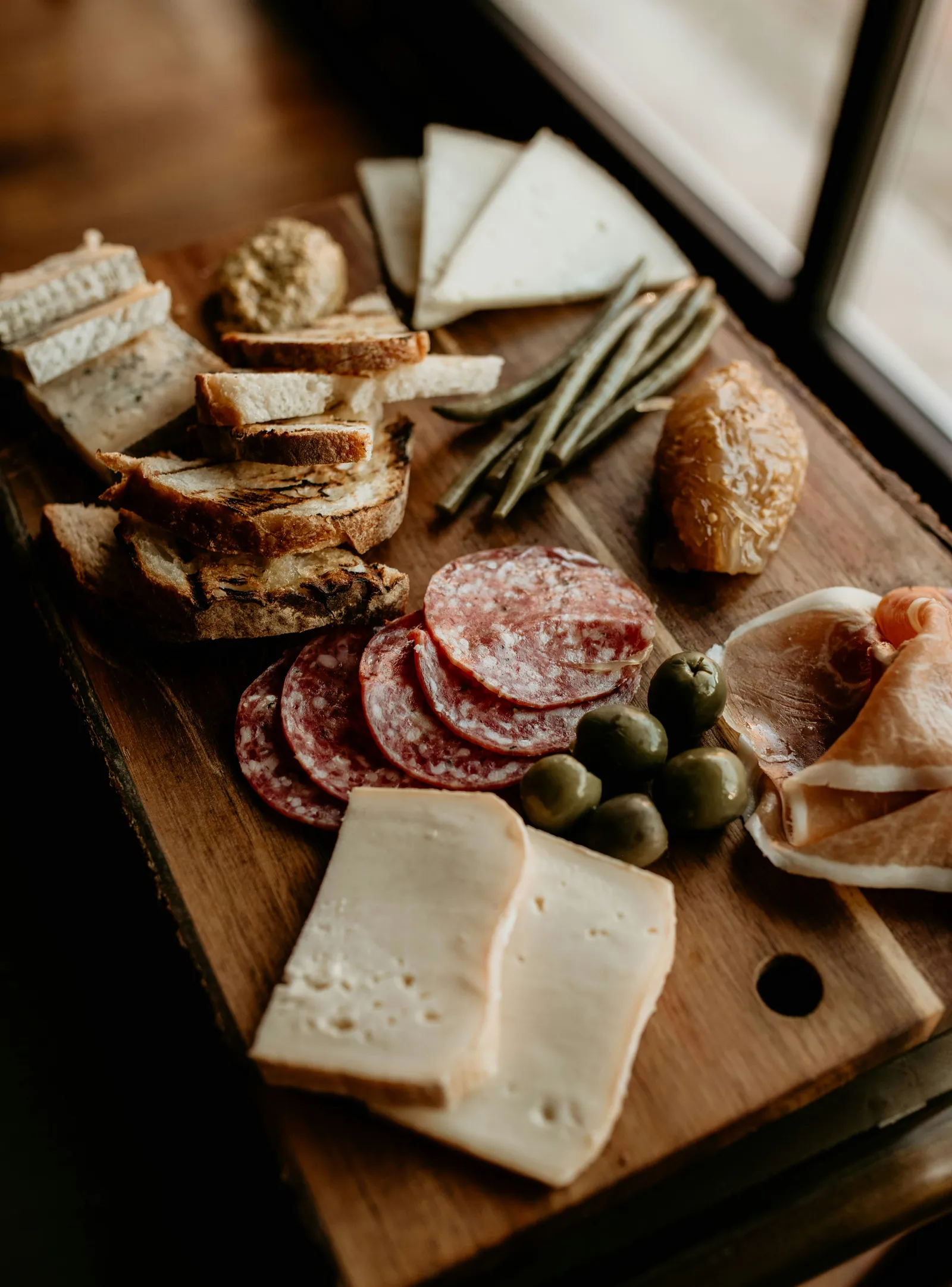
The anchor is the salty, savory, substantial role that keeps the board from feeling like a fruit plate. On a Thanksgiving board this is usually cured meat, and two or three kinds give you enough variety. Pick a mix of textures: something draped (prosciutto), something sliced and firm (salami), and something a little different (smoked turkey or summer sausage).
- Prosciutto, draped in loose folds, the classic salty-savory anchor.
- Salami or soppressata, sliced or folded into a “river” down the board.
- Smoked turkey slices, a quiet nod to the day that does not duplicate the roast.
- Summer sausage, sliced, sturdy, and a crowd favorite.
- For vegetarian guests, add a meat-free anchor like marinated olives or marcona almonds (more on the meatless version below).
The cheeses
- A soft cheese: brie is the fall classic, especially baked with a spoonful of cranberry.
- A firm, aged cheese: sharp cheddar or a nutty gouda.
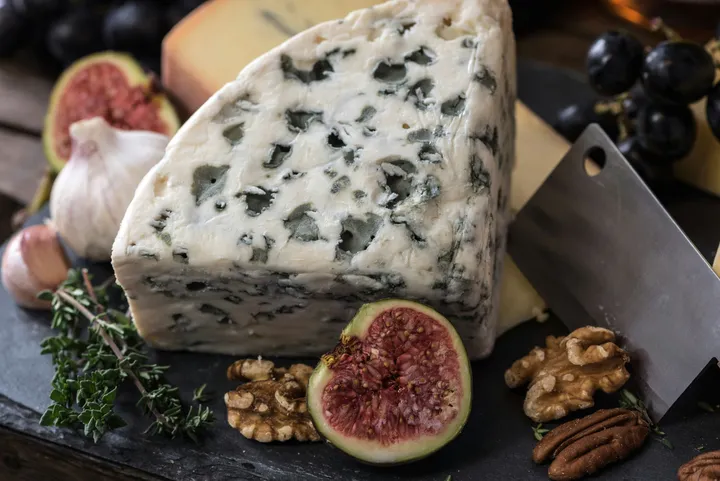
- A seasonal or bold option: a cranberry- or cinnamon-studded cheese, or a wedge of blue for contrast.
The seasonal sweet (the fall signature)
- Cranberry sauce or a quick cranberry compote, in a board-sized bowl (not the dinner’s batch).
- Fig jam or preserves, the natural partner for the cheeses.
- Pumpkin or apple butter, for the autumnal spread.
- A drizzle of honey or maple. (Honey is vegetarian but not vegan, worth knowing if a vegan guest is coming.)
The autumnal crunch
- Candied or spiced pecans, the signature fall nut.
- Pepitas (pumpkin seeds), salty and seasonal.
- Gingersnaps or a spiced cookie, a small sweet-crunchy bridge.
- Seeded crackers, pretzels, and breadsticks, the sturdy vehicles.
The fresh
- Apple and pear slices, tossed with a little lemon so they do not brown.
- Pomegranate arils, the festive fall color with almost no prep.
- Grapes, fresh figs, or persimmon, for the juicy contrast.
The vehicle and the centerpiece spread
- Crostini, sliced baguette, and water crackers, to carry everything.
- A baked brie with cranberry, warm in the middle of the board, if you want one showpiece.
- Whipped goat cheese or a pumpkin hummus, for a scoopable option.
A real board for 8 to 12
Thanksgiving crowds run bigger than a normal party, so build for 8 to 12: two or three cured meats, three cheeses, two or three of the fall sweets (one cranberry, one jam, the candied nuts), a crunch spread, a fresh section of apple, pear, and pomegranate, and plenty of crackers and crostini.
Plan roughly 2 to 3 ounces of cheese plus about 2 ounces of meat per person, which is lighter than a board meant to be the main event, because a full dinner is coming. For 8 to 12 people that is about 1.5 to 2 pounds of cheese and a pound or so of meat. Expect to spend roughly $4 to $8 per person depending on the cheeses and meats you choose. Lay the bowls and soft items first, set the cheeses, then fill the gaps with meat, fruit, and the crunchy things so there are no bare patches. If the board is the opening act before a seated dinner, our how to set a table guide covers the main event, and finger foods for a party has more grazing ideas if you want to round things out.
Scaling it: a small board or a big crowd
The 8-to-12 build is the standard, but Thanksgiving comes in every size, so scale the board to the room.
For a small Thanksgiving of 4 to 6 people, a single small board does it: one cured meat, two cheeses, one fall sweet (cranberry or fig), a handful of candied nuts, some crackers, and apple or pear slices. Do not over-buy for a small group, leftovers of cut cheese and sliced meat do not keep well, and you already have a fridge full of turkey coming. A board on a dinner plate or a small wooden slab is plenty.
For a big crowd of 15 or more, do not build one enormous board that gets picked over and looks wrecked within the hour. Build two or three smaller boards and place them in different spots (one by the drinks, one in the living room), or set out a single large grazing board and keep a backup tray in the fridge to refresh it halfway through. Spreading the food out also spreads the people out, which keeps any one room from jamming up while you are trying to move a turkey.
Feeding a mixed Thanksgiving table
Thanksgiving tables are mixed by nature: a vegetarian cousin, a couple of kids, someone avoiding nuts, your aunt who only eats the cheese. The board is the easiest place to quietly cover everyone without making a production of it.
Keep a few crowd-pleasers that need no explanation (cubed mild cheese, grapes, plain crackers, pretzels) in their own spots so kids and picky eaters have obvious safe choices. If a guest is vegetarian, make sure some of the cheeses are vegetarian (several traditional ones, including authentic Parmesan, are not) and keep the plant-based savory anchors like marinated olives and nuts grouped together so they have a clear section to graze; our vegetarian charcuterie board guide has the full meatless build and the cheese rule. If nut allergies are in play, keep the candied pecans and pepitas on a separate small dish rather than scattered across the whole board, so they are easy to avoid. None of this takes extra work, it just takes deciding where things go before you start placing them.
Make-ahead: build it around the turkey
The board only does its job if it is finished before guests arrive, because once they are there you are committed to the kitchen. Here is the timeline that fits around the turkey.
- The day before: Shop. Make the candied nuts and any cranberry compote. Slice the hard cheeses, portion the jams into small bowls, and confirm any vegetarian guests’ cheese is suitable (see below).
- Thanksgiving morning, as the turkey goes in: While the bird roasts, assemble the whole board on a large platter. Bowls and soft items first, then cheeses, then fill with meat, fruit, and crunch. Cover it and refrigerate.
- 30 to 45 minutes before guests arrive: Pull the board from the fridge so the cheese loses its chill (cold cheese is half its flavor), slice the apples and pears, and set the board on a table well away from the kitchen.
By the time the doorbell rings, the board is done and stationed where you want the early crowd to gather. You go back to the gravy.
Food safety for a board that sits out for hours
Thanksgiving runs long, so a board can easily sit out for three hours or more, which is longer than a quick party and long enough to matter. Per FoodSafety.gov, you should “never leave perishable foods out of refrigeration for more than 2 hours,” and the safe zone is to keep food out of the danger range between 40°F and 140°F where bacteria multiply fastest.
On a Thanksgiving board, the watch items are the cured meat and the soft cheese. The practical move is to put out about half of those perishable items and keep backups in the fridge, then swap or refresh at the two-hour mark rather than letting one platter sit all afternoon. The shelf-stable parts of the board (nuts, crackers, dried fruit, jams) are happy sitting out the whole time and can carry the spread once you pull the meat and soft cheese. We cover the same rule in a longer-grazing context in our housewarming party food guide.
What to skip
The Thanksgiving board mistakes that show up every year:
- Duplicating the dinner. The single most common one. The same cranberry sauce, the dinner rolls, a turkey-on-a-board theme. The board complements the meal, it does not rehearse it.
- A board so big it wrecks appetites. It is a holdover, not a second Thanksgiving dinner. Generous but restrained.
- Leaving the meat and soft cheese out all afternoon. Tie this to the food-safety section: swap and refresh.
- The turkey-shaped cheese-ball gimmick, if it crowds out good food. A centerpiece is fine if people will actually eat it; just do not let the novelty take the place of things that taste good.
- Over-buying. Thanksgiving already has a mountain of food on the way. The board is the warm-up act.
- Forgetting the vegetarian guests. If anyone at the table does not eat meat, point them to our vegetarian charcuterie board, which also explains why some cheeses (including authentic Parmesan) are not actually vegetarian.
A short FAQ
What do you put on a charcuterie board for Thanksgiving? Build by role: a savory anchor (cured meats or smoked turkey), two or three cheeses, the fall sweets (cranberry, fig jam, candied pecans), an autumnal crunch (spiced nuts, pepitas, seeded crackers), and fresh fruit like apple, pear, and pomegranate. Lean seasonal, but do not duplicate the dinner.
What is the 3-3-3 rule for charcuterie? A popular guideline, not an official rule: commonly three cheeses, three meats, and three accompaniments. It is a fine starting ratio for a small board; scale it up for a Thanksgiving crowd and treat it as a rough guide.
What are five things to avoid on a Thanksgiving charcuterie board? Duplicating the dinner, building it so big it ruins appetites, leaving perishables out for hours, a gimmick that crowds out good food, and over-buying when a full meal is already coming.
How far in advance can I make a Thanksgiving charcuterie board? Prep the day before, assemble that morning while the turkey roasts, refrigerate, then set it out 30 to 45 minutes before guests arrive so the cheese warms up. Watch the perishable items once it is out.
How much charcuterie do you need per person for Thanksgiving? About 2 to 3 ounces of cheese and 2 ounces of meat per person, less than you would serve if the board were the meal, because dinner is coming.
What’s next
A Thanksgiving charcuterie board is one of the most useful things you can make for the day, as long as you build it for the job it actually does: holding the early crowd while you cook. Keep it make-ahead, keep it off the dinner’s turf, mind the clock once it is out, and station it away from the kitchen.
When you are ready for the rest of the day, our Thanksgiving table decor guide handles the table itself, friendsgiving covers the casual version of the holiday, the Halloween charcuterie board runs on the same logic a month earlier, and the charcuterie board guide has the full method behind any board you build. For now: prep the nuts, assemble it in the morning, and go put the turkey in.