If you have searched for French appetizer ideas, you have probably hit the same two articles everyone else does. The first is a 23 recipe listicle. The second is a single fancy chef recipe from a hotel in Provence. Neither tells you how the French actually feed people before dinner.
This is different. Below are five complete apéro spreads, each one a planned set of small things plus a drink that goes together. You pick one spread, you buy what is on its list, you make the one or two things that need making, and you have a complete pre-dinner setup for four to six guests in 30 minutes. No 23 recipes. No executive chef. The same thing the French actually serve.
Who this is for
You are hosting people for dinner and want a real pre-dinner moment, not just bowls of chips. Or you are doing an apéro as the whole event, no dinner attached, which is also extremely French and totally fine. You want to know what to buy, what to make, and what to pour, all within one short Saturday afternoon. You are not trying to be impressive. You are trying to feed your friends.
This pairs directly with our full guide on how to host a dinner party, which covers the timeline of the whole evening, and our dinner party menu ideas for what to serve when you sit down after the apéro.
TL;DR: 5 French apéro spreads at a glance
| Spread | Best for | Make-ahead level | Drink | Cost per person |
|---|---|---|---|---|
| 1. The Classic Parisian | Any weeknight or pre-dinner | Low | Crémant or Champagne | $15-20 |
| 2. The Burgundy Apéro | Cheese-forward, cool weather | High (gougères freeze) | Kir | $18-25 |
| 3. The Provençal Apéro | Summer, outdoor, lighter | Medium | Provence rosé | $18-22 |
| 4. The Make-Ahead Apéro | No day-of time | Highest | Pre-batched Kir or rosé | $15-22 |
| 5. The Vegetarian Apéro | Mixed-diet groups | Medium | Rosé, Crémant, or NA | $13-18 |
If you want the planning side, the free Dinner Party Checklist is the one-page 5-day timeline these spreads drop into.
First, the apéro is not “appetizers”
This part matters because every English-language article on French appetizers misses it.
The French word apéro is short for apéritif, which is the pre-meal drink. The full social ritual (“on prend l’apéro,” roughly “we’re doing apéro”) is the drink plus the small things you eat with the drink, in the room before dinner, while everyone is still standing or just sat down. It is not a course. It is the time between people walking in and people sitting at the table.
A few useful distinctions:
Apéro vs hors d’œuvre
An apéritif is a drink, per the Wikipedia entry on apéritifs and digestifs, typically alcoholic, served before a meal to stimulate the appetite, and usually dry rather than sweet. An hors d’œuvre is a small bite that may be served standing during the apéro or as a plated first course at the table.
In practice: apéro is the event, hors d’œuvre is the food at the event. American English collapses both into “appetizers.” That is what produces 23 recipe listicles that miss the cultural framing.
The apéro formula
A real apéro spread has roughly four to seven small items plus one drink. The mix is almost always some version of:
- One or two cheeses
- Something cured (saucisson, prosciutto, jambon)
- Something salty and crunchy (Marcona almonds, olives, cornichons)
- Something fresh (radishes, cherry tomatoes, sliced cucumber)
- Sliced baguette and salted butter
- One thing dippable (tapenade, a roasted pepper spread, a soft-cheese baked into something)
- Optional one warm thing (gougères straight from the oven)
You do not need all seven. Four is enough. Pick a coherent four to seven and call it a spread.
How long it lasts
A proper apéro runs 60 to 90 minutes before dinner. Long enough to take the edge off, short enough that nobody is starving by the time the main hits the table. If apéro is the whole event with no dinner after, plan for 90 minutes to two hours and slightly more food.
Spread 1: The Classic Parisian
The default. If you have never hosted apéro before, this is the one to start with. Nothing fancy, nothing seasonal, all reliably good.
What you serve
- Saucisson sec, sliced thin (about 20 slices)
- Wedge of Brie or Camembert, room temperature
- Marcona almonds
- Cornichons
- Sliced baguette
- Salted butter, room temperature
- A small bowl of homemade tapenade
What to buy
- 4 oz saucisson sec (look for Olympia Provisions, Fra’Mani, or any French-style dry-cured)
- 1 wedge Brie or Camembert (4 to 6 oz)
- 1 jar Marcona almonds
- 1 small jar French cornichons (Maille or Vlasic cornichons both work)
- 1 baguette from a real bakery (not the grocery bag with twist ties)
- 1 stick high-fat European-style butter (Plugrá, Kerrygold, or any cultured butter)
- Ingredients for the tapenade (below)
What to make
Tapenade, the Provençal olive spread that holds up in the fridge for a week:
- 1 cup pitted Kalamata or Niçoise olives
- 2 tablespoons capers, rinsed
- 2 anchovy fillets (skip if you keep strict vegetarian; the flavor changes but it still works)
- 1 small garlic clove
- 2 tablespoons olive oil
- 1 tablespoon lemon juice
Pulse everything in a food processor until it is a coarse paste, not a smooth puree. Taste. Add more lemon if it needs lift, more oil if it is too thick. Done.
The drink
Crémant or Champagne in coupes or flutes. Crémant is just sparkling French wine made outside Champagne. It costs roughly half what Champagne costs and tastes 80% as good. For 4 to 6 guests, one bottle covers one pour each, two bottles is safer.
For a non-alcoholic option, pour sparkling water over a teaspoon of any non-alcoholic aperitif like Lyre’s or Ritual Zero Proof. If you do not have NA spirits, a sparkling water with a strip of grapefruit peel works.
30-minute prep
- 5 min: slice the saucisson, plate cheese
- 5 min: make tapenade
- 5 min: slice the baguette, soften the butter
- 5 min: set the table (small plates, napkins, the wine + flutes)
- 10 min: buffer for when one of these inevitably takes longer than expected
Cost per person
Roughly $10-13 for food + $5-7 for the wine = $15-20 per person.
Spread 2: The Burgundy Apéro
For when the weather is cooler and you want one hot thing in the mix. The classic Burgundian apéro pairs gougères straight from the oven with a Kir, which is the regional drink.
What you serve
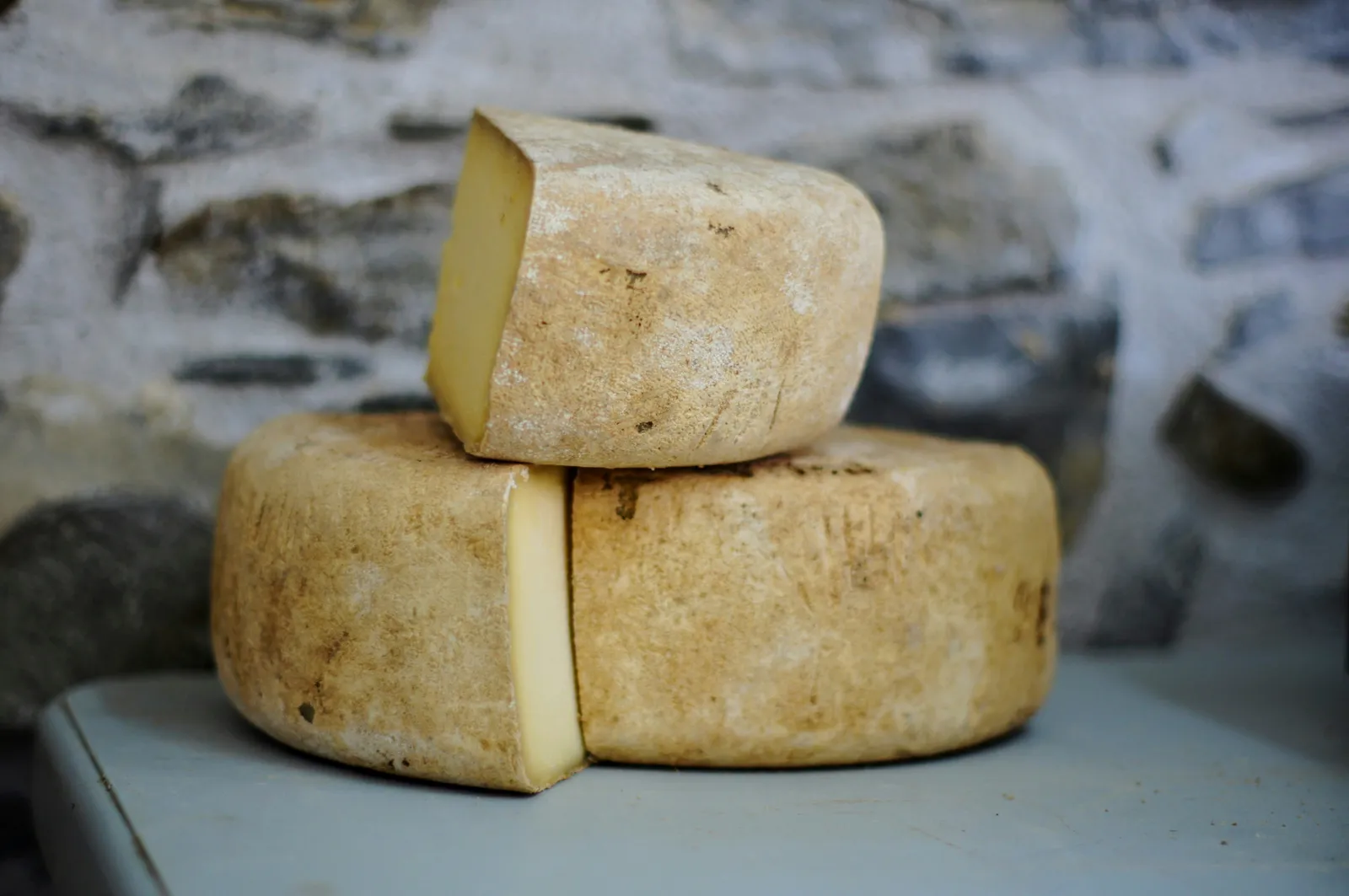
- 2 Burgundian cheeses: Comté (an aged hard cheese) and Époisses or any soft washed-rind
- Walnut halves
- Dried apricots
- Sliced baguette
- Salted butter
- Warm gougères, fresh from the oven
What to buy
- 4 oz Comté (preferably aged 12 months or longer)
- 4 oz Époisses or any small wheel of soft washed-rind cheese (Pont l’Évêque, Reblochon, Munster all work)
- 1 cup walnut halves
- 1 cup dried apricots (the dark unsulfured ones taste better)
- 1 baguette
- 1 stick salted butter
- Ingredients for gougères (below)
- 1 bottle Aligoté or other dry white wine, 1 small bottle crème de cassis
What to make
Gougères, the cheese choux pastry from Burgundy. The trick is to make and freeze them ahead, then bake from frozen the day of:
- 1 cup water
- 1 stick butter, cubed
- 1 teaspoon salt
- 1 cup all-purpose flour
- 4 large eggs
- 1.5 cups grated Gruyère
Combine water, butter, and salt in a saucepan. Bring to a boil. Add flour all at once and stir vigorously with a wooden spoon. Cook 2 minutes, until the dough pulls away from the sides. Transfer to a bowl, cool 5 minutes. Add eggs one at a time, beating fully between each. Stir in 1 cup of the Gruyère.
Pipe or scoop into 1.5-inch rounds on a parchment-lined sheet pan. Top with the remaining 1/2 cup Gruyère. Freeze the whole sheet pan, then transfer the frozen rounds to a freezer bag.
The day of: bake from frozen at 400°F for about 25 minutes, until puffed and deep golden brown. Serve warm.
The drink
Kir, the Burgundy regional apéritif. The Wikipedia entry on Kir gives the canonical ratio: 9 parts dry white wine to 1 part crème de cassis. Traditionally the wine is Aligoté, a Burgundian white, but any dry white works. Pour the cassis in first, then top with chilled wine. Serve in a small wine glass.
For a sparkling version (Kir Royal), use Crémant or Champagne instead of still wine.
30-minute prep (day of)
- 0 min: gougères go in the oven
- 5 min: plate cheeses, walnuts, apricots
- 5 min: slice baguette, soften butter
- 5 min: pour Kir (cassis first, then wine, do not stir)
- 10 min: buffer
- 25 min total in the oven, but the oven is doing the work, you are setting up
Cost per person
Roughly $13-18 for food + $5-7 for the Kir = $18-25 per person. The cheeses are the line item that moves the most.
Spread 3: The Provençal Apéro
For when it is warm enough that nobody wants a hot dish, or when you are doing apéro outside.
What you serve
- Saucisson sec, sliced thin
- Fresh red radishes, washed and trimmed
- A mound of salted butter on a small plate
- A small bowl of flaky sea salt
- Marinated artichoke hearts
- Mixed olives, warmed in olive oil with a strip of orange peel
- Sliced baguette
- A wedge of pissaladière (made and chilled, served at room temperature) or extra tapenade
What to buy
- 4 oz saucisson sec
- 1 bunch fresh radishes (French breakfast radishes if your store has them)
- 1 stick high-fat European butter
- Flaky sea salt (Maldon)
- 1 jar marinated artichoke hearts
- 1 cup mixed olives, ideally Provençal (Nyons, Niçoise, picholines)
- 1 baguette
- Ingredients for pissaladière (below) or for tapenade if you skip the tart
What to make
A simple pissaladière, the caramelized onion tart from Nice, can be made ahead and held in the fridge or freezer:
- 1 sheet store-bought puff pastry, thawed
- 4 large yellow onions, thinly sliced
- 3 tablespoons olive oil
- 2 sprigs fresh thyme
- 10 anchovy fillets (omit for non-anchovy version, replace with sliced olives)
- 16 small black Niçoise or Kalamata olives, pitted
Cook the onions with the oil, thyme, and a big pinch of salt in a wide skillet over medium-low heat for 45 minutes, stirring occasionally, until they are deep golden brown and jammy.
Roll the puff pastry onto a parchment-lined sheet pan. Spread the caramelized onions evenly. Arrange anchovies in a lattice pattern across the top, dot with the olives, bake at 400°F for 20 to 25 minutes, until the pastry is puffed and deeply golden on the edges. Cool to room temperature. Slice into 16 small squares.
If you make it Friday, it holds fine in the fridge and can be served at room temperature, no reheating required.
The drink
Provence rosé, served properly chilled. Bandol if you want to splurge, Côtes de Provence for everyday. One bottle per 2 guests + 1 extra is the right math (so 4 bottles for 6).
30-minute prep (day of)
- 5 min: slice radishes and trim, plate with butter and salt
- 5 min: warm the olives in oil
- 5 min: slice the saucisson, plate the pissaladière
- 5 min: slice the baguette
- 10 min: pour the rosé, set the table
Cost per person
Roughly $12-15 for food + $6-7 for rosé = $18-22 per person.
Spread 4: The Make-Ahead Apéro
For when you want apéro but you do not have any day-of time. Everything is done by Friday night, and Saturday is roughly 10 minutes of plating.
What you serve
- 2 or 3 sliced cured meats from a real deli
- 2 hard cheeses (you want hard because soft cheeses get sweaty if they sit out too long)
- Cornichons, mustard
- Salted butter, sliced baguette
- Dried apricots and dates
- Salmon rillettes (made ahead)
- Tapenade (made ahead)
What to buy
- 2 to 3 oz each of 2 to 3 cured meats (prosciutto, jambon de Bayonne or Spanish jamón, saucisson)
- 4 oz each of 2 hard cheeses (Comté, aged Gouda, Manchego)
- Cornichons + Dijon mustard
- Stick of butter
- Baguette
- Dried apricots and dates
- Ingredients for salmon rillettes (below) + tapenade (Spread 1)
What to make (Friday)
Both of these improve overnight, which is the entire point.
Salmon rillettes (Friday afternoon, 15 minutes):
- 1 can good-quality smoked salmon or skinless wild salmon (or 1/2 lb fresh, poached and flaked)
- 1/2 stick (4 tablespoons) softened butter
- 2 tablespoons crème fraîche or sour cream
- 1 tablespoon lemon juice
- 1 tablespoon finely chopped fresh dill or chives
- Salt, pepper
Mash everything together with a fork until well combined but still a little chunky. Pack into a small ramekin or bowl. Cover and refrigerate. Bring out 20 minutes before serving so the butter softens slightly.
Tapenade: same recipe as Spread 1. Make it Friday, it actually gets better.
The drink
Pre-batched Kir is the move here. Chill the wine and have the crème de cassis bottle ready to go. When guests arrive, pour the cassis (about 1 tablespoon per glass), then top with chilled wine. Total time: 30 seconds per drink.
Alternatively, pre-chilled rosé requires zero work.
30-minute prep (day of)
- 3 min: take cheeses and rillettes out of the fridge
- 5 min: slice baguette, slice cured meats, plate
- 5 min: put cornichons, mustard, apricots into little bowls
- 5 min: spread out everything on a board or platter
- 12 min: buffer (and pouring drinks as people arrive)
Cost per person
Roughly $12-17 for food + $5-7 for drinks = $15-22 per person.
Spread 5: The Vegetarian Apéro
For mixed-diet groups or all-vegetarian gatherings. The trick is to skip the meat without making the plate look thin. The fix: more cheeses, more dips, more bread.
What you serve
- 3 cheeses: one hard (Comté or aged Gouda), one soft (Brie, Camembert), one washed-rind (Reblochon, Pont l’Évêque)
- Marcona almonds
- Dried apricots, sliced fresh apples or pears
- Sliced baguette and salted butter
- Cornichons
- Olives
- Fresh radishes with butter and sea salt
- 2 dips: tapenade + roasted red pepper spread
What to buy
- 4 oz each of 3 cheeses
- 1 cup Marcona almonds
- Dried apricots, 1 fresh apple or pear
- 1 baguette
- 1 stick salted butter
- Cornichons, mixed olives
- 1 bunch radishes, flaky sea salt
- Ingredients for tapenade (Spread 1) and roasted red pepper spread (below)
What to make
Tapenade: same as Spread 1. Make it the day before.
Roasted red pepper spread (15 minutes):
- 2 red bell peppers, charred under the broiler until blackened on all sides
- 1 small garlic clove
- 1 tablespoon almond butter or 2 tablespoons toasted almonds (this gives body)
- 1 tablespoon olive oil
- 1 teaspoon sherry vinegar
- Salt, smoked paprika
Peel the charred skin off the peppers (do not rinse, you lose the flavor). Pull out the seeds. Pulse with everything else in a food processor until you have a coarse spread, not a smooth puree.
The drink
Provence rosé or Crémant works for everyone. For a real non-alcoholic option, pour grapefruit juice + tonic + a strip of lime over ice. We have mocktail recipes that work as full apéritif substitutes, and non-alcoholic spirits like Lyre’s Pastis make the swap nearly invisible.
If you want one cocktail option, the French 75 is technically a French apéritif and works well with this spread.
30-minute prep
- 5 min: slice radishes, mound butter, set out flaky salt
- 10 min: char and peel peppers for the spread (do this Friday if you can)
- 5 min: plate cheeses, slice apples, set up dips in small bowls
- 5 min: slice baguette
- 5 min: pour drinks, set the table
Cost per person
Roughly $10-14 for food + $3-5 for drinks = $13-18 per person. The cheapest spread, partly because there is no cured meat.
How to pick the right spread
Quick decision tree, in priority order:
- First time hosting an apéro? Spread 1. Reliable, classic, no surprises.
- No time on the day of? Spread 4. Almost all the work is Friday.
- Cool weather and you want one warm thing? Spread 2. The gougères are worth it.
- Hot day, outdoors, lighter food? Spread 3. Provence rosé is what apéro tastes like in July.
- Mixed-diet or all-vegetarian group? Spread 5.
The apéro shopping rules
A few things apply to every spread.
One bottle of wine per 2 guests, plus 1 extra. Standard math. For 6 guests, 4 bottles. For a Kir-only apéro, you can stretch one bottle of Kir per 3 people because the cassis adds volume.
Always include a non-alcoholic option. Sparkling water with citrus is the floor. A real NA cocktail is the move. Per recent Gallup polling, US drinking rates are at historical lows; about 4 in 10 American adults describe themselves as total abstainers, so a thoughtful NA drink is no longer optional.
Cheese math. Plan on 2 to 3 oz of cheese per person across the spread. Two cheeses for 4 guests, three cheeses for 6 to 8.
Bread math. One baguette feeds 4 to 6 for apéro. Slice it within an hour of serving. If you slice it earlier, cover with a damp tea towel so it does not turn into hardtack.
Take cheese out of the fridge 30 minutes before guests arrive. Cold cheese tastes flat. Room temperature cheese is the whole point of the spread.
Use small plates and small spoons for the dips. Guests should be able to scoop, not double-dip. Anything that needs a knife (butter, soft cheese) gets its own knife.
No cocktail forks or fancy picks. Hands are fine. The Provençal radish-in-butter dish is eaten with your hands.
What to skip
Most “French appetizer” articles in the SERP fall into a small number of traps. Skip all of these:
- A 23-dish apéro. Apéro is small. Four to seven items on the plate is the right count for 4 to 6 people. Anything more is showing off and most of it goes uneaten.
- Frozen mini quiches from the grocery freezer aisle. They taste like the box they came in. Skip.
- A “cheese course” mid-apéro. The cheese is on the apéro plate. The cheese course at the end of dinner is a separate, optional thing. Do not stack them.
- A dessert during apéro. This is not the time. The dessert comes after dinner.
- Sweet cocktails with the spread. Apéritifs are dry on purpose. Sugary drinks fight with the saltiness of cured meats and olives and dull your appetite for dinner.
- Multiple hot dishes. One warm thing (gougères, or the pissaladière at room temperature) is plenty. Two hot dishes turns apéro into a kitchen project.
- A cheeseball, a deviled egg tower, or anything billed as a centerpiece. Different vibe. Save those for an American cocktail party.
- A dip that requires a chip. Tortilla chips break the apéro frame. Use baguette slices, vegetable batons, or a small spoon.
- Buying cheese the day of. Cheese tastes better when it has had 24 hours at home, out of the refrigerator for the last 30 minutes. Buy it Friday.
A short FAQ
What are popular French appetizers? Gougères, tapenade, pissaladière, salmon rillettes, radishes with salted butter, the cheese plate. The most popular ones are almost always the simplest.
What is a traditional French starter? The apéro itself is the traditional pre-meal ritual, drinks plus small things, before anyone sits at the table. The plated starter (entrée or hors d’œuvre) comes later if you are doing a full sit-down dinner.
What do the French serve as nibbles? Saucisson, cheese, cornichons, olives, Marcona almonds, sliced baguette with salted butter, sometimes tapenade or a soft cheese baked in something. Spread 1 in this guide is the most representative.
What is a classic French snack? Radishes with salted butter and flaky sea salt. Three ingredients, three minutes of prep, and it tastes better than 99% of restaurant amuse-bouches.
Can I make a French apéro spread for one or two people? Yes. Halve any of the spreads above. Apéro at home for two on a Tuesday is one of the great quiet pleasures of grown-up life. A small wedge of cheese, a few slices of saucisson, half a baguette with butter, a glass of cold rosé.
Do I need special glassware? Not really. Wine glasses work for everything. Coupes and champagne flutes are nice for the sparkling spreads but optional. A water glass or a mason jar works in a pinch.
What’s next: the dinner that follows the apéro
If apéro is the whole evening, you are done. Pour another round and let it run 90 minutes.
If a sit-down dinner is coming after, that is what our dinner party menu ideas cover. Each of the 6 menus there pairs naturally with one of the apéro spreads here: Spread 1 leads into the First Dinner Party menu, Spread 3 leads into the Summer Patio Dinner, Spread 5 leads into the Vegetarian Showpiece.
When that hits the table, the apéro should fade out: clear the small plates, take the cheese board to the counter, refill water, sit everyone down. The apéro did its job. The room is loose, the conversation is on, the food is the next chapter.
That is the whole point.